Sign up with Google
 Sign in with Zoho

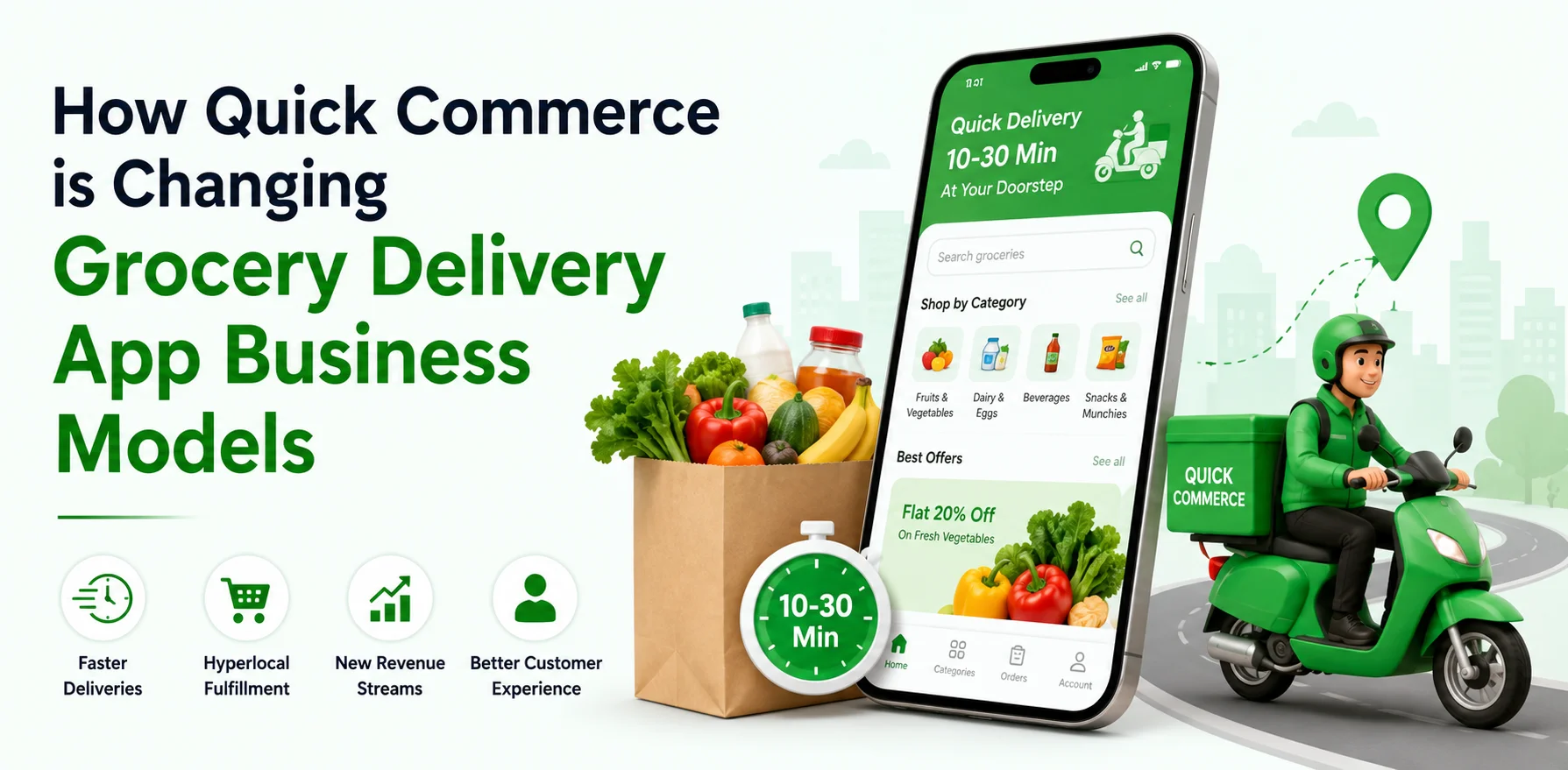
There have been significant developments witnessed in the grocery delivery industry over the past few years. Customers are not prepared anymore to wait for several hours or even days for the delivery of their groceries; they require the delivery of their orders within a few minutes. This phenomenon is resulting in the evolution of a completely new concept of Q-commerce that indicates the delivery of necessities within 10 to 30 minutes. It has become essential for companies to alter their strategies due to the changing demands of their customers.
To sustain itself in this rapidly growing industry, it becomes imperative for a company to have technology-based solutions to manage the stock and deliver orders efficiently. This is the reason for the development of grocery delivery apps by companies in the grocery delivery industry.
What is Quick Commerce?
Q-commerce is essentially an advanced iteration of the classic online grocery delivery model. Unlike the classic online grocery delivery model, which utilizes centralized warehouses for order processing and delivery, q-commerce leverages dark stores and local fulfillment centers.
Unlike conventional grocery delivery, quick commerce focuses on:
- Ultra-fast deliveries (10–30 minutes)
- Limited delivery radius
- Real-time inventory management
- AI-powered demand forecasting
- Optimized delivery routes
These improvements enable businesses to provide faster service while improving customer satisfaction.
Why Quick Commerce is Reshaping Business Models
Quick commerce has significantly changed how grocery businesses operate. Companies are moving away from traditional delivery systems and embracing technology-driven business models.
1. Dark Store Operations
Dark stores are small fulfillment centers dedicated exclusively to online orders. They eliminate the need for customers to visit physical stores and allow delivery partners to collect products quickly.
This operational model reduces delivery times while increasing efficiency.
2. Hyperlocal Delivery Networks
Modern grocery platforms focus on serving customers within a limited geographical area. Hyperlocal delivery minimizes transportation costs while ensuring faster order fulfillment.
This localized approach helps businesses maintain consistent service quality.
3. Subscription-Based Revenue
Many grocery platforms now offer premium memberships that provide:
- Free deliveries
- Exclusive discounts
- Faster delivery priority
- Loyalty rewards
Subscription models create recurring revenue while improving customer retention.
4. AI-Powered Inventory Management
Artificial intelligence predicts purchasing behavior based on customer preferences, seasonal demand, and local buying patterns. This reduces stock shortages and minimizes inventory waste.
Businesses can maintain optimal inventory levels while improving profitability.
5. Data-Driven Personalization
Quick commerce platforms collect valuable customer insights to recommend products, offer personalized promotions, and improve shopping experiences.
Personalized recommendations often lead to higher order values and increased repeat purchases.
Technologies Powering Quick Commerce
Several modern technologies are driving the success of quick commerce platforms.
Artificial Intelligence
AI helps businesses:
- Forecast product demand
- Recommend products
- Detect fraud
- Automate customer support
- Optimize delivery routes
Cloud Computing
Cloud infrastructure ensures scalability during high-demand periods while providing secure data storage and real-time synchronization.
GPS Tracking
Live location tracking allows customers to monitor delivery progress while helping businesses optimize delivery operations.
Digital Payments
Secure payment gateways offer multiple payment options, including digital wallets, UPI, credit cards, and cash on delivery.
IoT Integration
Smart inventory systems automatically update stock availability, reducing manual errors and improving operational efficiency.
Key Features Required in Modern Grocery Apps
Businesses looking to build competitive grocery platforms should include the following features:
Customer Features
- Easy registration
- Smart product search
- Personalized recommendations
- Secure checkout
- Live order tracking
- Multiple payment options
- Ratings and reviews
- Order history
Delivery Partner Features
- Route optimization
- Order notifications
- Earnings dashboard
- GPS navigation
- Delivery status updates
Admin Panel
- Product management
- Inventory tracking
- Customer management
- Delivery management
- Analytics dashboard
- Promotion management
- Revenue reporting
Benefits of Quick Commerce for Grocery Businesses
Businesses adopting quick commerce gain several competitive advantages.
Higher Customer Satisfaction
Fast deliveries improve customer convenience and increase repeat purchases.
Increased Revenue
Frequent purchases and subscription services generate consistent revenue streams.
Better Inventory Control
Real-time stock monitoring reduces product wastage and prevents stockouts.
Improved Operational Efficiency
Automation minimizes manual work while streamlining order management.
Stronger Brand Loyalty
Reliable delivery experiences encourage long-term customer relationships.
Challenges of Quick Commerce
Despite its advantages, quick commerce presents several operational challenges.
High Operational Costs
Maintaining dark stores, delivery fleets, and advanced technology requires significant investment.
Inventory Accuracy
Real-time stock management is critical to avoid cancelled orders.
Delivery Speed
Meeting strict delivery timelines requires efficient logistics and route optimization.
Scalability
Businesses must continuously upgrade their infrastructure as customer demand grows.
Future Trends in Quick Commerce
AI-Powered Shopping Assistants
Artificial intelligence will revolutionize grocery shopping as it will recommend various products to customers depending on their tastes, previous purchases, and seasonal needs. Furthermore, AI assistants will be available for immediate help and customized grocery shopping experiences.
Drone and Autonomous Vehicle Deliveries
The use of drones and autonomous delivery vehicles is anticipated to minimize delivery time and expenses. This technology can contribute to improving last-mile logistics, as well as faster and more efficient order processing.
Voice-Based Grocery Ordering
Voice assistants can be used by customers to place goods in the cart, place repeat orders, and even monitor delivery via voice commands only.
Predictive Purchasing
Advanced analytics and AI will forecast customer purchasing patterns and automatically recommend or reorder popular products. This technique will not only increase convenience but also boost customer loyalty and sales.
Sustainable Delivery Practices
Companies engaged in quick commerce are beginning to use sustainable practices such as eco-packaging, electric vehicles for deliveries, and sustainable delivery routes.
Smart Warehouse Automation
Automation of warehouses with robotics and inventory intelligence will help process orders quickly, reduce any mistakes made by people, and ensure accurate inventory control.
Personalized Shopping Experiences
The future grocery delivery app development services will provide a personalized shopping experience to their customers via product suggestions, promotions, and loyalty rewards that are tailored specifically for them.
Choosing the Right Development Partner
The choice of the correct grocery delivery application development company is perhaps the key step towards creating an efficient quick commerce service. The chosen company will have the necessary experience in developing similar applications and will know about all current trends in the market and the technological needs to create a robust and scalable application.
The following qualities should be taken into consideration while choosing the development company: good portfolio, proficiency in current technologies, transparent communication, and maintenance services. The chosen company will provide security, performance, and scalability of the app and will make the process of development quicker and more efficient.
Conclusion
Rapid commerce has completely revolutionized the grocery business sector through rapidity, convenience, and technology, becoming the pillar of modern-day business models. The consumer demands that groceries reach him or her within just a few minutes, thereby making it necessary for businesses to employ more intelligent logistics and AI processes, along with up-to-date inventory systems. It is through innovation and the adoption of advanced technologies that businesses will be able to sustain in the competitive grocery delivery business.