Sign up with Google
 Sign in with Zoho

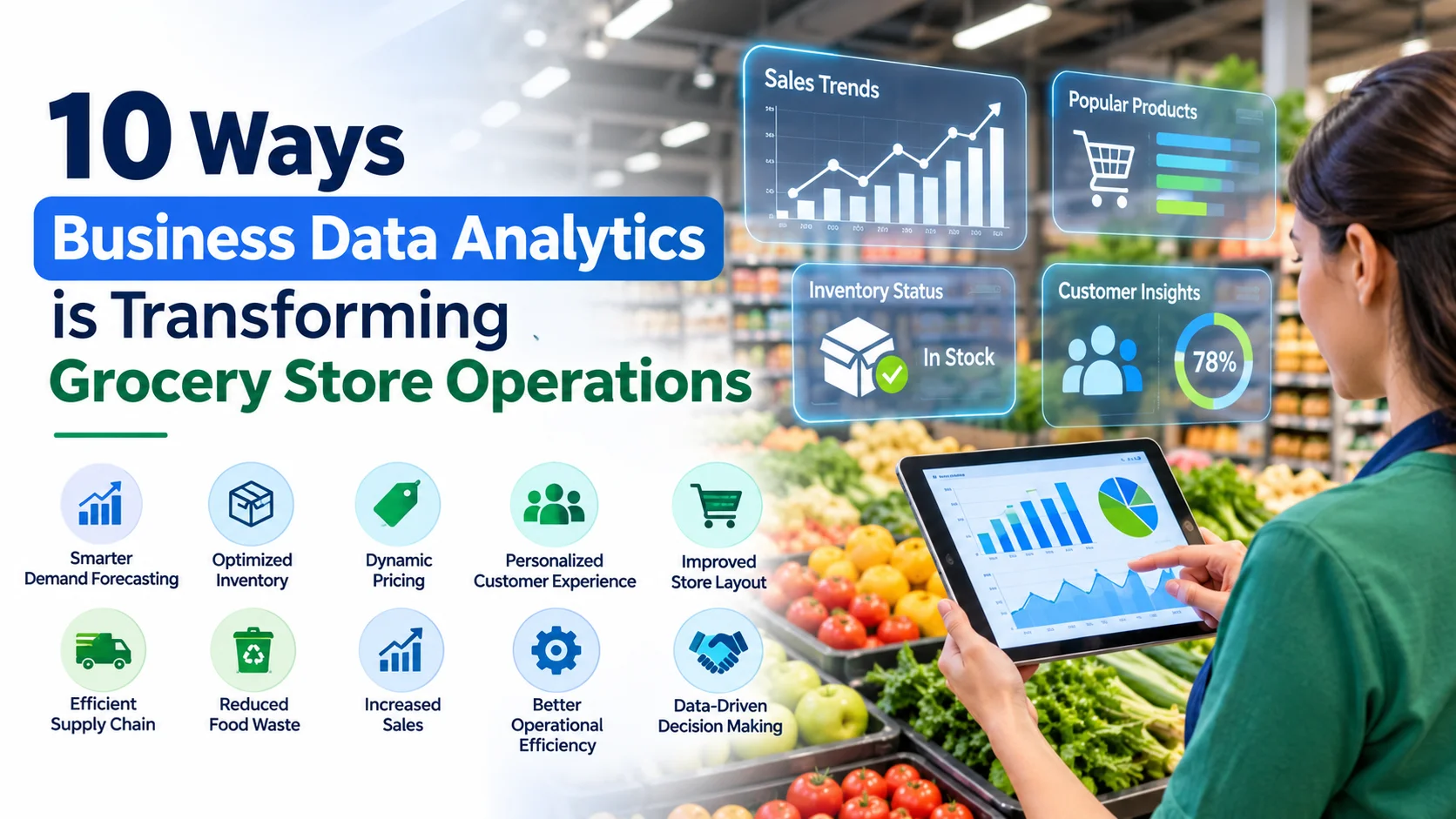
There is a tendency to become data-driven within the groceries sector due to the attempts of companies to discover some new approaches to inventory management, understanding customer behavior, lowering the expenses and enhancing the quality of service provided to customers. Within any kind of grocery from traditional to online groceries, huge volumes of data are gathered with the help of transactions, mobile applications, websites, loyalty programs, deliveries, and inventory management.
The use of business data analytics allows turning all the information into knowledge. It enables finding patterns of consumer buying behavior, predicting demand, and optimizing inventories and deliveries. The use of business data analytics has become an essential part of modern technology within the grocery business.
Those companies that plan to develop an on-demand grocery delivery app can benefit from business data analytics in linking consumer demand with inventory, pricing, and the delivery process. Here are ten ways in which business data analytics influences grocery store operations.
1. Accurate Demand Forecasting
Data analytics enables grocery retailers to forecast future demand by evaluating their historical data, seasonal factors, holidays, promotions, and customers' behavior. Accurate predictions enable maintaining proper inventories without any stock-outs and unnecessary spending on purchasing and warehousing of goods.
2. Smarter Inventory Management
Through analytics, retailers will have access to information about product availability, sales pace, and the need for replenishment of inventory. They will be able to know which products sell faster and which sell slower, make reordering decisions automatically, and keep proper inventory levels. It will help them decrease inventories and increase their turnover.
3. Reduced Food Waste
The retailers of grocery products will be able to study the purchase trends of the products, their shelf life, and the movements in the inventories in order to understand which products are likely to become wastage.
4. Personalized Customer Experiences
Customer analytics enable retailers to track purchasing behaviors, preferences, frequency of purchases, and spending trends. Retailers can make use of customer analytics for personalizing suggestions and promotions. Grocery application development services can include customer analytics features to offer an improved experience for digital shoppers.
5. Optimized Pricing Strategies
Data analytics helps grocery stores analyze demand for their products, pricing of the competitors, previous sales information, and effectiveness of their marketing strategies. This will help retailers make intelligent pricing decisions and offer discounts and also help them in adjusting prices based on demand.
6. Better Delivery Management
Order volume, delivery time, location, driver availability, and cancellation data are some metrics that analytics can be used for analysis. For a grocery delivery app, such an analysis would allow companies to recognize the problems with deliveries and optimize their performance.
7. Improved Product Recommendations
Analyzing previous purchases and browsing behavior helps grocery businesses identify products customers may be interested in purchasing. Recommendation engines can suggest complementary or frequently purchased products, increasing cross-selling opportunities while making product discovery easier across websites and mobile applications.
8. Enhanced Store Layout Planning
Retailers can analyze product performance, customer purchasing patterns, and transaction data to understand which products perform better together. These insights help optimize shelf placement, product categories, promotional displays, and store layouts to improve shopping convenience and sales opportunities.
9. Real-Time Performance Monitoring
Analytics dashboards provide managers with real-time information about sales, inventory, orders, customer activity, and delivery operations. Businesses can quickly identify performance issues and respond to operational changes. Grocery delivery software development can integrate centralized dashboards for better monitoring.
10. Data-Driven Business Decisions
Analytics transforms complex business information into actionable insights that support strategic decisions. Retailers can identify profitable products, high-demand locations, customer trends, and operational inefficiencies. A grocery delivery app development Company can integrate advanced analytics to support scalable digital grocery operations.
How to Implement Business Data Analytics in Grocery Operations
Implementing business data analytics requires a structured approach. Grocery retailers should connect operational data with suitable analytics technologies and establish measurable objectives before introducing advanced analytical capabilities.
Step 1: Define Business Objectives
Start by identifying the specific problems analytics should solve. Objectives may include reducing food waste, improving inventory accuracy, increasing sales, optimizing delivery operations, or improving customer retention.
Step 2: Identify and Collect Data
Collect relevant information from different business systems, including POS systems, inventory software, customer relationship platforms, websites, mobile applications, loyalty programs, and delivery management systems.
Step 3: Integrate Data Sources
Connect different data sources through APIs, databases, cloud platforms, or data integration tools. A unified data environment makes it easier to analyze information across sales, inventory, customers, and delivery operations.
Step 4: Clean and Organize the Data
Remove duplicate, outdated, incomplete, or inconsistent information. Standardizing data ensures that analytics systems work with accurate information and generate more reliable insights.
Step 5: Build Analytics Dashboards
Create dashboards that display important business metrics such as sales, inventory levels, order volumes, average order value, product performance, delivery time, and customer retention.
Step 6: Apply Predictive Analytics
Once sufficient historical data is available, businesses can use predictive analytics and machine learning to forecast demand, identify purchasing patterns, predict inventory requirements, and detect potential operational issues.
Step 7: Integrate Analytics With Grocery Applications
For digital grocery businesses, analytics should be connected with customer-facing applications and backend systems. On-demand grocery delivery app development can include features such as personalized recommendations, demand forecasting, inventory insights, and delivery analytics.
Step 8: Monitor and Improve Performance
Analytics implementation should be an ongoing process. Businesses should regularly monitor KPIs, evaluate results, identify new opportunities, and update analytical models as customer behavior and market conditions change.
Conclusion
Business data analytics is transforming grocery store operations by enabling smarter decisions across inventory, pricing, customer engagement, product management, and delivery. Retailers can use data-driven insights to improve efficiency, reduce waste, and respond more effectively to customer demand.
For businesses planning digital transformation, investing in grocery delivery app development services can help create scalable platforms that connect customer data, inventory, analytics, and delivery operations. With the right technology and implementation strategy, analytics can become an important foundation for modern grocery retail.