Sign up with Google
 Sign in with Zoho

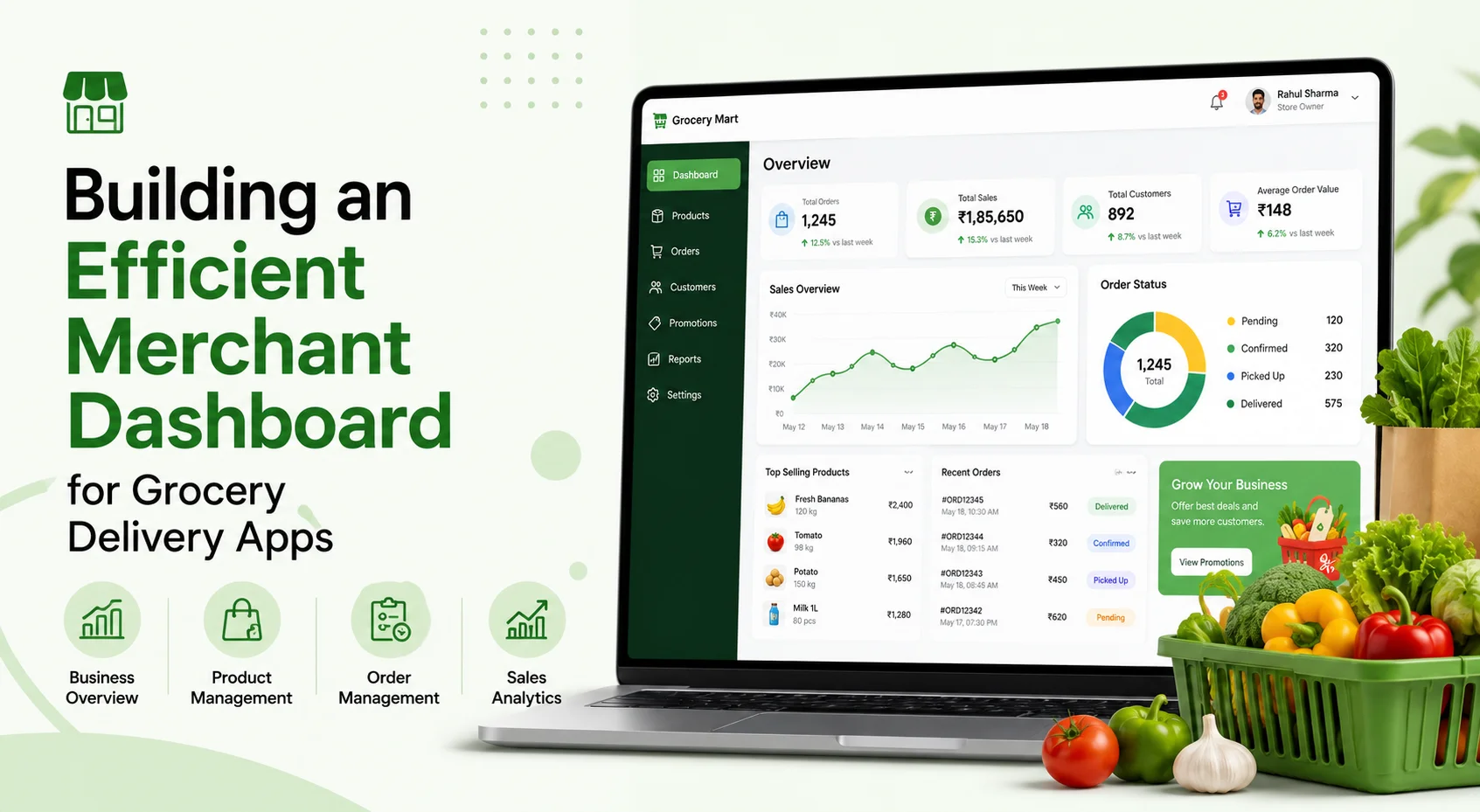
Any on-demand grocery delivery system works not only on the convenience factor but also on how well the merchant is able to operate the store. This means that a proper merchant dashboard turns into a central control room from where the store owner will be managing all aspects, including inventory management, order processing, and sales performance. The effective merchant dashboard turns out to be a necessity for businesses that wish to start an on-demand grocery delivery platform.
This article explores the key features, benefits, and best practices for building a merchant dashboard that enhances productivity and improves overall service quality.
Why a Merchant Dashboard Matters
Merchants are essential components of the food delivery system. If there is no integrated platform, it will be difficult to handle product management, order handling, and customer queries. Through the use of a merchant dashboard, merchants can:
- Manage inventory efficiently
- Process incoming orders quickly
- Monitor sales and revenue
- Handle customer inquiries
- Track delivery status
- Generate business reports
An efficient dashboard helps reduce manual work, minimize errors, and improve operational efficiency.
Essential Features of a Grocery Merchant Dashboard
1. Inventory Management
Inventory management is one of the most important dashboard functions. Merchants should be able to:
- Add and update products
- Manage stock levels
- Receive low-stock alerts
- Remove unavailable items
- Categorize products efficiently
Real-time inventory updates help prevent overselling and improve customer satisfaction.
2. Order Management System
The dashboard should provide a complete order management section where merchants can:
- View incoming orders
- Accept or reject requests
- Update order status
- Manage cancellations
- Track order history
A streamlined order workflow reduces processing time and ensures faster deliveries.
3. Product Catalog Management
Merchants need an easy way to manage their product listings. Features should include:
- Product creation and editing
- Bulk product uploads
- Image management
- Price updates
- Promotional offers
An organized catalog improves customer browsing experiences and increases sales opportunities.
4. Sales Analytics and Reporting
Business insights help merchants make informed decisions. The dashboard should provide:
- Daily sales reports
- Revenue tracking
- Product performance analysis
- Customer purchase trends
- Peak order time insights
Detailed analytics support business growth and operational improvements.
5. Customer Management
Understanding customer behavior helps merchants improve service quality. Dashboard capabilities may include:
- Customer profiles
- Purchase history
- Feedback management
- Complaint tracking
- Loyalty program monitoring
Better customer management contributes to stronger retention rates.
6. Delivery Tracking
Real-time delivery monitoring allows merchants to:
- Track active deliveries
- View driver locations
- Monitor delivery completion
- Handle delivery issues quickly
This feature improves coordination between stores and delivery personnel.
7. Notification and Alert System
Automated notifications help merchants stay informed about:
- New orders
- Low inventory
- Payment confirmations
- Delivery updates
- Customer messages
Instant alerts ensure timely actions and reduce operational delays.
Advanced Features for Enhanced Efficiency
AI-Based Demand Forecasting
Artificial intelligence can analyze historical sales data and predict future demand patterns. This helps merchants optimize inventory planning and reduce stock shortages.
Automated Reordering
The dashboard can automatically suggest product restocking based on sales trends and inventory levels.
Multi-Store Management
Businesses operating multiple stores benefit from centralized management features that allow monitoring all locations from a single dashboard.
Promotional Campaign Management
Merchants should be able to create discounts, coupon codes, and seasonal promotions directly from the dashboard.
Performance Monitoring
KPIs such as order fulfillment rate, customer ratings, and sales growth can be displayed through visual charts and reports.
User Experience Best Practices
Simple Interface Design
A clean and intuitive dashboard reduces the learning curve and improves productivity.
Mobile Accessibility
Many merchants prefer managing operations on mobile devices. Responsive dashboard designs ensure accessibility across smartphones and tablets.
Fast Loading Speed
Quick dashboard performance enhances user satisfaction and operational efficiency.
Customizable Layout
Allowing merchants to personalize dashboard widgets and reports improves usability.
Secure Access Controls
Role-based permissions ensure that only authorized users can access sensitive business information.
Technology Considerations
Developing a robust merchant dashboard requires a combination of modern technologies, including:
- Cloud infrastructure
- Real-time databases
- API integrations
- Secure payment systems
- Analytics tools
- Push notification services
Businesses often partner with a professional grocery delivery app development Company to ensure proper implementation of these technologies.
Benefits of an Efficient Merchant Dashboard
A well-designed dashboard offers several advantages:
- Faster order processing
- Improved inventory control
- Better customer satisfaction
- Increased operational efficiency
- Enhanced sales visibility
- Reduced manual workload
- Better business decision-making
These benefits contribute to overall platform success and merchant retention.
Development Approach
Speed, security, and scalability should be some of the major considerations when developing the merchant’s dashboard because of increasing demands. The appropriate services for grocery delivery application development will help companies develop merchant dashboards that include features such as inventory management, order tracking, sales analysis, and reporting, which will help them optimize their operations in the store.
Conclusion
An efficient merchant dashboard serves as the operational backbone of a grocery delivery platform. From inventory management and order processing to analytics and customer engagement, the dashboard empowers merchants to manage their businesses effectively. By incorporating essential and advanced features while maintaining a user-friendly experience, businesses can create a powerful system that drives efficiency, improves service quality, and supports sustainable growth in the competitive grocery delivery market.