Sign up with Google
 Sign in with Zoho

A bigger partner list looks good on paper.
More companies. More contacts. More potential reach.
But here's the problem: a long list of recruited partners doesn't necessarily create a strong channel.
You can recruit 100 partners and still have a partner program that generates very little business.
Why?
Because partner recruitment and partnership building are two different things.
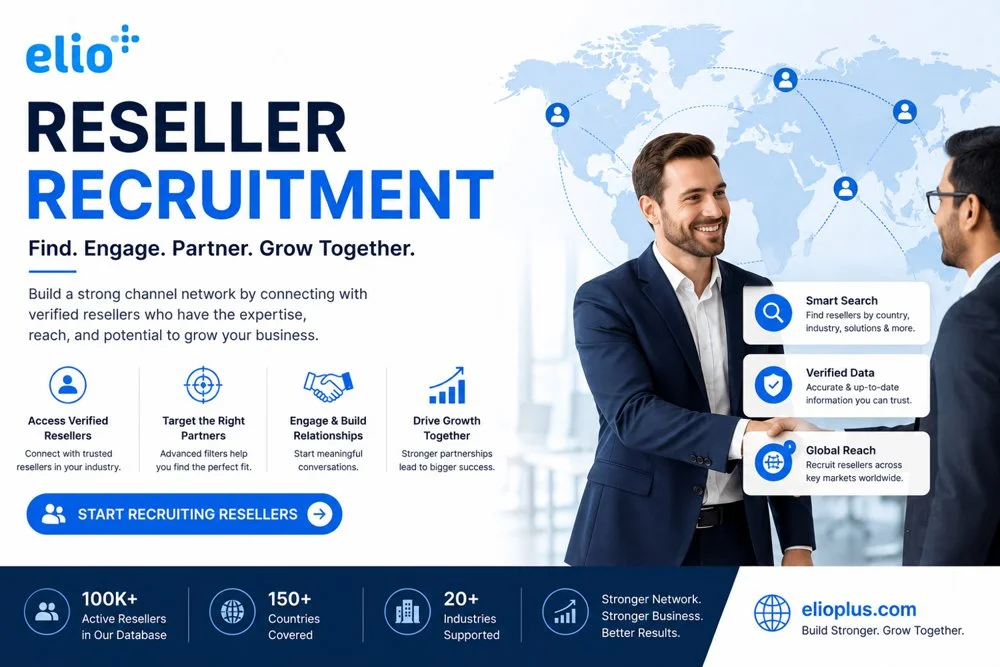
Recruitment is about finding and bringing the right companies into your ecosystem.
Partnership building is about giving those companies a reason to stay, engage, sell, collaborate, and grow with you.
That distinction matters for every technology company building an indirect sales strategy.
Partner Recruitment Is the Starting Point
Recruitment answers a fairly straightforward question:
“Who should we partner with?”
For a technology vendor, that might mean looking for:
- Resellers
- Managed Service Providers
- VARs
- System Integrators
- IT Consultants
- Distributors
- Technology-focused service providers
The objective is to identify companies that have access to the right customers, operate in the right markets, and have capabilities that complement your offering.
But recruitment is only the first step.
Getting a company to sign up for a partner program doesn't automatically mean they will sell your solution.
That's where many channel programs hit a wall.
Building a Partnership Starts After Recruitment
Once a partner joins your ecosystem, the question changes.
It's no longer:
“Can we recruit them?”
It becomes:
“How can we create value for each other?”
A genuine partnership needs mutual benefit.
The partner needs to see an opportunity to generate revenue, expand its services, improve customer value, or strengthen its market position.
The vendor needs market reach, sales opportunities, customer access, technical capabilities, or other strategic value from the relationship.
When both sides understand the value, the relationship can move beyond registration.
It can become commercially meaningful.
Recruitment Gets You Names. Partnerships Create Momentum.
Imagine two vendors.
Vendor A has 500 registered partners.
Vendor B has 75 active partners.
Vendor A looks more impressive.
But if only 15 of those 500 partners generate opportunities, while 50 of Vendor B's 75 partners are actively selling, Vendor B may have the healthier channel.
This is why partner count shouldn't be the only metric.
Look at:
- Active partners
- Partner-generated opportunities
- Revenue contribution
- Partner engagement
- Training participation
- Joint campaigns
- Customer acquisition
- Partner retention
The quality of the relationship matters more than the size of the database.
Step 1: Recruit for Fit, Not Just Volume
A common recruitment mistake is focusing on how many companies can be added to the program.
A better question is:
“Which partners have the strongest potential fit?”
Consider:
Market alignmentDoes the partner operate where you want to grow?
Customer alignmentDoes it already serve the customers you're trying to reach?
Technical expertiseCan it understand, implement, or support your solution?
Sales capabilityDoes it have the resources and motivation to generate opportunities?
Portfolio compatibilityDoes your solution complement its existing services?
The right recruitment process should make these factors visible before a partner enters the program.
Step 2: Give Partners a Reason to Engage
Signing an agreement is not a partnership strategy.
Partners need to understand what they get from working with you.
That could include:
- New revenue opportunities
- Access to new markets
- Sales enablement
- Technical training
- Marketing support
- Lead sharing
- Product expertise
- Joint go-to-market opportunities
Your partner proposition should answer one simple question:
“Why should we invest our time and resources in selling this?”
If the answer isn't obvious, recruitment numbers won't solve the problem.
Step 3: Make Onboarding More Than Paperwork
A partner shouldn't disappear into your CRM after signing up.
The first stage of the relationship sets the tone for everything that follows.
A strong onboarding process can introduce partners to:
- Your products
- Your ideal customer profile
- Sales processes
- Pricing and commercial models
- Technical resources
- Marketing assets
- Support channels
- Partner contacts
- Opportunity registration
The objective is simple:
Move the partner from “registered” to “ready.”
Step 4: Help Partners Sell
This is where recruitment turns into partnership building.
Your partner may like your product.
They may understand your product.
But can they actually sell it?
Give them tools that make selling easier.
Create clear positioning.
Provide sales materials.
Share use cases.
Offer training.
Make technical information accessible.
Help them identify the types of customers that are most likely to benefit.
The easier you make the sales motion, the easier it becomes for the partner to incorporate your solution into its own business.
Step 5: Build Two-Way Communication
Partnerships become weak when communication only goes in one direction.
Vendor sends announcement.
Partner receives announcement.
Vendor sends another announcement.
Partner receives another announcement.
That's not collaboration.
Talk to partners about what's happening in their market.
Ask what customers are requesting.
Find out which products are difficult to sell.
Understand where they need support.
Listen to objections.
The best partner feedback can come from the companies that are actually talking to customers every day.
Step 6: Create Joint Opportunities
A partnership becomes much more tangible when both sides work on actual opportunities.
This could involve:
- Joint campaigns
- Co-marketing
- Account mapping
- Lead sharing
- Customer events
- Joint webinars
- Cross-selling
- Market development activities
You don't need to launch everything at once.
One well-executed joint campaign can teach you more about a partner relationship than dozens of automated emails.
Step 7: Measure the Relationship, Not Just Recruitment
Partner recruitment metrics tell you what happened at the beginning.
Partnership metrics tell you whether the relationship is working.
Track both.
Recruitment metrics
- Partner applications
- Qualified partner prospects
- Recruitment conversion rate
- Time to onboard
- Partner profile fit
Partnership metrics
- Active partner rate
- Opportunities created
- Revenue generated
- Partner engagement
- Customer wins
- Joint marketing activity
- Partner retention
This creates a more complete picture.
You can see whether your recruitment strategy is producing partners who actually contribute to the channel.
Recruitment vs. Partnership Building
Neither is more important.
You need both.
Recruitment fills the pipeline. Partnership building makes the pipeline valuable.
Where Elioplus Fits
For technology companies, finding the right partners can be one of the hardest parts of building a channel.
You need to know which companies operate in your target markets, which ones match your ideal partner profile, and which relationships are worth pursuing.
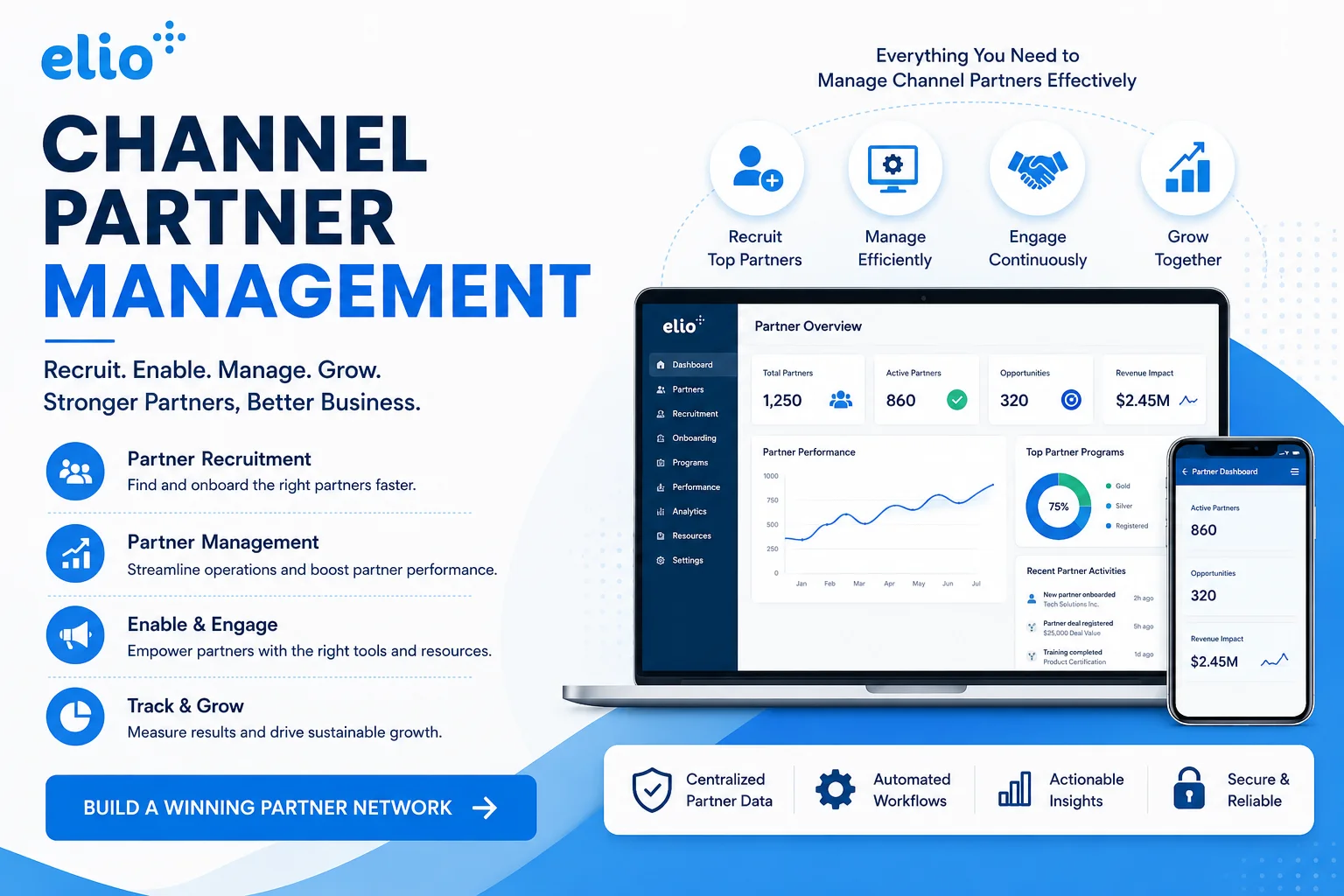
ELIOPlus supports this process by helping businesses discover and recruit channel partners across categories including Managed Service Providers, resellers, and system integrators.
The platform can be used as a starting point for identifying potential partners based on market and business needs.
But discovery is only the beginning.
Once the right partners are identified, the real opportunity is to build relationships that produce mutual value.
The Goal Isn't a Bigger Partner Program
It's a more productive one.
A successful channel isn't measured by how many logos appear on a partner page.
It's measured by what happens after those logos get there.
Do partners understand your offering?
Do they know which customers to target?
Are they generating opportunities?
Are you helping them close business?
Are both sides finding new reasons to work together?
That's the difference between recruiting partners and building partnerships.
Recruitment gives you access to potential.
Partnership building turns that potential into growth.
Build a Stronger Channel With ELIOPlus
Finding the right partners is the first step toward building a productive channel.
Explore ELIOPlUS to discover potential resellers, MSPs, system integrators, and other channel partners for your target markets.