Sign up with Google
 Sign in with Zoho

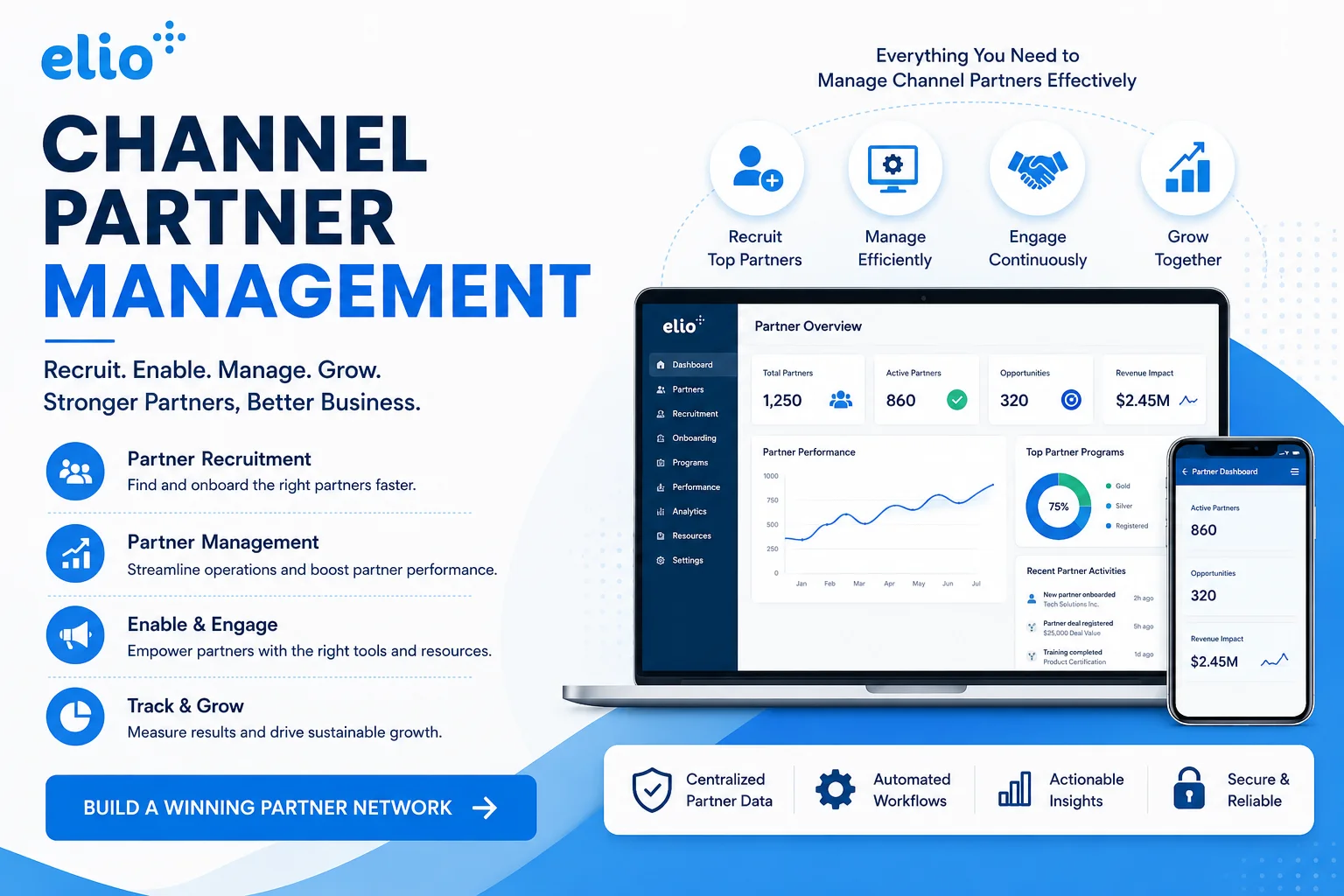
A large partner pipeline doesn't necessarily mean a successful recruitment strategy. If your pipeline is filled with companies that don't match your ideal partner profile, your team can spend hours on research, outreach, and follow-ups without generating meaningful partnerships.
Improving pipeline quality means focusing on relevance, qualification, accurate data, and consistent recruitment processes.
1. Define Your Ideal Partner Profile
Start by clearly defining what a qualified partner looks like.
Consider factors such as:
- Industry expertise
- Geographic coverage
- Target customers
- Sales capabilities
- Technical expertise
- Existing partnerships
- Market presence
- Growth potential
Clear criteria give your team a consistent standard for evaluating potential partners.
2. Use Better Partner Data
The quality of your pipeline depends heavily on the quality of the data used to build it.
A reliable channel partner database can help businesses identify potential partners based on specific criteria instead of relying entirely on manual research.
For technology companies, specialized resources such as a reseller database, MSP database, or VAR database can make prospecting more focused.
Better data can help reduce irrelevant prospects and create a stronger starting point for recruitment.
3. Focus on Fit, Not Volume
Adding hundreds of companies to your pipeline may look impressive, but quantity doesn't guarantee results.
Instead, prioritize companies that have:
- Relevant customers
- Complementary offerings
- Strong market presence
- Appropriate technical capabilities
- A genuine interest in partnership
A smaller pipeline of qualified prospects can be more valuable than a large list of poorly matched companies.
4. Strengthen Your Qualification Process
Don't wait until late in the recruitment process to determine whether a prospect is suitable.
Create qualification criteria that help your team evaluate prospects early.
You can assess:
Market Fit → Customer Fit → Capability → Resources → Partnership Potential
This allows recruiters to remove unsuitable prospects before investing significant time in outreach.
5. Keep Partner Information Updated
Outdated information can quickly reduce pipeline quality.
Companies may change their:
- Services
- Locations
- Leadership
- Contact information
- Target markets
- Technology partnerships
Regularly reviewing partner information helps ensure your pipeline is based on current and useful data.
6. Segment Your Partner Pipeline
Not every prospect should receive the same approach.
Segment your pipeline according to factors such as:
- Geography
- Industry
- Partner type
- Customer segment
- Qualification level
- Recruitment stage
For example, you might separate resellers, MSPs, and VARs into different segments so outreach can be more relevant to each group.
7. Personalize Partner Outreach
A qualified prospect can still become unresponsive if the outreach isn't relevant.
Explain why you're interested in their company and what potential value the partnership could create.
Personalized communication demonstrates that your team has researched the prospect rather than simply adding them to a mass outreach campaign.
8. Automate Repetitive Recruitment Tasks
As your pipeline grows, manually managing every prospect becomes increasingly difficult.
Partner recruitment automation can help streamline:
- Prospect tracking
- Qualification workflows
- Outreach
- Follow-ups
- Pipeline updates
- Recruitment reporting
Automation allows your team to maintain a consistent process while spending more time on high-value partner conversations.
9. Prioritize Active Opportunities
Your pipeline should make it easy to identify which prospects deserve attention now.
Consider creating priority levels such as:
High Priority: Strong fit and actively engaged Medium Priority: Good fit but requires additional qualification Low Priority: Limited engagement or weaker fit
This helps your team allocate time to the opportunities most likely to progress.
10. Measure Pipeline Quality
Pipeline improvement requires more than counting prospects.
Track metrics such as:
- Percentage of qualified prospects
- Response rate
- Meetings booked
- Recruitment conversion rate
- Time to qualification
- Time from prospect to partner
- Partner-generated opportunities
These metrics can reveal whether your recruitment process is producing genuinely valuable prospects.
Final Thoughts
Improving the quality of your channel partner pipeline isn't about adding more companies. It's about creating a pipeline filled with relevant, qualified, and engaged prospects.
By defining an ideal partner profile, using reliable data, improving qualification, segmenting prospects, personalizing outreach, and automating repetitive recruitment tasks, businesses can build a stronger foundation for long-term partner growth.
Whether you're trying to find channel partners in new markets or improve an existing recruitment process, better pipeline quality can help your team focus its resources where they matter most.
A high-quality pipeline doesn't just create more opportunities—it creates better opportunities.