Sign up with Google
 Sign in with Zoho


Every successful company eventually reaches the same challenge.
The partner program starts growing.
More companies show interest.
More conversations begin.
More onboarding tasks appear.
At first, everything feels manageable.
A small channel team can personally handle each partner, answer every question, and track every opportunity.
But growth changes everything.
Suddenly, the same team is managing hundreds of partner interactions, follow-ups, training requests, and performance updates.
Many businesses assume the only solution is hiring more people.
But the fastest-growing partner programs usually take a different approach.
They scale the system before they scale the team.
Growth Problems Usually Start With Manual Processes
A growing partner ecosystem creates more work in every area.
More applications to review.
More partner questions.
More onboarding requirements.
More communication.
The issue isn't always the number of partners.
The issue is that every process depends on manual effort.
When teams spend most of their time updating spreadsheets, searching for information, and repeating the same tasks, they have less time for activities that actually create growth.
Scaling requires removing unnecessary work—not simply adding more people.
Create a Repeatable Partner Process
Successful companies don't manage every partnership differently.
They create structure.
A scalable process clearly defines:
- How partners are evaluated
- What happens after approval
- How onboarding works
- When communication happens
- How success is measured
Consistency makes growth easier.
When everyone follows the same framework, teams can support more partners without losing quality.
Focus on the Right Partners
Not every partner deserves the same amount of time and resources.
One common mistake businesses make is treating every relationship equally.
Some partners actively create opportunities.
Others remain inactive for months.
A smarter approach is understanding where your team's attention creates the greatest return.
Quality partnerships usually produce more value than simply having a larger network.
Use Data to Prioritize Opportunities
As ecosystems expand, it becomes harder to identify which opportunities deserve attention.
Without reliable information, teams often make decisions based on assumptions.
A channel partner database helps companies discover and evaluate potential partners more efficiently before investing time into conversations.
Better data allows smaller teams to focus on relationships with stronger potential.
Automate Repetitive Tasks
Many activities inside partner programs don't require manual effort.
For example:
- Sending reminders
- Organizing partner information
- Managing workflows
- Tracking progress
- Coordinating onboarding steps
These tasks are important, but they shouldn't consume most of your team's time.
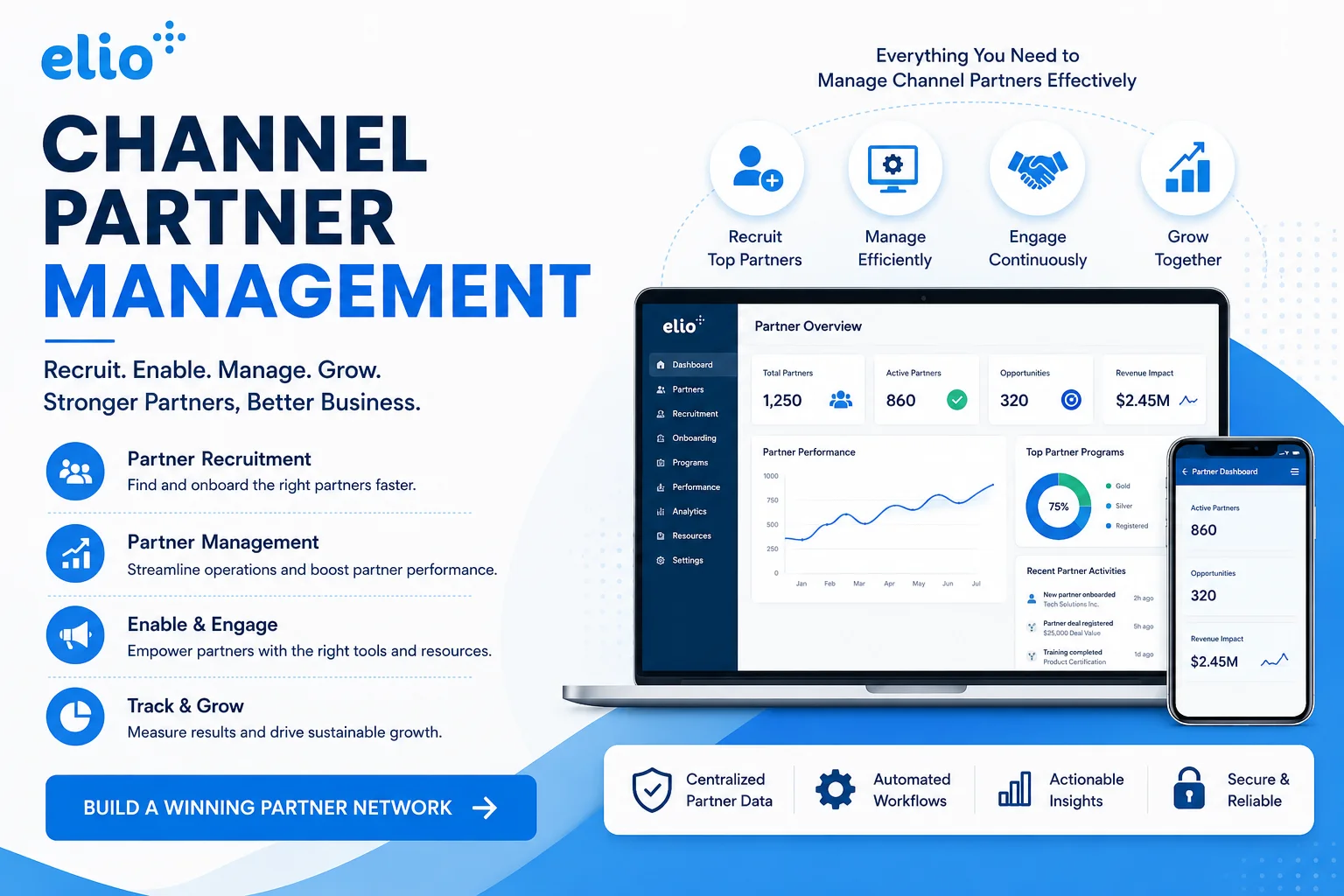
Using partner recruitment automation helps reduce repetitive work so channel managers can focus on strategy, communication, and relationship building.
Automation doesn't replace people.
It allows people to spend their time where they create the most value.
Make Partner Onboarding Easier
Onboarding often becomes one of the biggest barriers to scaling.
When every new partner requires hours of individual support, growth becomes difficult.
A scalable onboarding process provides partners with clear resources from the beginning.
This may include:
- Product information
- Sales materials
- Training resources
- Process guidelines
- Support channels
The easier it is for partners to become productive, the easier it becomes to grow.
Give Partners More Independence
Strong partner programs empower partners instead of making them dependent on constant assistance.
Partners should know where to find information.
They should understand processes.
They should have access to the tools they need.
When partners can move forward independently, internal teams can support a much larger ecosystem.
Improve Communication Without Increasing Workload
Communication is essential.
But managing hundreds of individual conversations manually becomes impossible.
Successful programs create structured communication systems.
They provide updates.
Share resources.
Collect feedback.
Keep partners engaged.
This creates consistency while preventing teams from becoming overwhelmed.
Strengthen Management as You Grow
Scaling isn't only about adding new partners.
It's about maintaining the quality of existing relationships.
Strong channel partner management ensures partners continue receiving support, guidance, and opportunities as the ecosystem expands.
Growth without management usually leads to inactive partnerships.
Sustainable growth requires both.
Measure What Actually Matters
A bigger partner program isn't automatically a better one.
Instead of only tracking the number of partners recruited, successful teams measure:
- Active partners
- Engagement levels
- Generated opportunities
- Revenue contribution
- Partner satisfaction
These metrics reveal whether the ecosystem is actually becoming stronger.
Final Thoughts
Scaling a partner program doesn't always require a larger team.
It requires a better system.
Companies that grow successfully focus on improving processes, using technology effectively, prioritizing the right relationships, and giving partners the resources they need to succeed.
With the right structure, a small team can manage a large and productive partner ecosystem.
Because sustainable growth isn't about doing more manual work.
It's about building a program that can grow without depending on manual effort at every stage.