Sign up with Google
 Sign in with Zoho

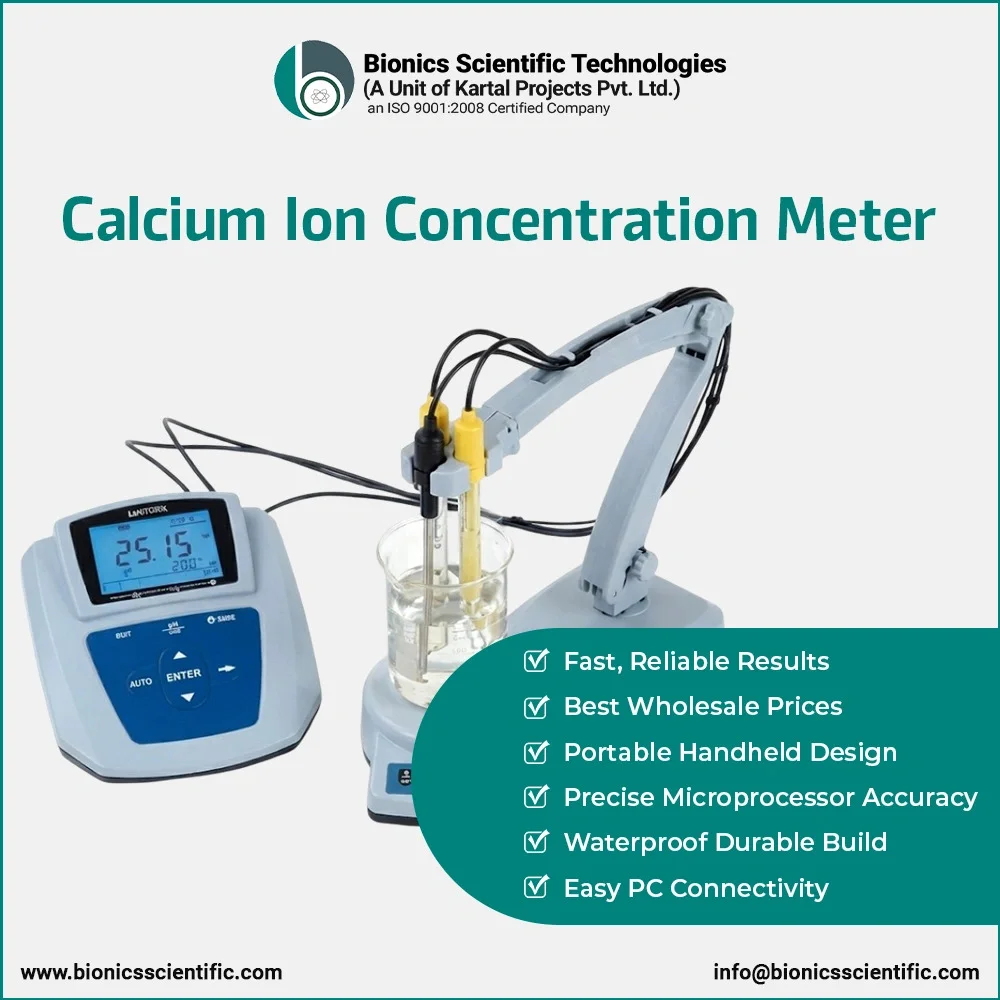
Calcium Ion Concentration Meter: Why Accurate Ion Measurement Is More Critical Than Many Laboratories Know
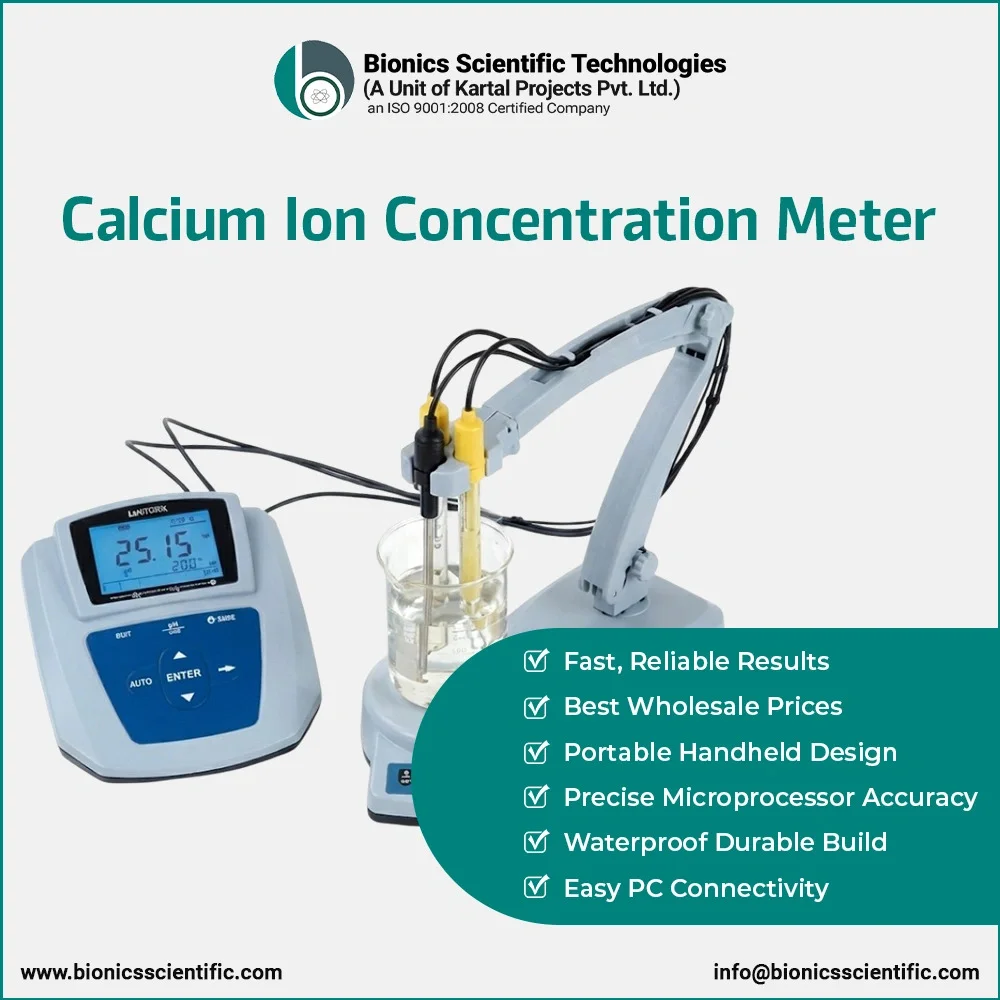
Calcium ions are not idle spectators in a liquid sample; they take part in muscle contraction, blood coagulation, enzymatic reactions and a number of industrial reactions. Getting the measurement wrong even slightly, may make the diagnostic process, water purification or food manufacturing go wrong. Precisely for this reason, a calcium ion concentration meter became an important device to have in any clinic laboratory, water purification facility or quality control section of an industry, but not a specialized device used for research purposes only.
What Does the Calcium Ion Concentration Meter Measure?
Unlike the tests for total calcium content in a sample that measure both bound and unbound forms, a calcium ion concentration meter measures ionized, or biologically active form of the substance. The measurement is extremely important in diagnostics, since the level of ionized calcium is more informative than the content of total calcium, especially in critical care medicine and in neonatology, where total calcium measurements may mislead doctors. The test is carried out with the help of an ion-selective electrode, or ISE, which produces a voltage depending on calcium ion activity in the sample.
Why Ion-Selective Electrode Is Important
Accuracy of any calcium ion meter depends mostly on electrode quality and calibration. Well-designed ISE-based calcium ion meters do not give false results due to presence of other ions in biological or environmental samples, such as sodium, potassium and magnesium ions. It is important to use the meter with an automatic temperature compensation feature, since ion activity varies with temperature changes and the lack of compensation may make the result of measurements drift during the session. Response time is also important in labs with a lot of tests.
Applications in Various Industries
Clinical and hospital laboratories need calcium ion concentration measurements in the blood gas and electrolyte profiles. Such measurement is required in ICU and during surgical procedures because such physiological states require a rapid assessment. Water treatment plants use ionized calcium meters to measure hardness or scaling potential. The concentration of ions plays a key role in pipe corrosion and equipment durability. In food and beverage industries, calcium level measurement is necessary in dairy manufacturing and mineral water production. Aquaculture and reef tank management also requires calcium ion concentration measurements due to the necessity of maintaining proper levels of calcium for corals and shellfishes' well-being.
Features to Consider Prior to Purchase
While choosing between various calcium ion concentration meters, pay attention to how simple the calibration procedure is. It should be taken into account that frequent recalibrations against certified standard solutions are inevitable with this type of sensors and a complicated procedure will waste valuable laboratory time. Moreover, consider the range and resolution of measurements in relation to your specific samples because the sensitivity requirements for clinical tests differ greatly from industrial water analysis.
Selection Criteria
Before making the purchase, ask for calibration certificates, information about electrode life span and interference tests results from the producer. A reliable calcium ion concentration meter is not only the instrument that shows the result quickly but the one you can be sure of.