Sign up with Google
 Sign in with Zoho

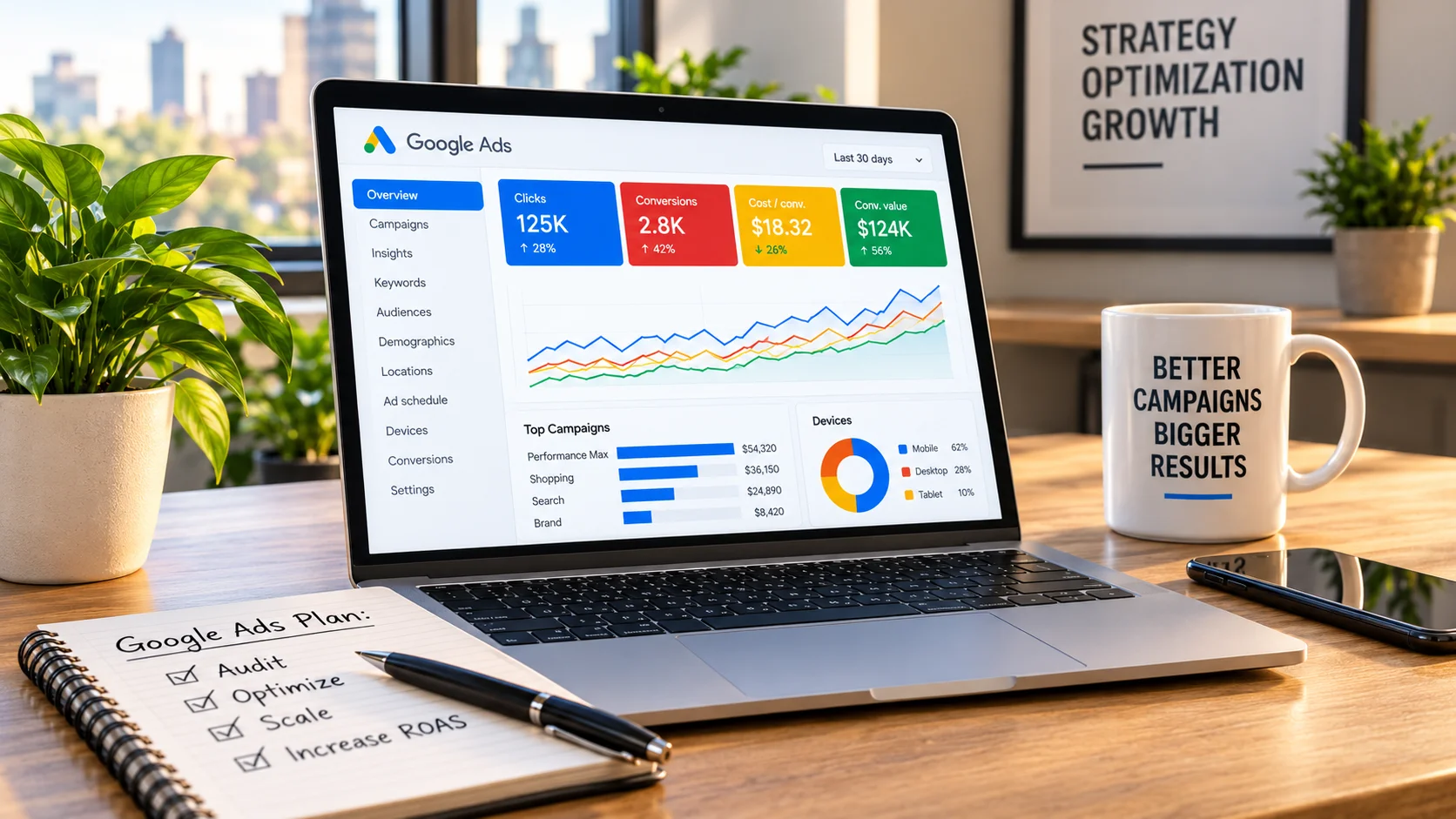
A Houston business can receive 30 Google Ads leads in a month and still struggle to book enough work. The dashboard says conversions are growing, but the owner sees unanswered calls, irrelevant enquiries, and quotes that never turn into sales. That gap is where advertising profitability often disappears.
At Adzlance, we look beyond the number of leads. The question is whether those enquiries came from the right people, for the right services, in the right locations, and whether the business converted them into customers.
Why Google Ads Leads Do Not Always Become Customers
A Google Ads lead is simply a tracked action, such as a call or form submission. A qualified lead is a potential customer whose needs, location, timing, and budget fit the business. A customer is someone who actually buys. These are three different outcomes, and confusing them makes optimization difficult.
For example, a Houston HVAC company might report 20 enquiries. If six are outside its service area, four want services it does not offer, and three calls are missed, only seven remain worth pursuing. The original 20 conversions may look impressive while the sales pipeline tells a different story.
1. Campaigns Attract Searches With the Wrong Intent
Broad search matching can reach relevant customers, but it can also attract information seekers, job applicants, DIY searches, and people looking for unrelated services. Reviewing search terms reveals what the business actually paid to appear for.
For a contractor, “how to fix a roof myself” and “roof repair estimate Houston” indicate very different intentions. Separate high-intent services, review search terms frequently, and add negatives where appropriate. This is a core part of effective Google Ads management services.
2. Houston Location Targeting Is Too Broad
The Houston metro area is large. A company serving selected neighborhoods may not profitably cover every suburb or nearby city. Some campaigns also include people interested in a location rather than physically in the target area, depending on the selected settings.
A practical PPC management Houston strategy starts with actual service boundaries and customer value by area. Review location reports, lead addresses, travel time, and closed sales before expanding coverage. A larger map is not automatically a better campaign.
3. Conversion Tracking Rewards the Wrong Actions
One of the most damaging mistakes is telling Google that every click on a phone number, every short call, and every completed form has equal value. Automated bidding may then pursue whichever action is easiest to generate rather than the enquiries most likely to close.
Verify form-success events, call-duration thresholds, duplicate tags, and primary conversion settings. Where possible, feed qualified leads and closed sales back to Google. The Google Ads offline conversion tracking guide explains why tracking the outcome after an enquiry can improve the signals used for optimization.
4. Landing Pages Do Not Match the Customer Problem
Someone searching for emergency AC repair expects immediate reassurance that the company handles that problem, serves their location, and can be contacted easily. A generic homepage full of unrelated services adds friction.
Build focused landing pages for high-value services. Include clear service descriptions, local coverage, trust signals, a visible phone number, and a simple form. Test the mobile experience because many urgent-service searches happen on phones.
5. Slow Follow-Up Turns Good Leads Into Lost Sales
Google Ads can create demand, but it cannot answer the phone or send a quote. A lead may contact several Houston providers in the same hour. Delayed callbacks, missed calls, and inconsistent follow-up can turn paid opportunities into lost revenue.
Track response time, missed calls, appointments booked, estimates sent, and closed jobs. These operational metrics help separate an advertising problem from a sales-process problem. Both matter when evaluating acquisition costs.
6. Budget Is Allocated by Lead Volume Instead of Value
A campaign generating cheap enquiries can look better than one producing fewer but more profitable customers. Consider a hypothetical comparison: Campaign A spends $1,000 for 20 leads and closes one $500 job. Campaign B spends $1,000 for 10 leads and closes three $2,000 jobs. Cost per lead favors A, but business outcomes favor B.
Allocate budget using qualified lead rate, booked jobs, customer acquisition cost, and margin when those numbers are available. For e-commerce, the same principle applies to purchase values and profit rather than raw conversion counts.
7. Nobody Reviews the Entire Customer Journey
Marketing reports often stop at the form submission. Sales reports begin at the phone call. When the systems are disconnected, nobody can explain why reported conversions rise while revenue stays flat.
A structured Google Ads audit can reveal problems with search intent, location settings, bidding, conversion actions, campaign overlap, and landing-page experience. A practical Google Ads audit checklist is also useful for checking the account before increasing spend.
How Can Houston Businesses Improve Google Ads Lead Quality?
Start with a simple sequence: confirm that tracking is accurate, inspect search terms and location performance, define a qualified lead, review the landing page, and measure what happens after each enquiry. Then shift budget toward services and areas that produce real customers.
Do not change every setting at once. Fix the clearest measurement errors first, then test search terms, messages, and landing pages with enough data to evaluate the result.
Frequently Asked Questions
Why am I getting Google Ads leads but no sales? Common causes include irrelevant searches, poor geographic fit, inaccurate conversion tracking, weak landing pages, missed calls, and slow follow-up.
What is a good Google Ads cost per lead in Houston? There is no universal figure. A useful target depends on service value, lead qualification rate, close rate, gross margin, and customer lifetime value.
Should I increase my Google Ads budget if leads are not converting? Usually not before investigating lead quality, tracking, and follow-up. Increasing spend can amplify the same problems.
Can a Google Ads agency improve lead quality? An experienced agency can refine targeting, keywords, messaging, measurement, and budget allocation, but the business must also handle enquiries effectively.
The Bottom Line
Houston businesses do not need to celebrate every conversion in the dashboard. They need to understand which enquiries become appointments, sales, and profitable customers. At Adzlance, that is the standard we use to evaluate paid search: not just more leads, but more valuable business from the advertising budget.