Sign up with Google
 Sign in with Zoho

Artificial intelligence is moving beyond chat windows and simple prompts. Businesses now want AI systems that can help complete real work, improve internal processes, and support decisions. But making that happen takes more than buying an AI tool. It takes people who know how to use it, test it, secure it, and connect it with the way a business operates.
That is the challenge Anthropic is addressing with its Claude Frontier Academy.
Announced on October 2, 2026, the initiative comes with a $100 million commitment and a target of training 10,000 Frontier Deployed Engineers by the end of 2027. Rather than relying only on online lessons or short certification courses, the program combines hands-on instruction with a longer workplace project.
For business leaders, training professionals, and technology teams, this announcement raises an important question: what does effective AI training look like when the goal is to change how work gets done?
What Is the Claude Frontier Academy?
Claude Frontier Academy is Anthropic's initiative to develop engineers who can help organizations put Claude-based AI systems into practical use.
The first program, called the Frontier Deployed Engineer Residency, is designed for experienced software engineers who already have strong technical skills and some experience building with large language models. Organizations nominate suitable engineers through their Anthropic account or partner contacts.
The program is not a general course that anyone can purchase and join. It is aimed at selected professionals who have a real business problem to work on when they return to their organizations.
Anthropic has named companies including Accenture, Bain, Capgemini, Commonwealth Bank of Australia, Deloitte, McKinsey, Morgan Stanley, and Novo Nordisk among the organizations involved in the first cohorts.
This mix is significant. Consulting firms need specialists who can help clients adopt AI, while banks and pharmaceutical companies need people who understand how to apply the technology within their own operations.
The common requirement is practical skill: knowing how to move from an interesting AI experiment to a system that works reliably in a real business.
How Does the Training Program Work?
The residency follows a learning model that resembles professional training in fields where people must demonstrate their abilities before working independently.
1. Start with an intensive practical program
Participants begin with a multi-day, in-person program led by Anthropic engineers and licensed instructors. They work through a simulated enterprise deployment, considering the business problem, system design, security, and handover.
The stage ends with a graded practical exercise based on a new scenario. Participants who pass receive the Claude Resident Engineer badge.
This approach tests more than whether someone remembers information from a lesson. It asks them to use their knowledge to solve a problem.
2. Apply the learning to a real workplace project
Successful participants then move into a 12-week residency. They lead a real Claude-related project at their own organization, with support from Anthropic engineers and other participants.
At the end of the residency, they complete another practical assessment. Those who pass earn the Claude Frontier Deployed Engineer badge.
The important difference is that participants must demonstrate their ability through work, rather than relying only on attendance or a final multiple-choice test.
The published program information does not yet provide a complete assessment rubric, so the precise grading standards remain something to watch as the first cohort progresses.
Why Is Anthropic Investing So Much in AI Skills?
AI tools can be impressive in a demonstration and still be difficult to use in daily business operations.
A company might build a promising chatbot, for example, but encounter problems when it needs to connect that tool to internal systems, handle sensitive information, or follow an existing approval process. Someone must understand both the technology and the business workflow.
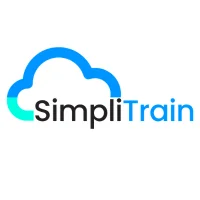
The scale of the skills challenge is reflected in the World Economic Forum's Future of Jobs Report 2025. It found that 63% of employers considered skills gaps a major barrier to business transformation.
That finding helps explain why AI education is becoming a business priority. Organizations need people who can identify suitable use cases, test outputs, understand risks, and measure whether a solution delivers useful results.
Anthropic's investment also suggests that AI companies increasingly see professional skills development as part of wider enterprise adoption. Selling access to a model is one step; helping organizations use it effectively is another.
The Bigger Lesson: Training Must Lead to Action
The strongest idea behind this initiative is the connection between learning and real work.
Consider a company that wants to automate part of its customer support process. Employees might complete an AI course and learn how to write prompts. But can they evaluate incorrect answers, protect customer information, connect the tool to approved knowledge sources, and decide when a human must take over?
Those are different levels of capability.
A well-designed learning program should move participants through three stages:
- Understand: Learn the technology, its limitations, and the relevant safety rules.
- Practice: Work through realistic business scenarios and receive feedback.
- Demonstrate: Complete a meaningful task and show that the result meets agreed standards.
This approach is useful beyond software engineering. Sales teams, HR professionals, operations staff, and customer support employees also need opportunities to practise AI skills in situations relevant to their jobs.
For broader employee development, instructor-led training (ILT) can help teams discuss unfamiliar problems, work through scenarios, and receive immediate feedback. The format works best when sessions include practical activities rather than long presentations.
What Can Learning and Development Teams Learn from This?
Not every organization can send employees to a specialized residency. The good news is that the underlying method can be adapted to internal training.
Build training around a real business problem
Start by identifying a process that employees want to improve. It might involve preparing reports, reviewing documents, answering routine questions, or organizing information.
Define the problem before choosing the course. This makes it easier to decide which skills employees actually need.
Test ability, not just course completion
A completion certificate can show that someone attended training. It does not automatically show that the person can apply the skill.
Add practical exercises, scenario-based assessments, and a final task that resembles the work employees will perform.
Give learners time and support
Workplace projects need more than a deadline. Participants need a manager or project sponsor, access to approved tools, feedback from experienced colleagues, and enough protected time to complete the work.
Without those conditions, practical training can quickly turn into another task added to an already busy schedule.
Measure results that matter
Choose a small number of useful measures before training begins. Depending on the project, these might include time saved, error rates, response quality, user satisfaction, or the number of manual steps removed.
Avoid assuming that a successful training session automatically produces business value. Measure the outcome.
A learning management system (LMS) can help organize learning materials, track participation, and record assessments. A training management system (TMS) can support the wider administration of scheduled training, instructors, resources, and delivery. These systems can support the learning process, but they do not replace hands-on practice or thoughtful assessment.
A Fresh Development to Watch in 2026
Anthropic's announcement is part of a broader shift toward AI education that focuses on how people use the technology rather than simply how they access it.
In August 2026, Anthropic also published its approach to teaching and learning AI through Claude Academy, emphasizing instruction designed to help people use AI safely and effectively. The newer Frontier Academy takes a more specialized approach by focusing on engineers responsible for enterprise deployment. Together, the initiatives point to a growing distinction between general AI literacy and the advanced skills needed to put AI systems into operation.
The distinction matters to employers. Most staff members do not need to become AI engineers, but they do need to understand appropriate use, check outputs, and recognize when human judgment is necessary. Specialized technical teams, meanwhile, need deeper training in deployment, evaluation, security, and integration.
The Human Side of Learning Still Matters
AI can provide explanations, generate examples, and help learners practise. But effective learning still depends on feedback, judgment, and the ability to apply knowledge in unfamiliar situations.
Albert Einstein's words offer a useful reminder:
“Education is not the learning of facts, but the training of minds to think.”
The point is not to collect as many AI certificates as possible. It is to build the confidence and judgment needed to solve real problems responsibly.
Frequently Asked Questions
What is the Claude Frontier Academy?
It is Anthropic's initiative to train engineers to deploy Claude-based AI systems in real business settings. Its first program combines in-person practical training with a 12-week workplace residency.
How much is Anthropic investing?
Anthropic announced a $100 million commitment, with a target of training 10,000 Frontier Deployed Engineers by the end of 2027.
Can anyone enroll in the program?
No. Participation is by nomination through eligible organizations' Anthropic account teams or partner contacts. Anthropic has not publicly disclosed a general enrollment price.
What makes the residency different from a typical online course?
Participants must complete practical assessments and lead a real workplace project. The program focuses on demonstrated deployment skills rather than course completion alone.
What can smaller businesses learn from this initiative?
Smaller businesses can use the same principle without copying the entire program: choose a real problem, provide guided practice, assign a project sponsor, assess the result, and measure the outcome.
Does AI training guarantee better business results?
No. Results depend on the quality of the training, the suitability of the use case, access to the right tools, employee support, and ongoing evaluation. Training should be linked to measurable goals.
Final Thoughts
The Claude Frontier Academy is a significant development because it treats AI implementation as a skills challenge, not just a technology purchase.
Its longer residency, practical assessments, and workplace projects offer a useful lesson for organizations planning their own AI training. Start with the work that needs to improve, give people opportunities to practise, and evaluate what they can actually do.
The future of workplace learning will not be defined by how many employees complete a course. It will be shaped by how confidently and responsibly they apply what they learn.