Sign up with Google
 Sign in with Zoho


Picture this. You're standing on the first tee with three golfers you barely know, your palms are a little sweaty, and someone in the group just yells "fore" and starts laughing about a "mulligan." You smile and nod, but inside you're thinking, what on earth are they talking about?
Golf has its own language, and honestly, it can feel like showing up to a party where everyone speaks in code. The good news is that the vocabulary isn't nearly as complicated as it sounds once someone breaks it down for you. Most of these words show up in nearly every round, whether you're playing with your buddies on a Saturday morning or joining a work outing you can't get out of.
This guide walks through 15 golf words you're almost guaranteed to hear on the course, explained in plain English with examples you can actually picture. By the end, you won't just understand the lingo, you'll be dropping it into conversation like you've been playing for years.
Why Knowing Golf Lingo Matters (Before You Even Tee Off)?
Golf terms aren't just fun slang, they're the shorthand players use to track scores, warn each other of danger, and describe the course itself. If you don't know the basics, you'll spend half your round nodding along and guessing. Learning these words upfront saves you the awkwardness.
15 Golf Words You'll Hear During a Typical Round
These are the terms that come up again and again, whether you're playing a quiet nine holes alone or a loud scramble with coworkers. Get comfortable with these, and the rest of golf's vocabulary will start clicking into place naturally.
1. Par
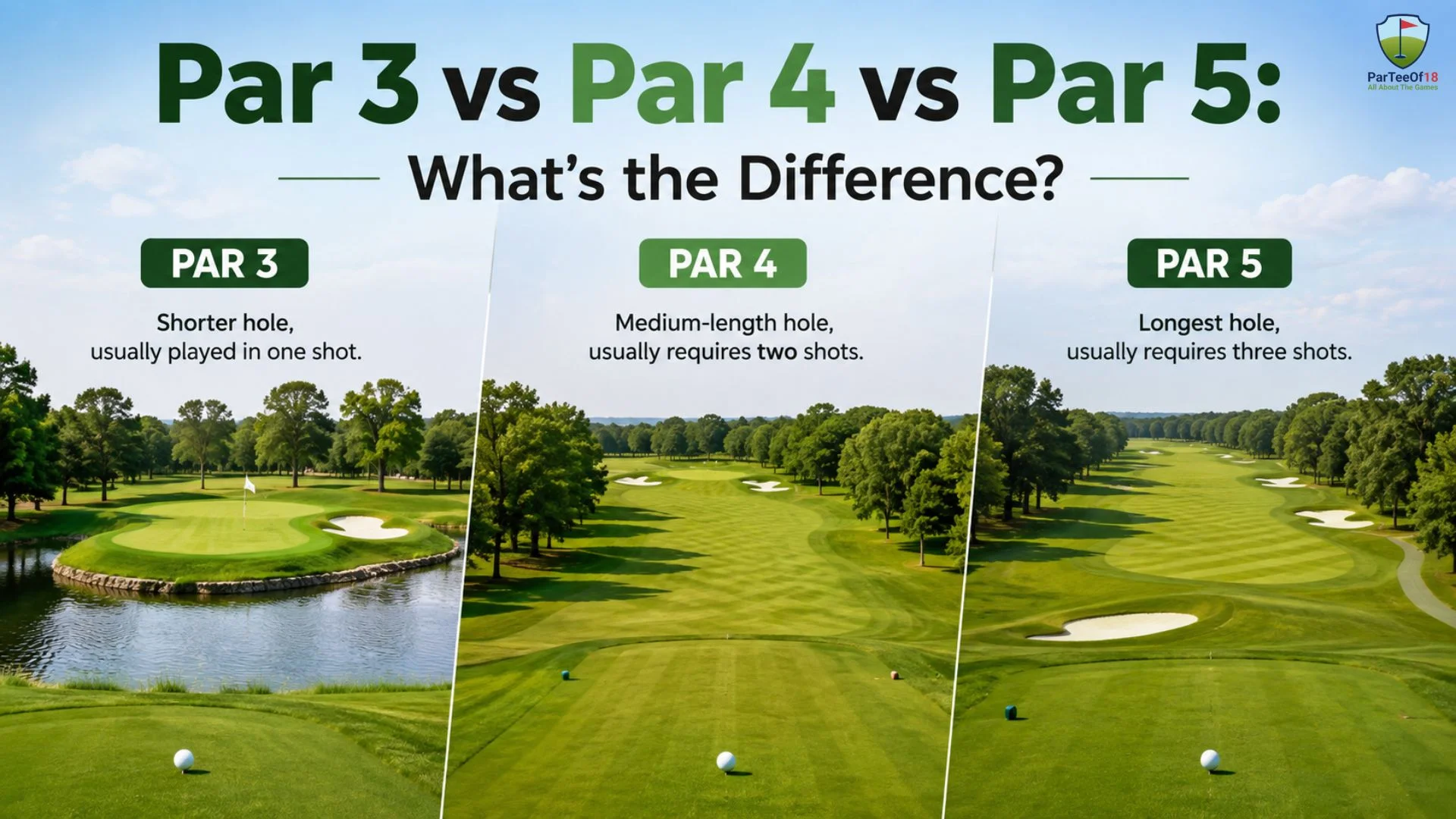
Par is the number of strokes a skilled golfer is expected to need to finish a hole. Most holes are a par 3, 4, or 5. If a hole is a par 4 and you finish it in four strokes, you've shot par, which is a solid, respectable result for most players.
2. Birdie
A birdie means you finished a hole one stroke under par. So on that same par 4, sinking your putt in three strokes earns you a birdie. It's a moment worth celebrating, and you'll often hear a little cheer or a high five when someone lands one.
3. Bogey
A bogey is the opposite of a birdie, meaning one stroke over par. It's incredibly common, even for good golfers, so don't feel discouraged if you hear yourself say "I bogeyed that hole." Most weekend players see plenty of bogeys, and that's completely normal.
4. Eagle
An eagle is two strokes under par, which is rarer and usually reserved for longer par 5 holes where a great drive sets up a short approach shot. If you ever card an eagle, expect your group to remember it and bring it up for weeks afterward.
5. Mulligan
A mulligan is a casual do over, typically used after a bad first tee shot. It's not an official rule in tournament golf, but among friends it's common practice. Someone might say, "That one doesn't count, take a mulligan," letting you retry the shot without penalty.
6. Fore
Fore is the warning shout golfers use when a ball is heading toward someone who might get hit. If you hear it, duck or cover your head immediately and ask questions later. It's one of the most important words in golf, purely for safety reasons.
7. Fairway
The fairway is the neatly mowed strip of grass between the tee box and the green. It's where you want your shots to land, since it gives you a clean, flat lie for your next swing. Landing in the fairway is often called "hitting it in play."
8. Rough
The rough is the longer, thicker grass bordering the fairway. Balls that stray off course usually end up here, making your next shot harder because the grass grabs the clubface. Golfers often groan when they hear "you're in the rough" after a slightly off shot.
9. Bunker
A bunker, also called a sand trap, is a hollow filled with sand that acts as a hazard around fairways and greens. Landing in a bunker means you'll need a special technique to blast the ball out. It's frustrating for beginners but becomes manageable with practice.
10. Green
The green is the smooth, closely trimmed area surrounding the hole where you putt. It's the final stretch of every hole, and reading its slope correctly can make or break your score. Golfers often say "he's on the green in two," meaning they reached it in two shots.
11. Tee Box
The tee box is the designated starting area for each hole, where you place your ball on a tee before your first shot. Different colored markers indicate different difficulty levels, so beginners typically play from the forward tees while advanced players choose the back tees.
12. Handicap
A handicap is a number representing a golfer's skill level, used to level the playing field between players of different abilities. A lower handicap means a better golfer. Two friends with different handicaps can still compete fairly by adjusting their scores based on this number.
13. Slice
A slice happens when the ball curves sharply to the right for a right handed golfer, often ending up far off target. It's one of the most common mistakes beginners make, usually caused by an open clubface at impact. Coaches spend a lot of time fixing slices.
14. Hook
A hook is essentially the opposite of a slice, where the ball curves hard to the left for a right handed player. It's less common among beginners but still shows up plenty, especially for golfers who tend to overcorrect after struggling with a slice for too long.
15. Gimme
A gimme is a short putt so close to the hole that your playing partners agree you don't need to actually hit it, it just counts as made. It's an informal courtesy used in casual rounds, though it's never allowed in official tournament play or strict rule formats.
How to Practice Using These Terms Naturally?
The fastest way to learn golf lingo is simply playing rounds and listening. Watch a few televised tournaments too, since commentators use these words constantly in context. Within a few outings, terms like birdie, bogey, and fairway will feel as natural as everyday conversation.
Final Thoughts
Golf can feel intimidating when you're new, especially with a whole vocabulary that seems designed to confuse outsiders. But once you understand these 15 words, you'll realize the language isn't complicated at all, it's just shorthand built up over generations of players trying to describe the same recurring moments.
The next time someone yells "fore" or celebrates a birdie, you won't be standing there guessing. You'll know exactly what's happening, and honestly, that confidence alone can make your round more enjoyable. Golf is meant to be fun, and speaking the language is just one more way to feel like you truly belong out there.
So grab your clubs, head to the course, and put these words to use. The best way to learn is still by playing, one hole at a time.
Frequently Asked Questions
1. What is the most commonly used golf term?
Par is arguably the most frequently used term, since every score on every hole is measured against it. You'll hear golfers reference par constantly, whether they're bragging about beating it or laughing about missing it by a few strokes.
2. Is a mulligan an official golf rule?
No, a mulligan is not recognized in official rules or tournament play. It's a casual, friendly practice used mostly in relaxed rounds among friends, allowing a player to retake a poor shot without any penalty added to their scorecard.
3. Why do golfers shout fore?
Golfers shout fore to warn nearby players that a ball is heading in their direction and could potentially hit them. It's a safety measure that's been part of golf etiquette for generations, and every player is expected to react to it immediately.
4. What's the difference between a bunker and the rough?
A bunker is a sand filled hazard, while the rough is simply longer, thicker grass bordering the fairway. Both make your next shot more difficult, but they require completely different techniques to escape and get your ball back into play.
5. Do beginners need to memorize all golf terminology before playing?
Not at all. Most golfers pick up terminology naturally over time simply by playing rounds and listening to others. Learning the core words covered in this guide is more than enough to feel comfortable and confident during your early rounds.