Sign up with Google
 Sign in with Zoho


You walk off the 18th green after a 94, convinced your putting cost you the round. You spend the next two weekends rolling putts on the practice green. Your score barely moves. Then you finally look at your numbers and realize you only hit four greens all day. The putter was never the problem.
That story plays out at golf courses everywhere. Most of us rely on feel, and feel can be wrong. Tracking a handful of the right numbers shows you where the strokes really go. Let's walk through the stats that matter, what they mean, and how to use them without turning your round into a spreadsheet.
Why Tracking Golf Stats Changes the Way You Play
Golf is a game of small decisions repeated about a hundred times. Without data, you remember the dramatic moments, like the water ball on 7 or the missed three-footer on 15, and forget the quiet mistakes that add up. Numbers cut through that bias. They tell you the truth about your game, even when it stings a little, and they give your practice time a clear direction.
Stop Guessing, Start Knowing
Memory exaggerates the bad shots and the lucky ones. A golfer who thinks he slices every drive might actually hit most fairways and simply remember the three that went out of bounds. Stats replace opinion with evidence, so you fix real problems instead of imagined ones.
Building a Baseline
You cannot improve what you have not measured. Track five or six rounds before changing anything. That baseline becomes your starting point, and every lesson, new club, or practice routine can be judged against it. Progress feels much better when you can actually see it.
Scoring Statistics That Show the Big Picture
Before you dig into the details, start with the numbers that summarize your whole game. Scoring stats are simple, and they give context to everything else you track. They tell you how you are trending and where the damage happens on the card. Think of them as the headline, with the other stats serving as the story underneath.
Scoring Average
Your scoring average is your total strokes divided by rounds played. Track it over your last ten rounds rather than your best or worst day. A golfer who shoots 92 on average but posts the odd 85 has a very different practice plan than someone who is steady at 90.
Score by Par Type
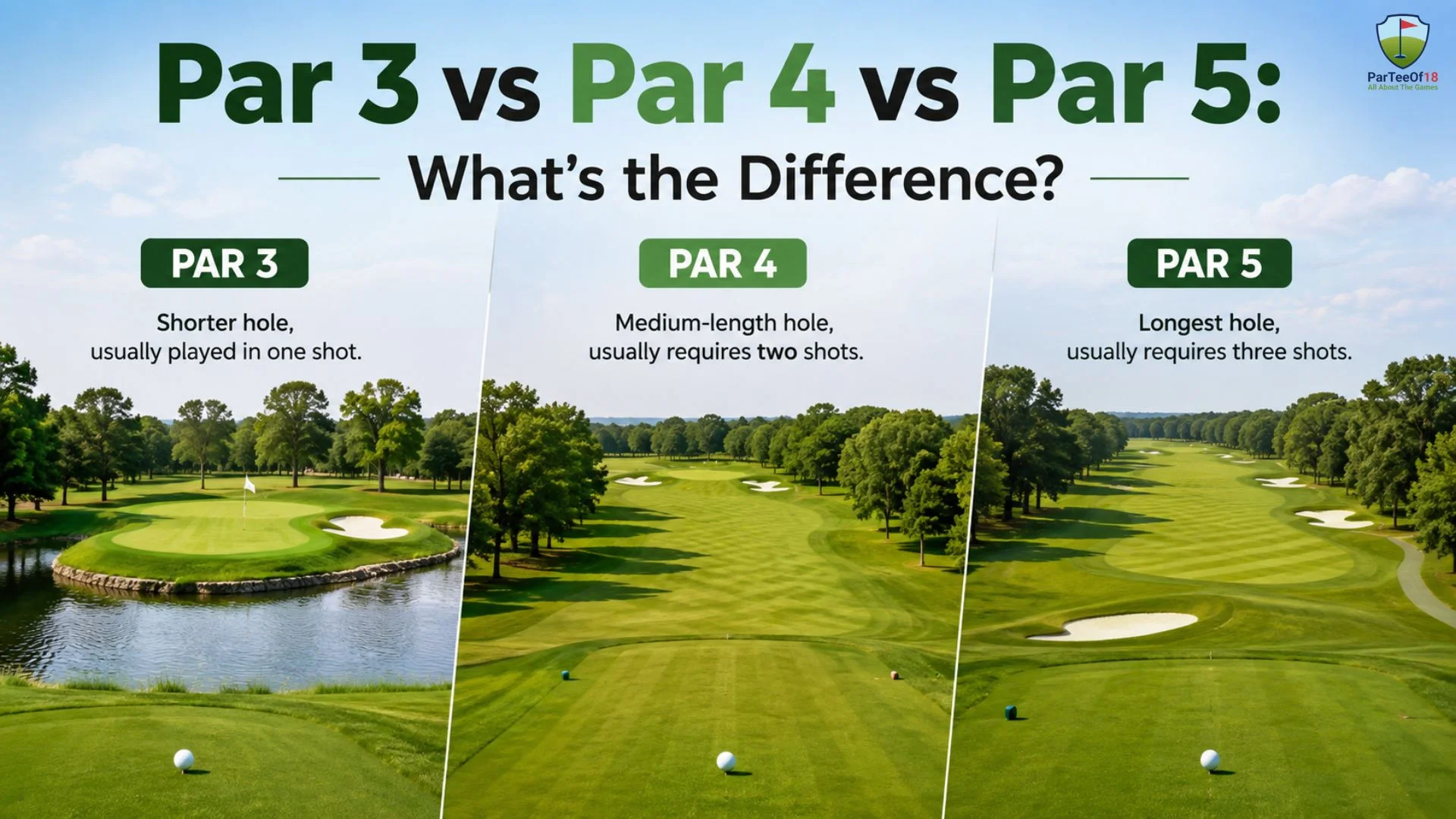
Break your results down by par 3s, par 4s, and par 5s. Many amateurs discover they play par 5s badly because they try heroic second shots. If your par 5 average is worse than your par 4 average by a wide margin, that is a strategy problem, not a swing problem.
Bogey Avoidance and Birdie Conversions
For most golfers, the goal is not more birdies. It is fewer doubles and more routine bogeys. Count how many holes you make bogey or better. A player who turns three doubles into three bogeys saves three shots without hitting a single better shot.
Driving Statistics That Set Up Every Hole
A good drive does not win a hole, but a bad one can ruin it quickly. Driving stats show whether your tee shots are helping or hurting. The key is looking beyond how far you hit it. A 280 yard drive in the trees is worth less than a 230 yard drive in the short grass, and your numbers will tell you which kind of player you are.
Fairways Hit
Fairways hit is the percentage of par 4 and par 5 tee shots that finish in the fairway. Tour players land roughly six in ten. Most amateurs land closer to four or five in ten. If you sit well below that, accuracy off the tee deserves attention before distance does.
Driving Distance
Track your average carry and total distance on measured holes, not your one big bomb downwind. Using a launch monitor or a GPS app gives you honest numbers. Knowing your real average helps you pick the right club on tight holes.
Miss Direction
Where your misses go matters more than how often you miss. If nearly every bad tee shot goes right, you can aim left and play away from trouble. A simple tally of left, right, short, and long takes seconds and often reveals a pattern you never noticed.
Approach Statistics That Decide How Many Pars You Make
Your approach shots are where scores are really built. Hit the green and you give yourself a chance at par or better. Miss it and you are suddenly playing defense. For most mid handicap golfers, this is the area with the biggest room for improvement, and the stats here are surprisingly easy to collect during a normal round.
Greens in Regulation
Greens in regulation, or GIR, means reaching the green in two shots on a par 4, or one on a par 3, or three on a par 5. Tour pros hit around 65 percent. A typical 90s shooter might hit three or four per round, and that is normal.
Proximity to the Hole
Ending up 12 feet away is far better than 35 feet away, even when both shots are on the green. Pace off your approach distances now and then. Better proximity leads directly to shorter putts and fewer three-putts.
Performance by Distance Range
Group your approaches into bands, such as 100 to 125 yards, 125 to 150 yards, and so on. You may find you are deadly from 100 yards but struggle with a six iron. That tells you exactly which club to practice next.
Short Game Statistics That Save Your Round
Nobody hits every green, so the short game decides how much a miss costs you. Great scramblers turn bad holes into pars and keep their rounds alive. Poor ones turn a missed green into a double bogey. Tracking these numbers is easy, especially with a simple golf stat tracker on your phone or scorecard, and the results often shock people who assumed their chipping was fine.
Scrambling Percentage
Scrambling is how often you make par or better after missing the green. Tour players do it about 58 percent of the time. For many amateurs, 20 to 30 percent is realistic. If yours is lower, a few hours of chipping practice can save more shots than a new driver.
Sand Save Percentage
A sand save means getting up and down from a greenside bunker. Many weekend players dread bunkers, yet they rarely track them. Keep a simple count for a month. If you save sand shots less than one time in five, a basic lesson on bunker technique will pay off quickly.
Up and Down Inside 50 Yards
Wedge play from short range is where hidden strokes live. Record how often you get the ball on the green and then hole out in two shots from inside 50 yards. This number points directly to whether you need touch around the green or better distance control.
Putting Statistics That Tell the Honest Story
Putting is where golfers love to blame bad luck. But raw numbers can be misleading if you do not read them carefully. Twenty-nine putts could be great or terrible depending on how many greens you hit. The trick is to track putting in a way that gives you context, so you know whether to practice long lag putts or short ones.
Putts per Round and Putts per GIR
Total putts per round is easy to count, but putts per GIR is more useful. It only counts holes where you reached the green in regulation, so it measures the putter and not your short game. Under two is excellent.
Three-Putt Avoidance
Count your three-putts every round. Each one is a free stroke gone. If you have more than two per round, the fix is almost always lag putting, not stroke mechanics. Spend practice time on speed from 30 and 40 feet.
Make Percentage Inside Six Feet
Short putts are where confidence lives or dies. Record how many putts inside six feet you hole. Pros make nearly 90 percent from four feet. If you are missing three or four of these every round, a simple daily drill with a gate or coin will help.
Strokes Gained: The Stat That Pros Swear By
Strokes gained compares every shot you hit to a benchmark, usually the average of a certain level of player. It breaks your round into driving, approach, short game, and putting. It sounds technical, but the idea is simple: where do you lose or gain strokes compared with a standard? Once you understand it, you will never look at your scorecard the same way.
What Strokes Gained Actually Measures
Say a scratch player takes about 2.8 strokes to hole out from the middle of the fairway at 150 yards. If you do it in three, you lost 0.2 strokes on that shot. Add those up over the round, category by category, and you see the real leaks.
Using It as an Amateur
You do not need tour level data. A good golf stat tracker, free or paid, can estimate strokes gained from the shots you enter on your phone. Even a rough version can reveal that your approach play, and not your putting, is your biggest weakness.
Penalty Strokes and Big Mistakes
Not every lost shot comes from a poor swing. Some come from poor decisions. Penalty strokes and blow up holes quietly wreck scorecards, and they are often the easiest things to fix. You do not need to hit it better. You just need to stop making the same costly choice, which is good news for anyone short on practice time.
Penalties per Round
Count every out of bounds, lost ball, and water hazard. Two penalties per round is two strokes you could have saved by playing safer. Many golfers cut penalties in half just by taking a three wood instead of a driver on risky holes.
Doubles or Worse
Track how many holes you score a double bogey or higher. A single triple bogey can wipe out three good holes. If you notice these usually come after one bad decision, such as trying a miracle shot from the trees, you know what to change.
How to Track Your Golf Stats Without Ruining the Fun
Let's be honest. Nobody wants to spend a Saturday morning filling out paperwork. The best system is the one you will actually use. Start small, with three or four numbers, and build from there as the habit sticks. Here are a few easy ways to do it.
Use Your Scorecard
Draw small columns next to your scorecard for fairway hit, green hit, and putts. It takes seconds per hole and costs nothing. Many golfers who start this way never need anything fancier, because the basic numbers already point to their biggest weakness.
Try a Golf App
Think of a golf stat tracker as a notebook that does the math for you. Apps like ParTeeOf18 ,Arccos, 18Birdies, and Golfshot can log shots through GPS or by tapping your phone. They also calculate things like strokes gained and trends over time. Pick one, use it for a month, and see whether the extra detail helps you.
Review Your Numbers Monthly
Collecting stats means little without looking at them. Set aside ten minutes at the end of each month. Compare your averages, spot one weakness, and build your practice plan around it. That single habit turns tracking into real improvement.
Conclusion
Tracking golf statistics is not about becoming a number cruncher. It is about playing smarter and practicing with purpose. Start with scoring average, fairways, greens in regulation, scrambling, putts, and penalties. Add strokes gained when you feel ready. Within a few rounds, you will know exactly where your shots go, and you will stop wasting range sessions on the wrong problem.
So next time you head out, grab a pencil, jot down a few simple numbers, and let the data guide you. Your future scorecard will thank you.
Frequently Asked Questions
What is the most important golf statistic to track?
For most golfers, greens in regulation and putts per round give the clearest picture, but scoring average ties everything together. If you can only track one thing, start with GIR. It shows how well your tee shots and approaches set up scoring chances.
How many golf stats should a beginner track?
Beginners should keep it simple. Track total score, fairways hit, greens in regulation, putts, and penalty strokes. Five numbers are plenty. Once those feel like a habit, you can add scrambling and sand saves without feeling overwhelmed.
What is a good greens in regulation percentage for an amateur?
It depends on handicap. A 20 handicap might hit three or four greens per round, around 20 percent. A single digit handicap often hits eight or nine, closer to 45 or 50 percent. Compare yourself to your own past rounds first.
What does strokes gained mean in golf?
Strokes gained measures how many shots you gain or lose on each swing compared with a benchmark player. It is split into driving, approach, short game, and putting, so you can see which area costs you the most strokes.
What is the easiest way to track golf stats?
The simplest method is adding a few columns to your scorecard for fairways, greens, and putts. If you prefer technology, golf apps with GPS can record shots automatically and give you trends over time with very little effort.
How often should I review my golf stats?
Review them after every round for a quick look, and sit down for a deeper review once a month. Monthly reviews show real trends and prevent you from overreacting to one good or bad day on the course.












.webp)