Sign up with Google
 Sign in with Zoho

Introduction
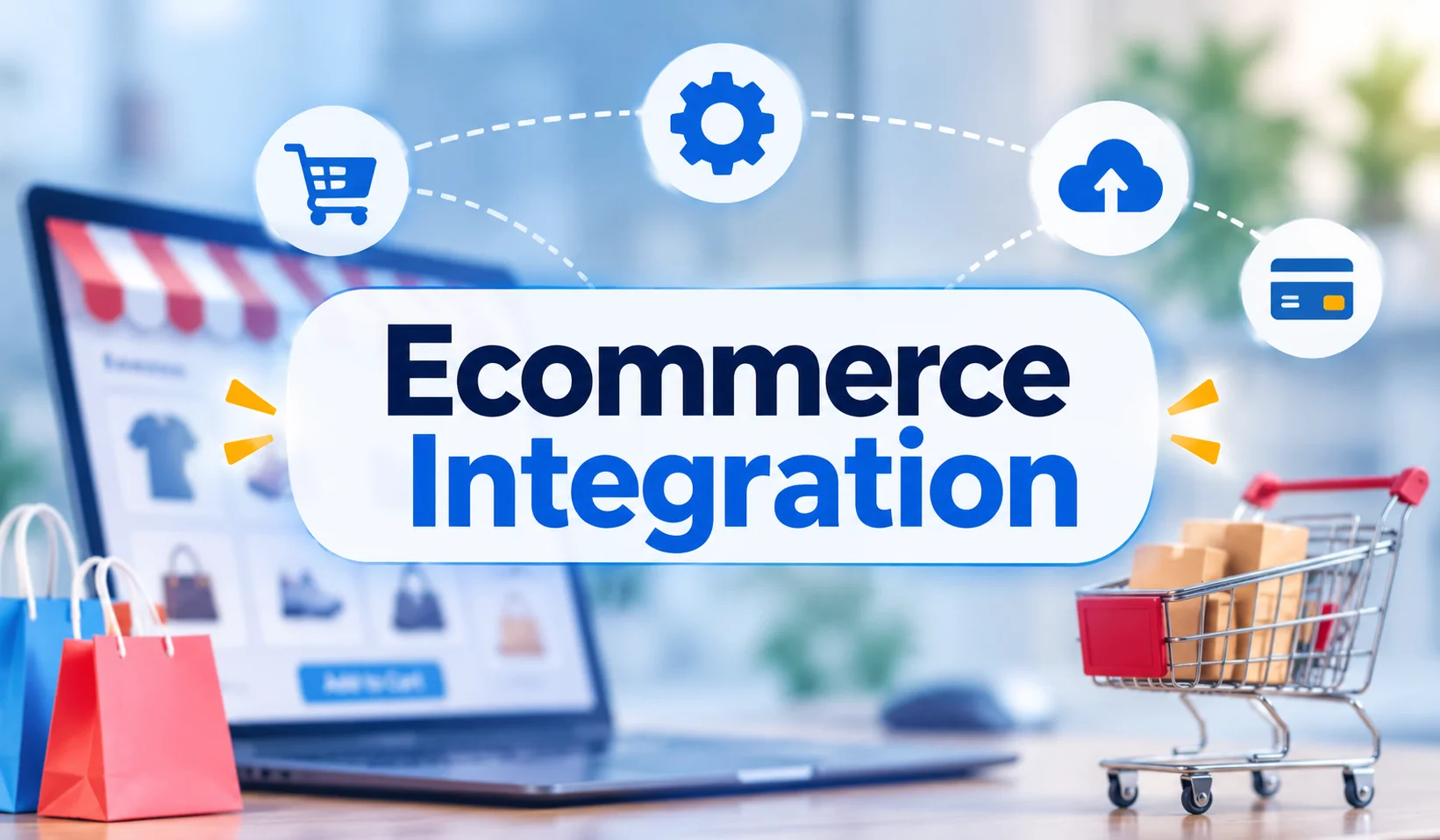
Ecommerce has transformed how businesses sell products, manage orders, and interact with customers. However, running an online store involves more than simply listing products and accepting payments. Businesses must manage inventory, shipping, customer information, accounting, marketing, and several other operations simultaneously.
Handling these activities through separate systems can create data inconsistencies, delays, and unnecessary manual work. This is where ecommerce integration becomes important. It connects an online store with different business applications, allowing information to move between systems automatically.
Whether a business operates a small online shop or a large ecommerce platform, integration can improve operational efficiency, reduce errors, and create a smoother shopping experience. Understanding its types, benefits, and implementation strategies can help organizations build a more connected ecommerce ecosystem.
What Is Ecommerce Integration?
Ecommerce integration refers to connecting an online store with external software, platforms, and business applications to exchange information and automate operations.
It allows different systems to communicate without requiring employees to manually transfer data between them. For example, when a customer purchases a product, the ecommerce platform can automatically update inventory, generate an order record, notify the warehouse, and share shipping information.
Common systems integrated with ecommerce platforms include:
- Customer Relationship Management (CRM) software
- Enterprise Resource Planning (ERP) systems
- Inventory management software
- Payment gateways
- Shipping and logistics platforms
- Marketing automation tools
- Accounting and billing applications
By connecting these technologies, businesses can manage their ecommerce operations through a more centralized and efficient workflow.
Types of Ecommerce Integration
Different integration types support different business functions. The right combination depends on an organization's operational requirements and technology infrastructure.
1. CRM Integration
CRM integration connects an ecommerce platform with customer relationship management software. It helps businesses organize customer profiles, purchase histories, communication records, and preferences.
With this integration, marketing and sales teams can understand customer behavior, personalize promotional campaigns, and manage customer relationships more effectively.
2. ERP Integration
Enterprise Resource Planning integration connects ecommerce platforms with systems responsible for managing business resources.
It synchronizes information related to inventory, procurement, finance, orders, and other operational activities. This helps businesses maintain consistent information across departments and make better operational decisions.
3. Inventory Management Integration
Inventory integration automatically synchronizes product availability between an online store, warehouses, and other sales channels.
Whenever a customer purchases an item, the available stock quantity can be updated automatically. This reduces the chances of overselling, incorrect stock information, and order fulfillment delays.
4. Payment Gateway Integration
Payment integration connects ecommerce websites with payment service providers to process online transactions securely.
It supports different payment methods, including credit cards, debit cards, digital wallets, and other supported payment options. A smooth payment process can reduce checkout friction and improve customer confidence.
5. Shipping and Logistics Integration
Shipping integration connects ecommerce platforms with courier services and logistics management systems.
It can automate shipping label creation, order tracking, delivery notifications, and shipping cost calculations. Customers can also receive timely updates about their purchases.
6. Marketing Automation Integration
Marketing integration connects online stores with email marketing, advertising, and customer engagement platforms.
Businesses can use customer activity and purchase information to create targeted campaigns, send personalized recommendations, and automate promotional communication.
Key Benefits of Ecommerce Integration
Integrating ecommerce systems offers several advantages that can improve business performance and customer satisfaction.
1. Improved Operational Efficiency
Integration automates repetitive tasks such as order processing, inventory updates, and customer data synchronization. Employees can spend less time managing manual activities and focus more on business development.
2. Better Data Accuracy
When multiple systems operate independently, businesses may experience duplicate records or inconsistent information. Integration helps maintain synchronized data across connected applications.
3. Enhanced Customer Experience
Customers expect accurate product availability, convenient payment options, and timely delivery updates. Integrated systems help businesses provide a smoother shopping journey.
4. Faster Order Processing
Automated workflows transfer order information between ecommerce platforms, warehouses, and shipping providers. This can reduce processing delays and improve fulfillment efficiency.
5. Better Business Insights
Connected applications provide businesses with access to information from different operational areas. By analyzing sales, customer behavior, inventory, and financial data, organizations can make more informed decisions.
6. Business Scalability
As ecommerce businesses grow, managing multiple sales channels and increasing order volumes becomes more complicated. Integration helps organizations expand their operations without relying entirely on manual processes.
Common Challenges in Ecommerce Integration
Although integration offers significant benefits, businesses may face several challenges during implementation.
Legacy System Compatibility
Older business applications may not support modern integration methods. Connecting these systems with newer ecommerce platforms can require additional development and customization.
Data Synchronization Issues
Incorrect mapping, inconsistent formats, or delayed updates can create data synchronization problems. Businesses need proper validation and monitoring mechanisms.
Security and Privacy Risks
Connecting multiple applications increases the importance of protecting customer and business information. Organizations should implement secure APIs, access controls, encryption, and appropriate compliance measures.
Implementation Costs
Integration projects may require software licenses, development resources, infrastructure, and ongoing maintenance. Businesses should evaluate the expected benefits before selecting an integration approach.
Best Practices for Successful Ecommerce Integration
A structured implementation strategy can help businesses avoid common integration problems and achieve better results.
1. Identify Business Requirements: Start by understanding which processes need automation and which applications must communicate with one another.
2. Choose Compatible Platforms: Select e-commerce platforms and business applications that support reliable integration methods, APIs, and suitable data formats.
3. Prioritize Data Security: Use authentication mechanisms, encryption, access controls, and regular security assessments to protect sensitive information.
4. Test Before Deployment: Test data transfers, order processing, payment workflows, and error-handling mechanisms before making the integration live.
5. Monitor Integration Performance: Regularly monitor synchronization activities, API performance, failed transactions, and system errors.
6. Plan for Future Growth: Build a flexible integration architecture that can accommodate additional applications, sales channels, and increasing transaction volumes.
Why Choose Moon Technolabs for Ecommerce Integration?
Moon Technolabs is a leading mobile app development company with extensive experience in delivering digital solutions for businesses across different industries. Established in 2009, the company offers expertise in mobile and web application development, enterprise software, AI/ML, IoT, and cloud technologies.
Its technology-focused approach helps businesses develop customized applications and connect different digital systems to support their operational requirements.
From developing e-commerce applications to integrating third-party services and building scalable software solutions, Moon Technolabs focuses on creating technology that supports business growth.
With 350+ technology experts and more than 16 years of industry experience, the company helps startups and enterprises explore modern development approaches and improve their digital capabilities.
Businesses looking to modernize their e-commerce operations can leverage Moon Technolabs' development expertise to build connected, efficient, and scalable digital solutions.
Conclusion
Ecommerce integration plays an important role in building efficient and scalable online businesses. By connecting e-commerce platforms with CRM, ERP, inventory, payment, shipping, and marketing systems, organizations can simplify operations and maintain consistent business information.
Although implementation challenges such as compatibility, security, and development costs require careful planning, the long-term advantages can make integration a valuable investment.
As online shopping continues to evolve, businesses that adopt connected technologies will be better positioned to improve customer experiences, automate workflows, and support sustainable ecommerce growth.