Sign up with Google
 Sign in with Zoho

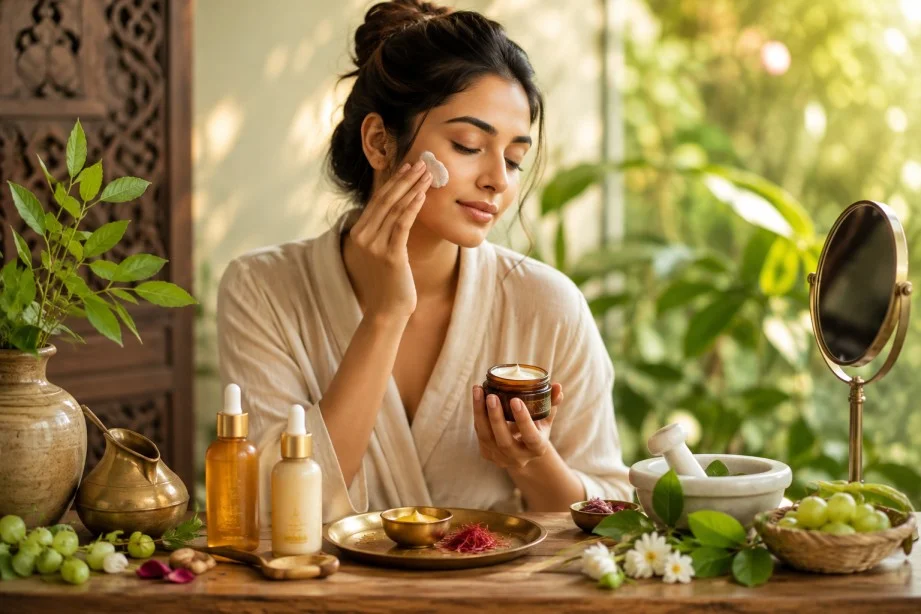
Skincare can get complicated pretty quickly. Some swear by facial oils others prefer lightweight serums and yet another person might just stick to a cleanser, a moisturizer and sunscreen. However Ayurveda is altogether the opposite.
Ayurveda does not treat each skin the same. It takes into account the individual constitution, lifestyle, environment, and the balance of the three doshas: Vata, Pitta, and Kapha.
This concept is what makes Ayurvedic skincare such a special one. Instead of gathering products just because they are hype, newcomers will focus on a simple and effective routine that caters to their skin's real need.
Why Personalization Matters in Ayurvedic Skincare
Ayurveda describes Vata as the air and space element combined; Pitta refers to fire and water combination; Kapha is seen as earth element and water. Traditional ideas in Ayurveda believe that these energies have different effects on parts of the body and also give a way to comprehend skin issues.
PRANA Beauty & Wellness similarly describes the Vata skin as dry and dull; Pitta skin may be red and sensitive; Kapha skin may be blocked or heavy.
It is not a necessity for anyone to identify perfectly with one of these typologies only. The skin may alter due to many causes like climate, aging, stress, hormones, sleep etc. An effective ritual ought thus to be adaptable.
A Simple Dosha-Based Starting Point
These are traditional Ayurvedic frameworks, not medical diagnoses. Persistent redness, irritation, acne, or other skin concerns may need advice from a qualified dermatologist.
Start With Skin, Not a Shopping List
One of the common mistakes that novice skin care enthusiasts often make is to buy a bunch of new products and introduce them all at the same time. When the skin shows signs of irritation, it is often hard to pinpoint which product is to blame.
The correct way would be to monitor one's skin for about a week or less. Does it feel taut after cleansing? Does it look oily shortly after? Does it react instantly to new cosmetics? Does it feel pleasant and comfortable upon waking up but gets dry at a later hour?
These questions are essential for the right understanding of your skin care routine.
When choosing skin care to suit your pitta dosha, comfort and hydration are at the top of the list. A milky gentle face wash, a moisturizing face cream, a protective cream with nourishing ingredients as well as a sunscreen which is suitable for the skin will form the basic set of care for the skin. On a frosty or very dry day, a thicker cream will provide a much better comfort factor than a very thin gel.
Choose Botanical Ingredients With a Purpose
Ayurvedic skincare often draws attention to traditional botanicals, but natural does not automatically mean suitable for every person. Patch testing is still sensible, particularly for reactive skin.
Saffron, turmeric, rose, sandalwood, and bakuchiol are among the botanical ingredients featured across modern Ayurvedic skincare formulations. PRANA Beauty & Wellness, for example, incorporates several of these ingredients into its skincare range.
Bakuchiol is particularly interesting because it has some clinical research behind it. In a randomized, double-blind 12-week study of 44 participants, topical bakuchiol and retinol both improved wrinkle surface area and hyperpigmentation, while the retinol group reported more scaling and stinging.
That does not make bakuchiol universally better. It simply shows why ingredient selection should consider evidence as well as tradition.
Make the Ritual Easy to Maintain
Consistency is the key factor when considering what the best routine will be.
Here is an example of a morning routine:
Cleanser → Toner → Moisturizer → SPF
And here is an example of an evening routine:
Cleanser → Treatment → Moisturizer
After you have established your basic skincare routine, you may want to add a mask or facial oil from time to time. However, it will not make much sense to change everything in your routine every few days.
It should also be mentioned that skincare is about more than just applying creams. Factors such as sleep, diet, stress, weather, and exposure to the sun may affect your skin as well.
Create a Ritual That Fits Real Life
In fact, customized skincare based on Ayurvedic principles does not necessarily involve strict regimens. The far more applicable approach would be to learn what the skin requires right now, what should be included in your skincare arsenal and develop a number of regular practices concerning skin cleansing, hydration, moisturizing and protection from sun.
The main advantage of Ayurveda for newcomers is not yet another checklist to follow, but rather a more thorough observation of the skin and a flexible regimen depending on the situation. This way, skincare will become more about following the ritual than trying out all new products.
FAQs
1. What is an Ayurvedic beauty ritual?
An Ayurvedic beauty ritual is a skincare approach inspired by Ayurvedic principles. It considers individual tendencies, including the traditional Vata, Pitta, and Kapha doshas, alongside everyday skincare needs.
2. How can someone identify their skin dosha?
Beginners can start by observing recurring skin characteristics such as dryness, oiliness, sensitivity, and congestion. Ayurvedic practitioners can provide a more traditional assessment. Skin type and dosha should not be treated as identical concepts.
3. Is Ayurvedic skincare suitable for sensitive skin?
It can be, but sensitive skin still requires caution. Botanical or natural ingredients can cause irritation in some people. Introduce one new product at a time and patch test when appropriate.
4. Are vegan skincare products always natural?
No. “Vegan” means a product does not contain animal-derived ingredients, while “natural” refers to the source or nature of ingredients. A formula can be vegan without being entirely natural.
5. How long should someone follow a new skincare routine?
Give a simple routine enough time to assess how the skin responds rather than changing products constantly. If irritation, persistent redness, or another concerning reaction develops, stop the product and seek appropriate professional advice.