Sign up with Google
 Sign in with Zoho
Selecting an Certified AI Engineering Professional requires more scrutiny than reading a list of fashionable terms. A useful programme should match the learner's starting point, teach capabilities that connect to real work and provide a way to demonstrate those capabilities. NovelVista's Certified AI Engineering Professional course is positioned for professionals who already have basic programming and AI or machine-learning familiarity and want to build production-oriented applications using LLMs, RAG, agents and MCP.
The curriculum is broader than an introductory generative AI course. Twelve modules move from AI engineering foundations to transformers, attention, tokens, context windows and model selection. Learners then study LLM API integration, parameters, system and user prompts, structured outputs, function calling, context management, routing and fallbacks. This sequence matters because reliable AI applications require conventional software concerns such as authentication, validation and error recovery alongside model-specific design decisions.
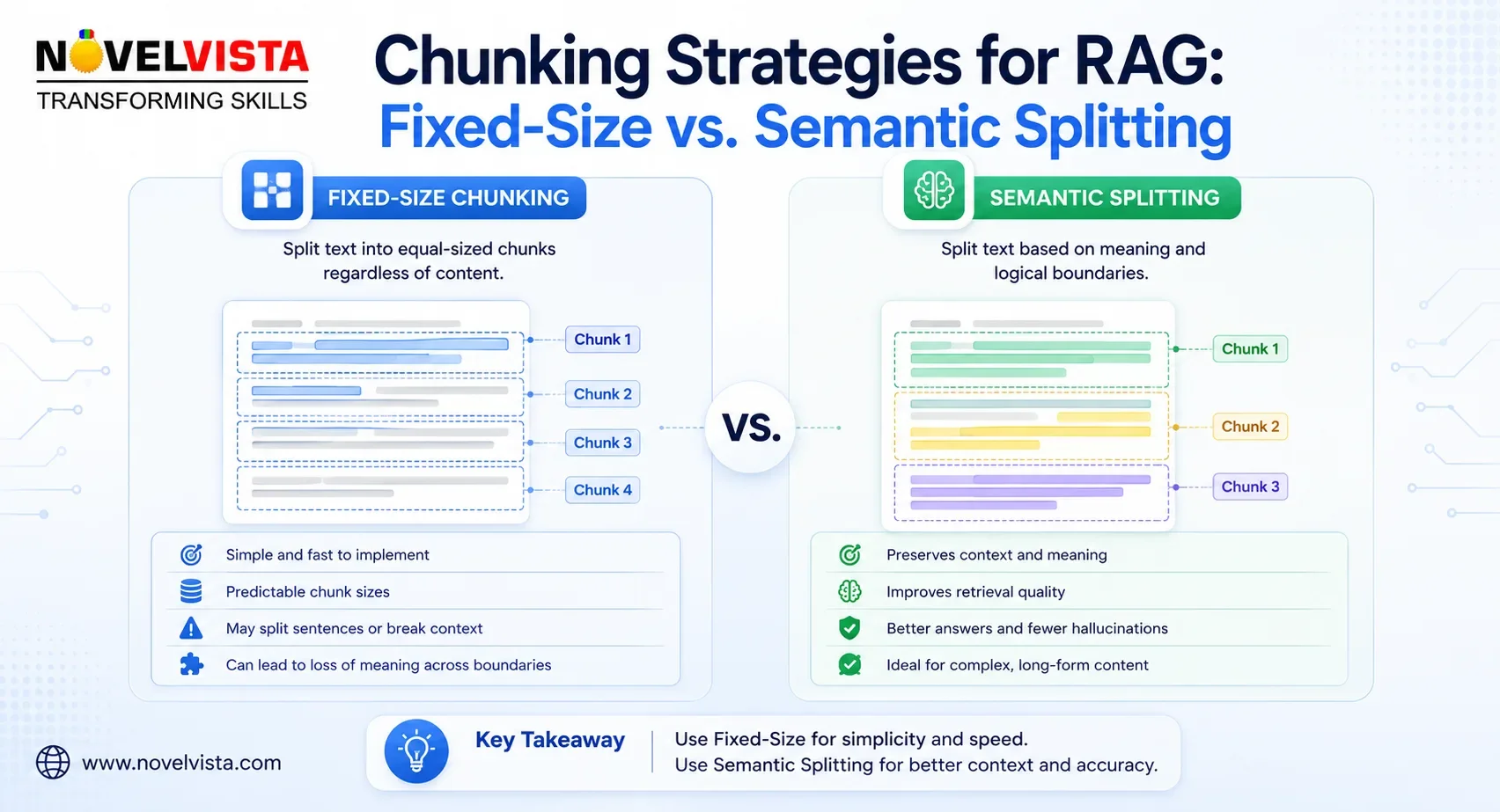
The middle of the programme focuses heavily on knowledge systems. Embeddings, semantic search, vector databases, metadata filters and hybrid retrieval lead into complete RAG engineering. The syllabus covers document loading, parsing, chunking, indexing, retrieval, context augmentation and citations. Advanced topics include semantic and hierarchical chunking, query rewriting, reranking, context optimisation, conversational RAG, corrective patterns and GraphRAG. This depth is relevant for professionals building assistants that must use private or frequently changing enterprise information.
Agent engineering is another differentiator. Learners examine goals, observations, actions, memory, state, planning, tool use, retries, stopping conditions and human approval. Multi-agent patterns are included without ignoring coordination risks. The MCP module covers hosts, clients, servers, tools, resources, prompts, authorisation and production architecture. These capabilities are increasingly important when AI applications must connect to databases, APIs and operational services through controlled, reusable interfaces.
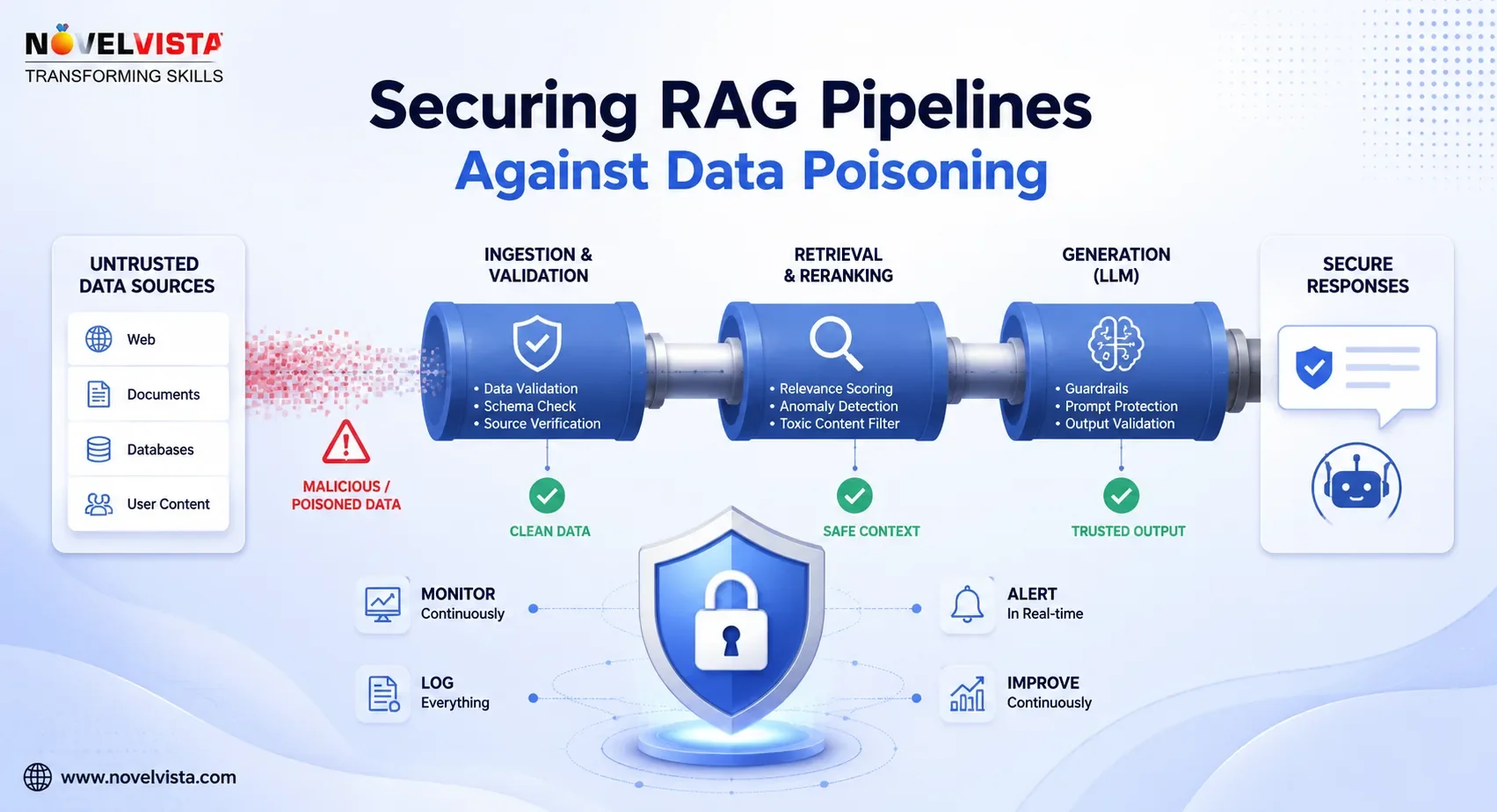
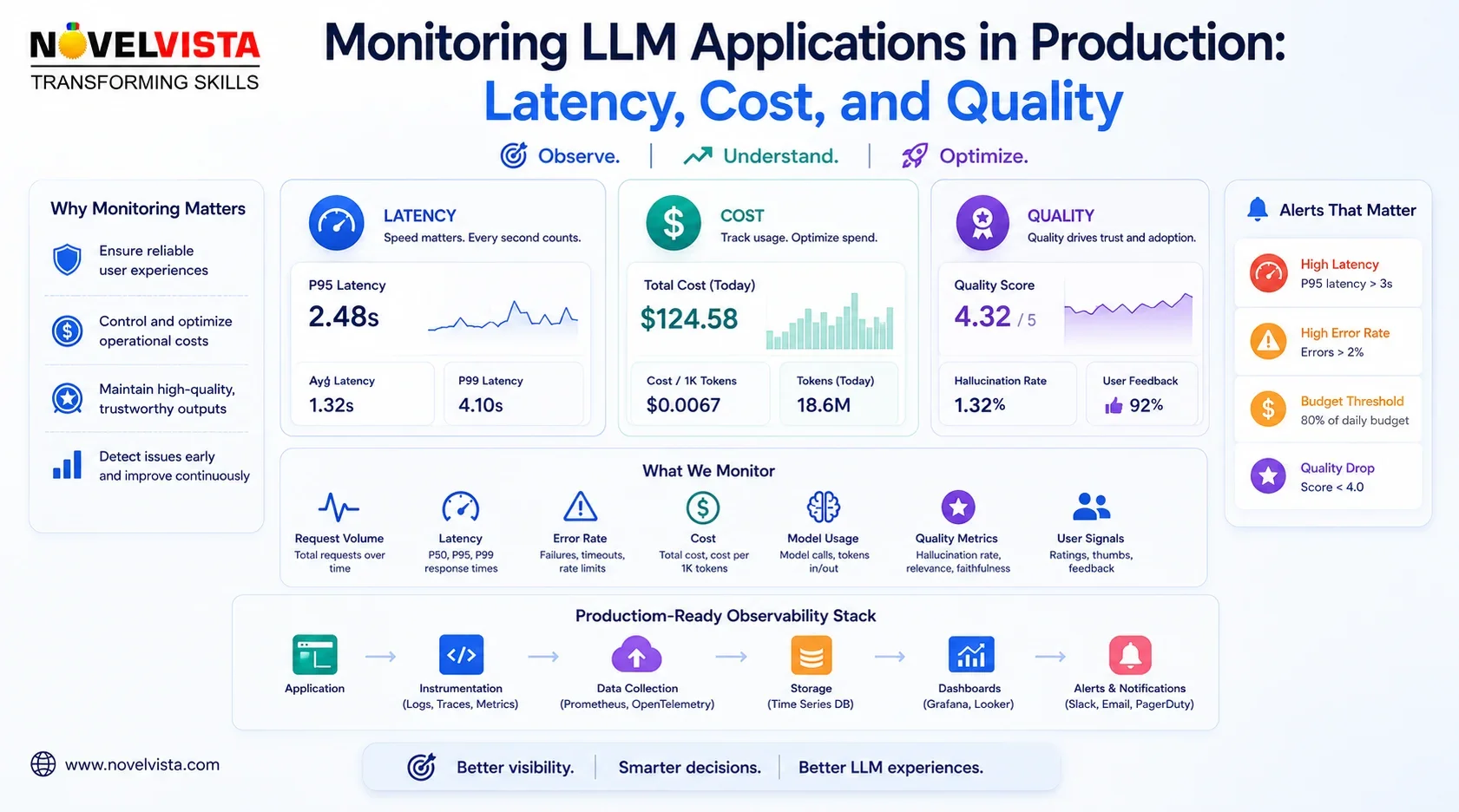
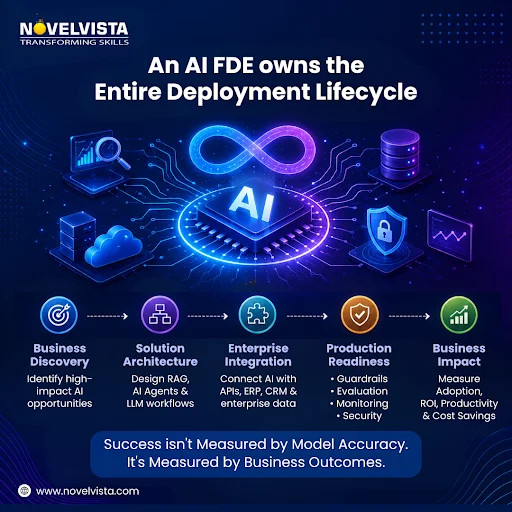
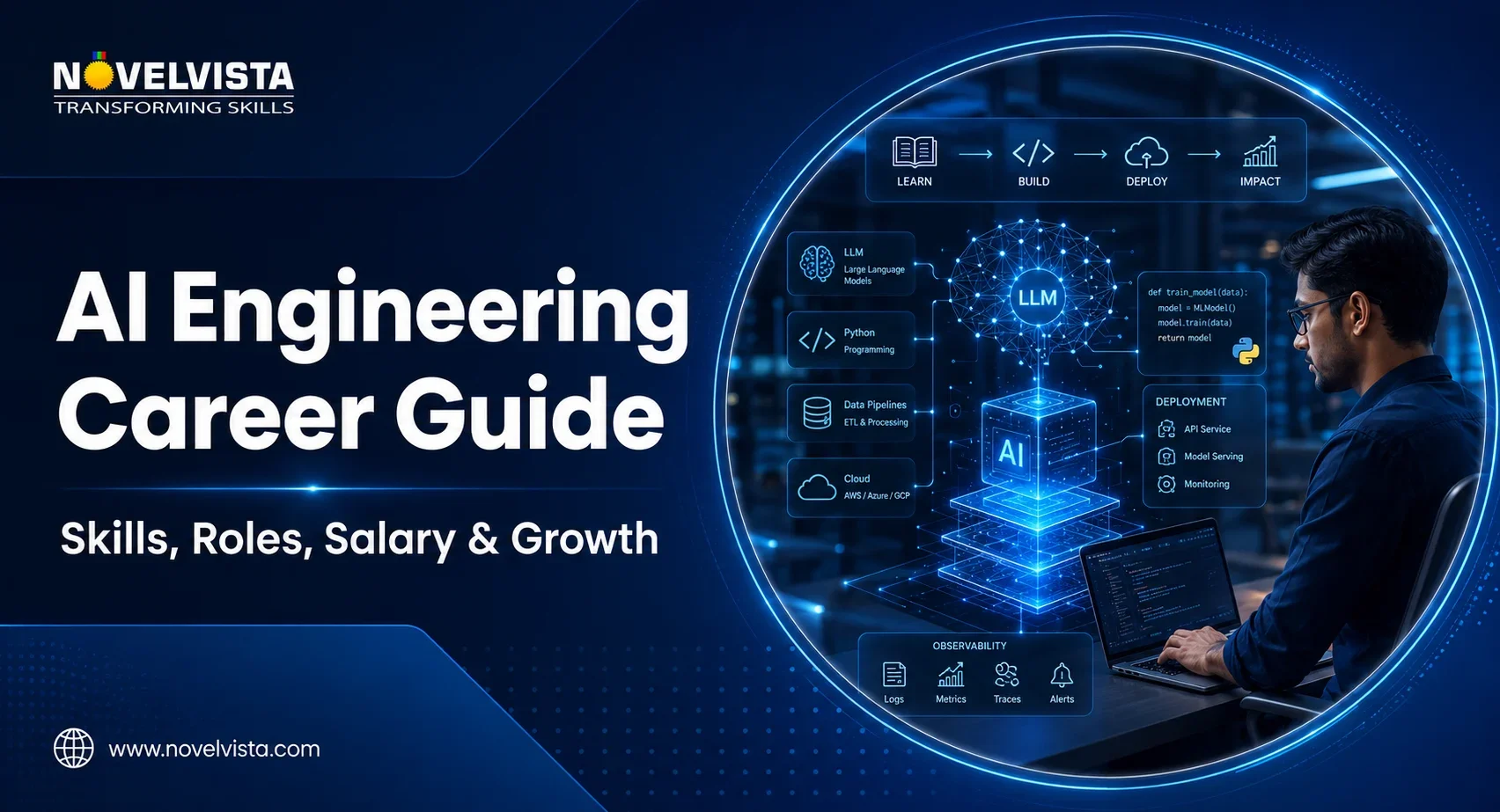
A credible production curriculum must also cover what happens after a feature appears to work. The course includes LLM, RAG and agent evaluation; hallucination and groundedness; model-based judging; guardrails; prompt-injection protection; privacy; responsible AI; and application security risks. LLMOps modules address versioning, logging, tracing, observability, token and latency monitoring, model serving, Docker, cloud deployment, CI/CD, cost and reliability. These topics help prevent a common weakness in AI training: teaching creation without teaching control and operation.
The capstone is likely to be the most valuable part for career development because it combines architecture, RAG, agents, tools, MCP, evaluation, guardrails and deployment. A completed implementation can become portfolio evidence when the learner can explain its trade-offs and test results. The certification exam consists of 40 objective questions over 90 minutes, with a 65 percent passing requirement, five-year validity and a complimentary retake, according to the course page.
Prospective learners should assess the course using three questions. First, does the syllabus cover the systems they expect to build, not only concepts they want to discuss? Second, will they have enough time to practise and complete the capstone properly? Third, can they connect the final project to their target role or business domain? A support engineer might build a cited troubleshooting agent, while a developer might create an internal API assistant. Tailoring the capstone makes the credential more credible in interviews. Learners should also preserve evaluation results, diagrams and deployment notes as portfolio material, while removing confidential information. The return on training is strongest when knowledge becomes demonstrable output. Course completion can provide structure and recognition, but sustained value comes from being able to defend architectural choices, explain failure handling and show how the application meets a measurable need.
Before enrolling, professionals should also compare the time commitment with their current workload and establish a weekly build schedule. Watching lessons without implementation can create familiarity without competence. Short, repeated practice sessions, documented experiments and regular capstone milestones will deliver more value than rushing through the syllabus. This discipline helps learners retain concepts and produce credible evidence of applied skill.
Is it worth it? For a complete programming beginner, the pace and technical depth may be unsuitable. For an experienced professional seeking only a high-level overview, the programme may be more detailed than necessary. For software developers, data professionals and ML practitioners who want an organised path into production AI engineering, the curriculum is strongly aligned with the work. Its value will depend on active practice: learners should implement the exercises, stress-test the capstone and document architectural decisions. A certification can validate structured learning, but the strongest outcome is the ability to build a secure, observable and deployable AI application.