Sign up with Google
 Sign in with Zoho
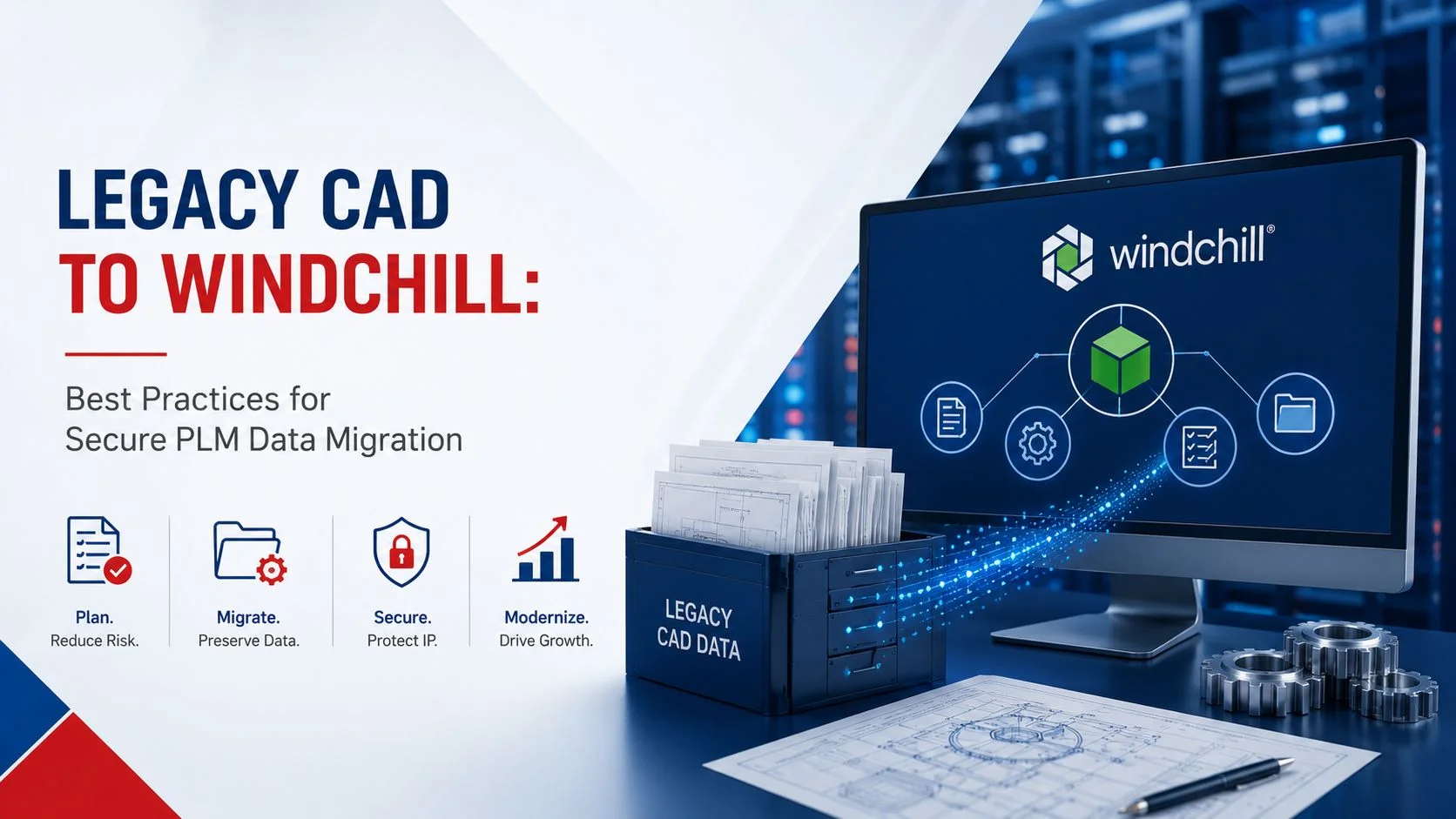
For many manufacturers, migrating from legacy CAD environments to a modern Product Lifecycle Management (PLM) platform like PTC Windchill is no longer a matter of convenience, it is a strategic necessity. Aging systems often limit collaboration, create data silos, complicate regulatory compliance, and hinder digital transformation initiatives. However, migrating years or even decades of engineering data presents significant technical and operational challenges.
A successful PLM data migration involves much more than transferring CAD files from one repository to another. It requires preserving product intelligence, maintaining traceability, protecting intellectual property, and ensuring business continuity throughout the transition.
Organizations that approach migration as a business transformation project rather than an IT exercise are significantly better positioned to achieve long-term success.
Why PLM Data Migration Is More Complex Than File Transfer
Short answer: Engineering data includes relationships, metadata, configurations, and business rules not just files.
Legacy CAD environments often contain:
- Multiple file versions
- Inconsistent naming conventions
- Duplicate components
- Obsolete product records
- Custom metadata
- Broken references
- Incomplete Bills of Materials (BOMs)
Migrating this information directly into Windchill without proper preparation can introduce inefficiencies that persist for years.
A successful PLM data migration preserves not only engineering files but also the relationships that define how products are designed, manufactured, and maintained.
Planning a Successful PLM Data Migration
Short answer: Careful planning reduces technical risk and minimizes operational disruption.
Migration projects should begin with clearly defined business objectives.
Typical goals include:
- Centralizing engineering data
- Improving collaboration
- Enhancing configuration management
- Strengthening regulatory compliance
- Supporting digital thread initiatives
- Modernizing product development processes
Once objectives are established, organizations can define migration priorities based on business value rather than attempting to move every legacy record.
Identify Critical Engineering Assets
Not all historical data requires migration.
Engineering teams should classify information into categories such as:
- Active product designs
- Current production assemblies
- Service documentation
- Legacy reference archives
- Obsolete engineering data
Reducing unnecessary data lowers migration complexity while improving long-term system performance.
Conduct a Business Process Audit Before Migration
Short answer: Clean processes produce cleaner migrations.
Many organizations assume data problems are purely technical. In reality, inconsistent workflows often create inconsistent data.
A structured business process audit helps identify:
- Manual approval bottlenecks
- Duplicate engineering activities
- Inconsistent revision practices
- Poor document governance
- Configuration management weaknesses
- Departmental process variations
Resolving these issues before migration prevents inefficient workflows from being transferred into the new PLM environment.
For example, if engineering teams use different part-numbering conventions across business units, standardizing those practices before migration greatly improves future data quality.
Prioritize Data Quality Over Data Volume
Short answer: Migrating poor-quality data creates long-term operational costs.
Before migration, organizations should evaluate:
- Duplicate records
- Missing metadata
- Invalid file references
- Obsolete revisions
- Broken assemblies
- Naming inconsistencies
Cleaning engineering data beforehand reduces future administrative effort while improving search accuracy and user confidence.
Many migration challenges originate from historical data management practices rather than the migration technology itself.
Preserve Product Relationships and Traceability
Short answer: Relationships are often more valuable than individual files.
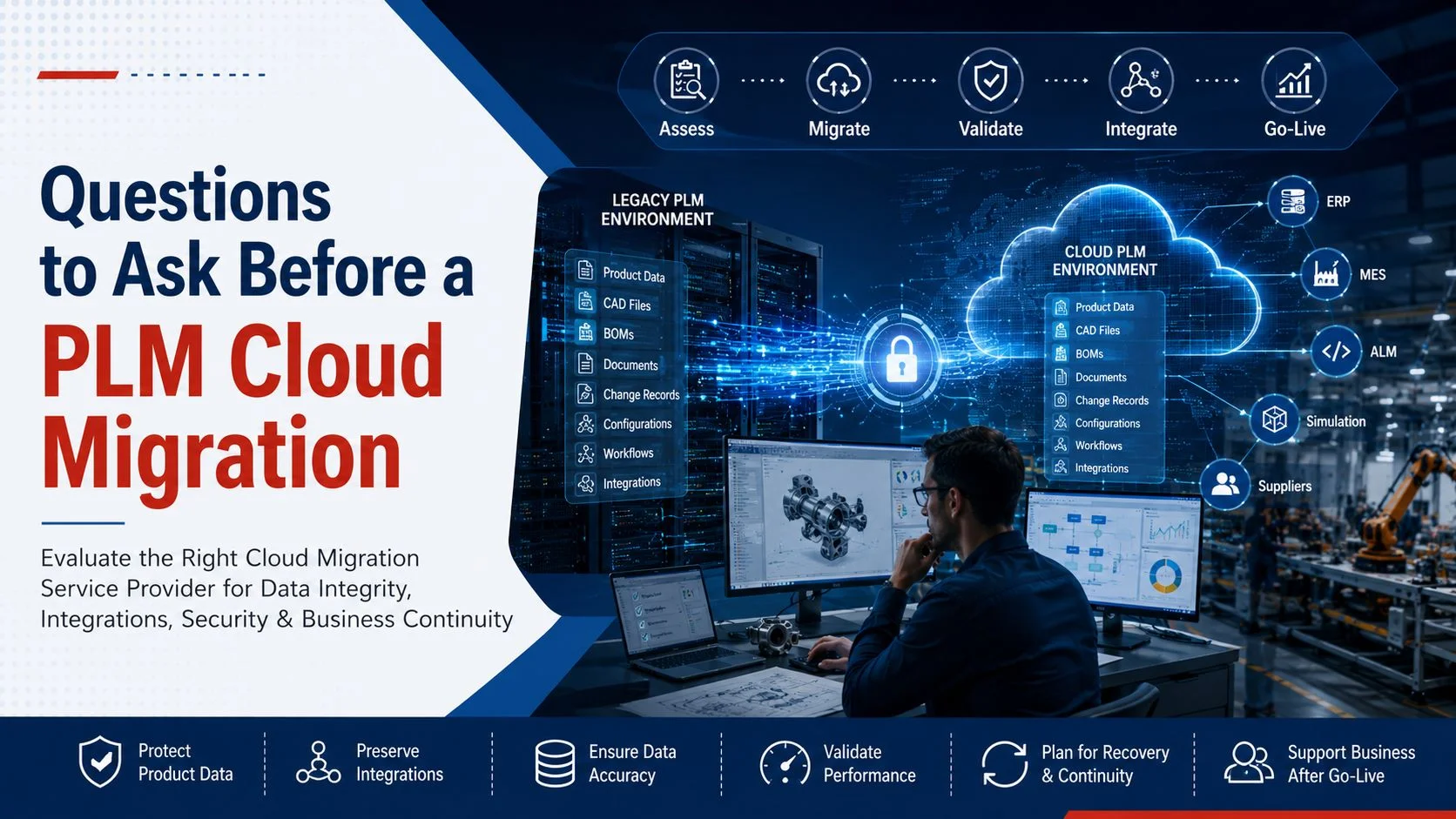
Modern PLM environments manage complex relationships between:
- CAD models
- Drawings
- Bills of Materials
- Requirements
- Change records
- Supplier documentation
- Manufacturing instructions
During PLM data migration, maintaining these relationships is essential.
Broken links between engineering artifacts can disrupt downstream manufacturing, procurement, and quality processes.
Organizations should validate that:
- Parent-child assemblies remain intact.
- Version histories are preserved.
- Metadata mappings are accurate.
- Configuration structures remain consistent.
- Engineering change histories are retained where required.
Secure Intellectual Property Throughout Migration
Short answer: Data security should be embedded into every migration phase.
Engineering data represents valuable intellectual property.
Migration plans should include controls for:
- Access permissions
- User authentication
- Encryption during transfer
- Audit logging
- Backup validation
- Disaster recovery procedures
Organizations operating within aerospace, defense, medical devices, or regulated manufacturing sectors should also ensure migration activities align with contractual and regulatory obligations.
Protecting sensitive engineering information is just as important as successfully transferring it.
Leverage Cloud Management Services for Scalability
Short answer: Cloud infrastructure can simplify migration while improving long-term flexibility.
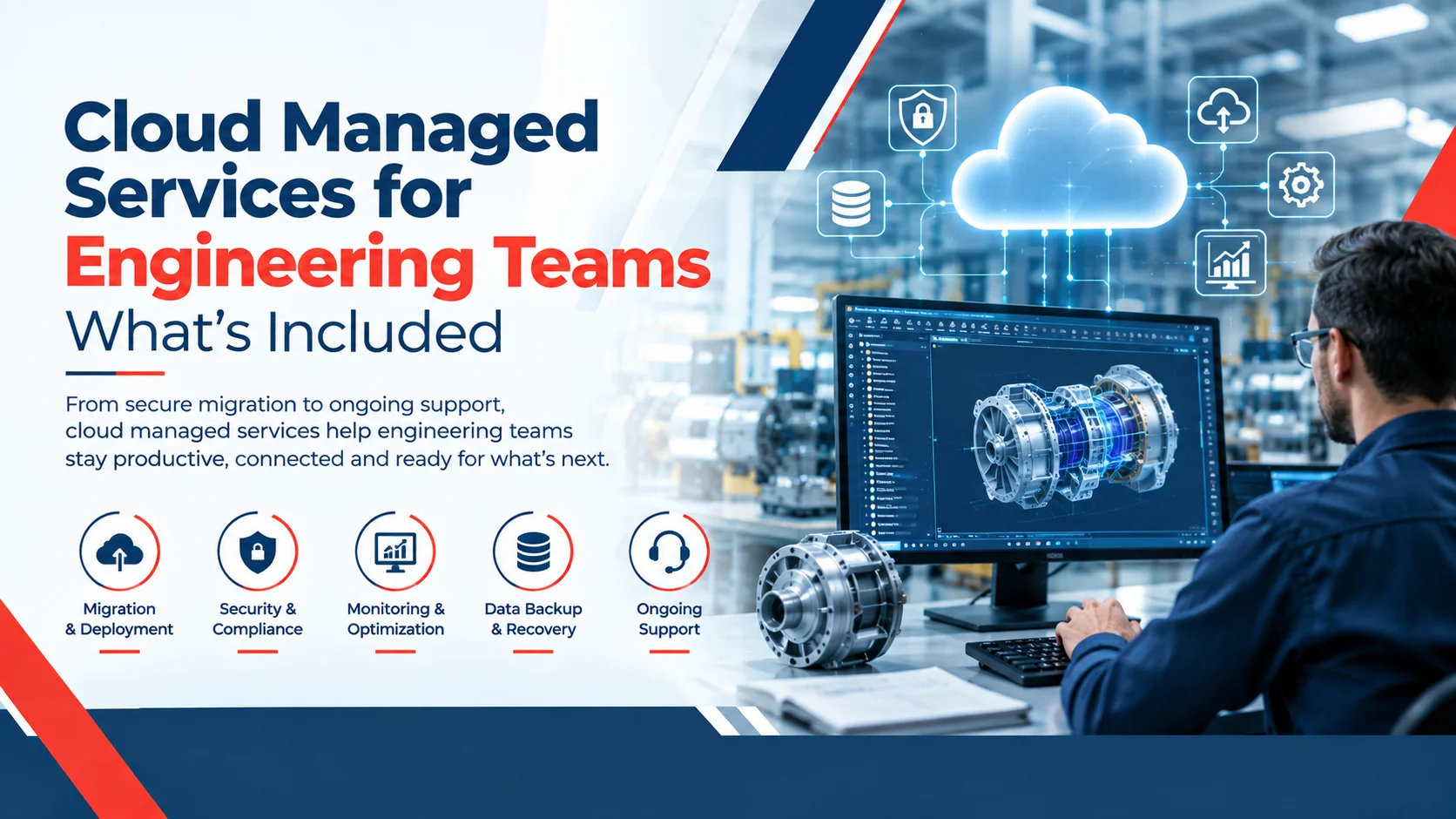
Many organizations now combine Windchill implementations with modern cloud management services.
Benefits include:
- Scalable migration environments
- Improved disaster recovery capabilities
- Enhanced system availability
- Simplified infrastructure management
- Faster deployment of development and test environments
Cloud-based migration strategies also allow teams to perform validation activities without disrupting production operations.
As hybrid engineering environments become increasingly common, cloud infrastructure provides greater operational flexibility throughout the migration lifecycle.
Test Before Going Live
Short answer: Validation reduces surprises after deployment.
Successful migration programs rarely involve a single production cutover.
Instead, organizations conduct multiple validation cycles.
Typical testing activities include:
- Pilot migrations
- Metadata verification
- Assembly validation
- Workflow testing
- User acceptance testing
- Performance benchmarking
- Security verification
Testing allows engineering teams to identify issues before production users begin relying on the new environment.
Common Mistakes to Avoid
Even experienced organizations encounter similar migration challenges.
Migrating Everything
Not all historical data delivers ongoing business value.
Migrating obsolete information increases complexity without improving operational performance.
Ignoring User Adoption
Technical success does not guarantee business success.
Engineers should receive training on new workflows, governance standards, and collaboration practices before deployment.
Focusing Only on Technology
Migration projects succeed when organizations improve business processes alongside technology modernization.
Underestimating Metadata Mapping
Incorrect metadata mappings can compromise searchability, reporting accuracy, and downstream integrations long after migration is complete.
Industry Perspective: Migration as a Foundation for Digital Engineering
Manufacturers increasingly view PLM migration as the first step toward broader digital transformation rather than an isolated infrastructure project. Modern PLM platforms support digital thread strategies, model-based engineering, enterprise collaboration, and lifecycle traceability that legacy systems often cannot deliver.
Service providers specializing in PLM modernization, including organizations such as 3HTi through its PLM services, emphasize structured migration planning, process optimization, and governance alongside technical implementation. This reflects a broader industry trend: successful migrations are driven by business objectives as much as by technology requirements.
Conclusion
Migrating from legacy CAD systems to Windchill is a significant undertaking, but it also presents an opportunity to improve engineering efficiency, strengthen data governance, and modernize product development operations.
A well-executed PLM data migration begins with clearly defined objectives, comprehensive planning, and a commitment to data quality. Organizations that perform a thorough business process audit, preserve product relationships, implement strong security controls, and leverage scalable cloud management services are better equipped to reduce migration risks while maximizing long-term business value.
Ultimately, migration should not be viewed as simply moving engineering files. It is an opportunity to establish a more connected, secure, and efficient product lifecycle environment that supports future innovation and sustainable growth.
FAQs
1. What is PLM data migration?
PLM data migration is the process of transferring engineering files, metadata, product structures, workflows, and related information from legacy systems into a modern Product Lifecycle Management platform while preserving integrity and traceability.
2. Why is data quality important before migration?
Poor-quality data can create duplicate records, broken relationships, inconsistent metadata, and operational inefficiencies that continue affecting engineering teams long after migration is complete.
3. What should be included in a business process audit before migration?
A business process audit should evaluate engineering workflows, document management, approval processes, configuration control, governance policies, and data management practices to identify opportunities for standardization and improvement.
4. How do cloud management services support PLM migration?
Cloud management services provide scalable infrastructure, secure migration environments, improved disaster recovery, flexible testing capabilities, and ongoing operational support for modern PLM platforms.
5. Should organizations migrate all legacy CAD data?
Not necessarily. Many organizations achieve better outcomes by migrating only active, high-value engineering data while archiving obsolete or infrequently accessed information separately.
6. What are the biggest risks during PLM data migration?
Common risks include data corruption, broken assembly relationships, incorrect metadata mapping, inadequate security controls, insufficient user training, and incomplete validation before production deployment.
7. How can manufacturers minimize disruption during migration?
Organizations should use phased migration strategies, conduct pilot testing, validate data thoroughly, involve key stakeholders early, and provide comprehensive user training to ensure a smooth transition with minimal operational impact.