Sign up with Google
 Sign in with Zoho

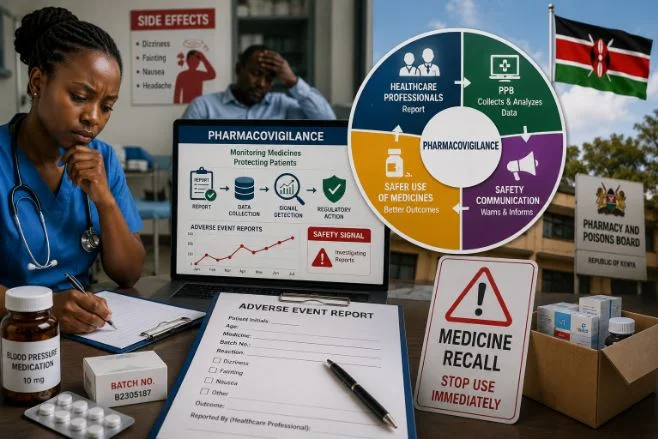
A nurse at a private clinic in Nairobi notices something odd. Three patients this month taking a particular blood pressure medicine have experienced dizziness and fainting episodes. It's unusual. She mentions it to the clinic doctor. He says it's probably coincidence. They treat the symptoms and move on. Nobody reports it to anyone.
Three weeks later, the PPB issues a notice. A batch of the same blood pressure medicine from the same importer has been identified with quality issues. The medicine is being recalled. Clinics are told to stop using it immediately.
If the nurse had reported those three cases through Kenya's pharmacovigilance system, they would have flagged a potential safety issue weeks earlier. Instead, the problem went undetected until someone else noticed something was seriously wrong.
This is why pharmacovigilance matters. And this is why most healthcare providers and importers in Kenya still don't take it seriously enough.
What Pharmacovigilance Actually Is
Pharmacovigilance is the practice of monitoring medicines after they're in use and detecting safety problems.
It's not about testing medicines before they're approved. That's already happened. Pharmacovigilance is about what happens after medicines are in patients' hands. If a medicine causes unexpected side effects in the general population. If a batch turns out to have quality issues. If drug interactions cause problems. If certain groups of people experience problems others don't.
These real-world safety issues only show up once medicines are being used widely. Pharmacovigilance systems are designed to catch these issues, investigate them, and respond appropriately.
The core responsibility is straightforward: report adverse events (bad reactions) to a central authority, which aggregates reports, looks for patterns, and investigates when patterns suggest real problems.
Kenya's system is built around PPB receiving reports and maintaining a national database of adverse events.
How Kenya's Pharmacovigilance System Works
In theory, it works like this:
Healthcare providers report adverse events to PPB. A patient takes medicine and has a bad reaction. The provider documents it and reports it.
PPB receives reports and enters them into a national database.
PPB analyzes the data looking for patterns. If multiple reports suggest a particular medicine might cause a particular problem, that's a signal. If all reports are from a particular batch, that's a signal.
PPB investigates serious signals. They contact importers, manufacturers, healthcare facilities. They might request medicines be tested. They might request detailed information about patients who experienced problems.
PPB takes action if warranted. They might issue warnings. They might require label changes. They might pull medicines from the market.
The system depends on reporting. Without reports, PPB doesn't see problems.
The Reporting Reality
Here's where theory meets reality, and reality is messy.
Healthcare providers don't report consistently. A clinic sees a bad reaction and treats it. They don't think to report it to PPB. They don't know how to report. They worry about liability if they report. Reporting feels like extra work.
Private sector reporting is especially weak. Private hospitals and clinics sometimes worry that reporting bad reactions reflects badly on their business. They manage the problem locally and don't report to authorities.
Rural healthcare is largely invisible. A rural health center experiences adverse reactions but has no formal mechanism to report. If they tried to report, they'd need phone or email and knowledge of PPB's address.
Pharmacies don't report. When a patient comes to a pharmacy saying a medicine caused problems, the pharmacist treats the complaint and moves on. They don't report to PPB.
The result is that Kenya's pharmacovigilance database probably captures maybe 5-10 percent of actual adverse events. The vast majority go unreported.
Why Importers Should Care About Pharmacovigilance
Pharmacovigilance is regulated not just for patient safety but because importers have responsibility.
Importers are responsible for medicines they bring into Kenya. Once you import a medicine and it enters the market, you've put it into the system. If that medicine causes problems, you're implicated.
Importers are expected to monitor their products. PPB expects importers to have processes for tracking how their medicines perform in the market. They're supposed to be aware of problems.
Importers can be held liable. If PPB discovers that an importer knew about adverse events but didn't report them, that's a regulatory problem. It can affect your import license.
Importers' reputation depends on it. A healthcare facility learns that an importer's medicines caused problems and were reported, that facility will prefer other suppliers.
What Importers Actually Need To Do
Most importers don't have formal pharmacovigilance systems. They should.
Establish a process for receiving adverse event reports. Healthcare facilities should know they can report problems to you. This might be as simple as "call our sales representative" or "email our quality team."
Train your sales and support staff to recognize when they're hearing reports of potential adverse events. A clinic calling to complain about a medicine causing unexpected problems is actually a pharmacovigilance report, even if it's not labeled as such.
Document these reports. Write them down. Keep records. Note what medicine, what patient group (approximately), what reaction, what batch (if known), when it happened.
Investigate serious reports. If multiple facilities report the same problem, or if a single report describes a serious reaction, investigate. Was it the batch? Was it the medicine itself? Was it something else?
Report to PPB. Serious adverse events should be reported to PPB. This is a legal requirement. Importers who don't report are violating regulations.
Communicate with your supplier. If you're importing a medicine and adverse events are reported, tell your supplier. They need to know. They might have received reports from other countries.
Keep records organized. PPB can ask to see your adverse event documentation. Have it organized and accessible.
The Supplier Responsibility Angle
Your pharmaceutical suppliers have pharmacovigilance responsibilities too.
A manufacturer in India is responsible for monitoring how their medicines perform worldwide. If adverse events are reported in Kenya, they should know about them. They might have received similar reports from other countries.
Serious or unexpected safety issues should prompt investigation and action. A supplier who's doing pharmacovigilance properly will take your reports seriously and investigate.
A supplier who ignores reports or treats pharmacovigilance as bureaucratic annoyance is a problem. You could be importing medicines from a supplier who's aware of safety issues but not addressing them.
When working with pharmaceutical exporters and suppliers, choosing partners who actively engage with pharmacovigilance helps. Suppliers who understand their responsibility, who take adverse event reports seriously, who investigate issues, who maintain transparency — these are the ones you want to work with. Resources highlighting reliable pharmaceutical exporters with quality monitoring and pharmacovigilance commitment can help you identify suppliers who treat safety monitoring as core responsibility, not compliance checkbox.
Common Pharmacovigilance Mistakes
Certain mistakes repeat among importers and healthcare facilities.
Not reporting because "it's probably coincidence." One adverse event might be coincidence. But multiple reports of the same problem aren't. Reporting lets PPB determine whether it's coincidence or pattern.
Assuming PPB will find out anyway. They won't. If you don't report, they probably won't know.
Assuming healthcare facilities will report directly. Many won't. They'll report to you instead. You have to report to PPB.
Not taking adverse event reports seriously. A customer calls to complain about a medicine causing problems. You treat it as customer service complaint and move on. Actually, it's a pharmacovigilance report. Investigate.
Not documenting reports properly. "Someone called and complained about dizziness" is too vague. You need date, medicine, batch if possible, approximate number of people affected, severity.
Letting reports go unanswered. If you're a distributor and healthcare facilities report problems, acknowledge them. Investigate. Report back. Show that you care about safety.
Building a Pharmacovigilance Culture
The importers who do pharmacovigilance well have built it into their operations.
They train staff to recognize and document adverse event reports.
They actively solicit feedback from healthcare facilities. "Have you experienced any problems with medicines we supply?"
They maintain organized documentation of all reports.
They report to PPB consistently.
They communicate transparently with healthcare facilities and suppliers about safety issues.
They view pharmacovigilance as quality assurance, not compliance burden.
The Patient Benefit
At the end of this is patient safety.
When adverse events are reported, investigated, and acted upon, problems are caught earlier. Patients don't get harmed by medicines that could have been identified as problematic sooner.
When pharmacovigilance works, safety signals that would otherwise be invisible become visible. A problem affecting a small group in Kenya can be detected before it affects more people.
Moving Forward
If you're an importer, establish a pharmacovigilance process. Simple is fine. But systematic matters.
If you're a healthcare provider, report adverse events. To PPB if you have access. To your supplier if PPB access is difficult.
If you're a patient, speak up if a medicine causes problems. Report it to your healthcare provider. Providers should take this seriously and report it.
Kenya's pharmacovigilance system only works if people participate. Most don't. But the ones who do contribute to safer pharmaceutical markets.
The adverse events that go unreported today become patterns that affect more people tomorrow. Prevention through reporting beats crisis management.
Pharmacovigilance isn't glamorous. It's not the visible part of pharmaceutical business. But it's the foundation of ensuring medicines are actually safe for the people taking them.
That's worth doing right.