Sign up with Google
 Sign in with Zoho
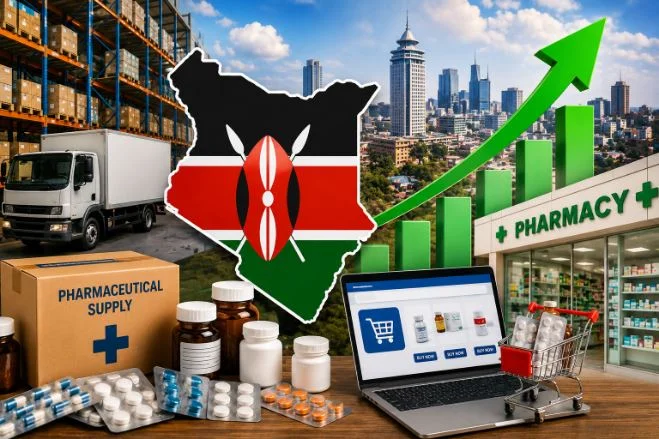
Kenya's pharmaceutical market is booming. I've watched it transform dramatically over the past five years. The market that was stagnant is now dynamic. For distributors, this represents enormous opportunity. But opportunity without understanding is risk. You need to understand what's driving growth. You need to see where the real opportunities lie. You need to know how to position yourself to capitalize on them.
Let me walk you through Kenya's pharmaceutical market growth and the real opportunities available to distributors right now.
The Market Context: Rapid Expansion
Kenya's pharmaceutical market is growing faster than most African countries. Annual growth rates exceed 8-10%. Some segments are growing 15-20% annually. This isn't modest growth. This is rapid expansion.
The market is valued at roughly $800 million to $1 billion annually. For a country of 50 million people, this represents significant pharmaceutical consumption. And it's growing.
The growth isn't temporary. It's structural. It's driven by fundamental market changes. Understanding those changes is essential for distributors.
What's Driving Kenya's Market Growth
Several factors are accelerating Kenya's pharmaceutical market expansion.
Healthcare Access Expansion is primary driver. More clinics are opening. More healthcare facilities are being built. Healthcare access is improving, particularly in rural areas. More healthcare access means more medicine demand.
Universal Health Coverage initiatives are expanding. The government is pushing healthcare access. Insurance coverage is increasing. More people have insurance. They can afford medicines. Demand grows.
Middle Class Growth is significant. Kenya's middle class is expanding. More people have disposable income. They can afford healthcare and medicines. Consumer demand is rising.
Urbanization is accelerating. People are moving to cities. Urban populations demand more healthcare. They expect better medicines. Urban pharmaceutical demand is growing rapidly.
Non-Communicable Disease Burden is increasing. Diabetes is epidemic. Hypertension is widespread. Cancer is rising. These chronic diseases require ongoing medication. Demand for chronic disease medicines is exploding.
Infectious Disease Control is improving. Malaria control is reducing transmission. HIV treatment is expanding. TB treatment is effective. But this means people live longer with chronic diseases. They need more medicines over time.
Generic Medicine Growth is driving volume. Patents expire. Generics enter market. Prices drop. Affordability increases. Volume explodes. Distributor opportunity grows exponentially.
Private Sector Growth is rapid. Private hospitals are expanding. Private clinics are multiplying. Private pharmacies are increasing. Private healthcare is growing faster than government healthcare. Private sector distribution is opportunity-rich.
E-Commerce Growth is creating new channels. Online pharmacies are emerging. Telemedicine is developing. Digital medicine distribution is growing. New distributor channels are opening.
All of these factors combine. The result: explosive pharmaceutical market growth in Kenya.
Market Segments: Where Growth Is Happening
Not all segments are growing equally. Understanding which segments are growing fastest helps distributors position strategically.
Antidiabetic Medicines are growing 15-20% annually. Diabetes prevalence is rising. More people are being diagnosed. Treatment rates are increasing. Demand is exploding. This is a priority growth segment.
Antihypertensive Drugs are similarly booming. Hypertension is epidemic. More people are medicated. Combination therapies are common. Demand is strong and growing.
Cardiovascular Medicines are expanding. Heart disease is increasing. Statins, antiplatelet drugs, heart failure medicines. Demand is growing as healthcare improves.
Cancer Medicines are growing. Cancer incidence is rising. Treatment access is improving. Oncology medicines are high-value, growing segment.
Respiratory Medicines are steady growth. Asthma, COPD, respiratory infections. These medicines are constantly needed.
Dermatology Products are growing. Skin conditions are common. Topical medicines are accessible. This is steady-growth segment.
Dietary Supplements are fastest-growing segment. Vitamins, minerals, herbal products. Regulatory barriers are lower. Consumer demand is rising. Margins can be excellent.
Pediatric Formulations are growing with population. Child health is priority. More children are being medicated. Pediatric medicines are growing segment.
Different distributors will focus on different segments. The key is understanding segment growth rates and positioning accordingly.
Regional Opportunities in Kenya
Kenya's regions offer different opportunities.
Nairobi Metropolitan Area is largest market. Urban. Wealthy. Competitive. High volume. Best for distributors seeking scale and competition management.
Coastal Region (Mombasa, Kilifi) is growing market. Tourism and commerce drive demand. Seasonal variation. Good opportunity for dedicated regional distributors.
Western Region (Kisumu, Kericho) is developing market. Growing rapidly. Less competitive than Nairobi. Good for aggressive regional expansion.
Northern Region is emerging market. Traditionally underserved. Healthcare access improving. Growing opportunity for dedicated distributors.
Rift Valley Region is diverse opportunity. Mixed urban and rural. Growing demand. Less competitive. Good for regional consolidation.
Eastern Region (Mombasa hinterland) is developing. Improving infrastructure. Growing demand. Less saturated. Opportunity for regional players.
Smart distributors will choose their target region. They'll build presence there. They'll understand local dynamics. They'll serve that region excellently.
Distributor Models: How to Position
Different distributor models work in Kenya's growing market.
Specialty Distributor Model focuses on specific therapeutic areas. Diabetes medicines. Oncology medicines. Cardiovascular medicines. Depth in one area. High expertise. Good profitability.
Regional Distributor Model dominates specific geographic region. All medicine categories. Regional presence. Strong local relationships. Predictable demand.
Wholesale Aggregator Model consolidates supply from multiple importers. Sells to retail pharmacies. High volume. Lower margins. Requires efficiency.
Direct-to-Retail Model bypasses wholesalers. Works directly with pharmacy chains. Higher margins. More control. Requires relationships.
Hospital Supply Model focuses on hospital systems. Government and private hospitals. Predictable demand. Contract-based. Good stability.
E-Commerce Model uses online platform. Delivers to customers directly. Growing channel. Lower geographic barriers. New opportunity.
The model you choose depends on your strengths, resources, and market knowledge. Different models work. The key is choosing the right model for your situation.
Challenges Distributors Face
Growth opportunity comes with challenges.
Competition Intensifying means margin pressure. More distributors entering market. Prices dropping. Efficiency becomes critical.
Working Capital Requirements are significant. You buy inventory before selling. Cash flow management is essential. You need capital reserves.
Regulatory Compliance is mandatory. PPB registration of products. Proper storage and distribution. Documentation requirements. Compliance costs money.
Logistics Complexity is significant. Kenya is large. Regional access is variable. Distribution costs are high. Logistics optimization is essential.
Payment Delays are common. Retailers pay slowly. Government facilities pay slower. Cash flow suffers. You need financial management.
Currency Fluctuations affect costs. Shilling movements change profit margins. Price adjustments are necessary.
These challenges are real. But successful distributors manage them effectively. They're not insurmountable.
Growth Strategies for Distributors
For distributors seeking to expand in Kenya's growing market, specific strategies work.
Product Portfolio Expansion means adding new categories. Start with one. Build expertise. Add adjacent categories. Gradually expand.
Geographic Expansion means moving to new regions. Master one region. Build relationships. Expand systematically to adjacent regions.
Channel Diversification means reaching new customer types. Start with retail pharmacies. Add clinics. Add hospitals. Diversify customer base.
Supplier Relationships matter greatly. Work with multiple importers. Don't be dependent on one. Build partnerships. Ensure supply reliability.
Technology Adoption is increasingly important. Inventory management systems. Electronic ordering. Tracking. Data analytics. Technology improves efficiency.
Professional Development is essential. Train your team. Develop expertise. Build capabilities. People are your competitive advantage.
Customer Service Excellence differentiates. Reliable supply. Quick service. Professional relationships. Good service creates loyalty.
All of these strategies drive growth. The key is consistent execution.
The Long-Term Outlook
Kenya's pharmaceutical market will continue growing. Healthcare demand is increasing. The economy is developing. Population is expanding. Market drivers are in place.
Growth is sustainable. It's not temporary. It's structural. For distributors, this means long-term opportunity.
But competition will intensify. More players will enter. Margins will face pressure. Efficiency becomes critical. Those who build strong positions now will dominate later.
For distributors willing to invest, develop capabilities, and execute well, Kenya's pharmaceutical market offers extraordinary opportunity.
Moving Forward: Capturing the Opportunity
For distributors, Kenya's pharmaceutical market growth is your time. Real opportunity exists. Not easy riches. But genuine business potential.
The key is understanding the market. Understanding demand drivers. Understanding distribution channels. Understanding competition. Understanding your own capabilities.
Then positioning yourself to serve that market effectively. With quality products. With reliable supply. With professional service. With strong relationships.
Resource: To understand how established pharmaceutical exporters approach Kenya's market distribution and expansion, examine how experienced companies structure their distribution partnerships. For example, reviewing how manufacturers approach Kenya's growing market shows the distribution systems and partnership strategies that successful distributors use to capture growth opportunity.
Kenya's pharmaceutical market is growing. The growth is real. The opportunity is there. The question is whether you'll position yourself to capture it.
Start understanding the market now. Build relationships. Develop strategy. Position yourself for opportunity. The pharmaceutical distribution market in Kenya is expanding rapidly. Those who understand it and serve it well will prosper.
The time to expand is now. The market window is open. Growth is happening. Distributors who act strategically will dominate.