Sign up with Google
 Sign in with Zoho

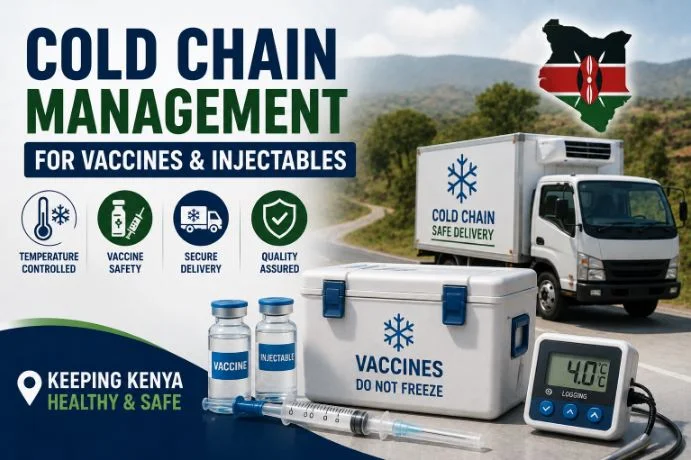
Vaccines and injectable medicines save millions of lives every year, but their effectiveness depends on much more than quality manufacturing. From the moment these products leave a manufacturing facility until they are administered to a patient, they must be stored and transported within carefully controlled temperature ranges. This uninterrupted temperature-controlled process is known as the cold chain.
For Kenya, where healthcare services extend from major cities like Nairobi and Mombasa to remote counties and rural communities, maintaining an efficient cold chain is essential. Even a brief exposure to temperatures outside the recommended range can reduce the effectiveness of vaccines and certain injectable medicines, leading to financial losses and potential risks to public health.
As Kenya continues to strengthen its healthcare infrastructure and expand immunization programs, pharmaceutical companies, importers, distributors, and healthcare providers must work together to ensure that every temperature-sensitive medicine reaches patients safely.
What Is Cold Chain Management?
Cold chain management refers to the system used to keep temperature-sensitive pharmaceutical products within their required storage conditions throughout manufacturing, transportation, warehousing, distribution, and administration.
Most vaccines require storage between 2°C and 8°C, although some newer biologics and specialty medicines have different temperature requirements. Maintaining these conditions requires specialized equipment, trained personnel, validated packaging, and continuous monitoring.
Cold chain management is not simply about refrigeration. It is a coordinated process involving people, technology, logistics, and quality systems that protect product integrity from start to finish.
Why Cold Chain Matters
Vaccines and injectable medicines are highly sensitive biological products. Unlike many tablets or capsules, they cannot always recover if exposed to excessive heat or freezing temperatures.
Improper storage may lead to:
- Reduced vaccine potency
- Loss of medicine effectiveness
- Increased product wastage
- Financial losses
- Supply shortages
- Reduced confidence in healthcare services
For healthcare providers, maintaining product quality is critical because patients trust that every medicine administered meets the highest standards of safety and effectiveness.
Kenya's Growing Demand for Temperature-Sensitive Medicines
Kenya has made remarkable progress in expanding access to healthcare over the past decade. National immunization campaigns, maternal healthcare programs, chronic disease management, and emergency health initiatives have increased the demand for vaccines and injectable medicines.
Hospitals, private clinics, pharmacies, and county health facilities now handle a wider variety of temperature-sensitive pharmaceutical products than ever before.
At the same time, healthcare services continue expanding into rural regions where maintaining refrigeration during transportation can be more challenging.
This makes strong cold chain systems increasingly important for both public and private healthcare providers.
Challenges Facing Cold Chain Distribution in Kenya
Although Kenya has significantly improved its healthcare logistics, maintaining consistent cold chain conditions across the country remains challenging.
Long Transportation Distances
Many medicines travel from international manufacturers through ports and airports before reaching central warehouses, regional distribution centers, and finally local healthcare facilities.
Every transfer creates another opportunity for temperature excursions if proper handling procedures are not followed.
Climate Conditions
Kenya experiences warm temperatures throughout much of the year.
Without proper insulated packaging and refrigerated transport, medicines can quickly exceed recommended storage temperatures during loading, unloading, or transit.
Rural Healthcare Access
Healthcare facilities in remote counties often face transportation delays caused by poor road conditions, seasonal weather, or long travel times.
These factors make temperature monitoring even more important.
Power Supply Interruptions
Some healthcare facilities experience occasional electricity interruptions.
Reliable backup power systems, generators, and solar-powered refrigeration help maintain product quality during outages.
Building an Effective Cold Chain System
An efficient cold chain depends on multiple interconnected components working together.
Qualified Manufacturing
The process begins with manufacturers that follow international quality standards and Good Manufacturing Practices (GMP).
Products should be manufactured, tested, packaged, and released according to validated quality procedures before entering the distribution network.
Proper manufacturing reduces risks before transportation even begins.
Validated Packaging
Temperature-sensitive medicines require packaging specifically designed to maintain required temperatures throughout transit.
This may include:
- Insulated shipping containers
- Refrigerant gel packs
- Phase change materials
- Thermal liners
- Temperature indicators
Packaging should be validated under real transportation conditions to ensure consistent performance.
Refrigerated Transportation
Specialized refrigerated vehicles help maintain stable temperatures during road transport.
Where refrigerated trucks are unavailable, validated insulated shipping systems combined with temperature monitoring devices can provide effective protection for shorter journeys.
Vehicle maintenance is equally important.
Even the best refrigeration equipment cannot protect medicines if regular inspections and servicing are neglected.
Temperature Monitoring Is Essential
Continuous temperature monitoring provides confidence that products remain within acceptable ranges.
Modern cold chain systems commonly use:
- Digital temperature data loggers
- Wireless monitoring systems
- GPS-enabled tracking devices
- Cloud-based monitoring platforms
- Automatic temperature alerts
These technologies allow logistics teams to respond immediately if temperatures move outside acceptable limits.
Instead of discovering problems after delivery, businesses can take corrective action during transportation.
Warehouse Management Supports Product Integrity
Cold storage warehouses play a central role in pharmaceutical distribution.
A properly managed warehouse includes:
- Qualified refrigeration equipment
- Backup power systems
- Temperature mapping
- Alarm systems
- Controlled access
- Preventive maintenance
- Inventory tracking
Products should never be overcrowded inside cold rooms because proper air circulation is necessary for maintaining uniform temperatures.
Regular equipment calibration also helps ensure accurate temperature readings.
Staff Training Makes a Significant Difference
Technology alone cannot guarantee cold chain success.
Every person involved in the supply chain must understand proper handling procedures.
Training should cover:
- Product storage requirements
- Temperature monitoring
- Equipment operation
- Emergency response procedures
- Safe loading and unloading
- Documentation practices
Even simple mistakes, such as leaving refrigerator doors open too long or placing products incorrectly inside storage units, can compromise medicine quality.
Continuous staff education helps reduce human error.
Inventory Planning Reduces Risk
Maintaining excessive inventory inside cold storage increases operating costs and may lead to product expiry.
On the other hand, insufficient inventory can result in medicine shortages.
Accurate forecasting allows distributors to maintain balanced inventory levels while reducing waste.
Many pharmaceutical companies now use digital inventory management systems that provide real-time stock visibility and automatic reorder alerts.
These systems improve planning while supporting uninterrupted medicine availability.
Emergency Preparedness Protects the Supply Chain
Unexpected situations can occur despite careful planning.
Examples include:
- Vehicle breakdowns
- Equipment failures
- Power outages
- Flight delays
- Customs clearance delays
- Extreme weather
Every organization involved in pharmaceutical distribution should develop emergency response plans.
Prepared businesses often maintain:
- Backup generators
- Spare refrigeration equipment
- Alternative transport arrangements
- Emergency contact procedures
- Temperature excursion protocols
Quick action can often prevent product loss.
Regulatory Compliance Strengthens Quality
Pharmaceutical cold chain operations must comply with national and international quality standards.
Importers and distributors should maintain proper documentation covering:
- Temperature records
- Equipment qualification
- Calibration certificates
- Maintenance records
- Distribution documentation
- Product traceability
Complete documentation demonstrates quality assurance and supports regulatory inspections.
Strong compliance systems also improve customer confidence.
Technology Is Transforming Cold Chain Logistics
Digital innovation continues improving pharmaceutical distribution across Africa.
Today's supply chains increasingly use:
- Internet of Things (IoT) temperature sensors
- Artificial intelligence for demand forecasting
- Electronic inventory management
- GPS fleet tracking
- Cloud-based logistics dashboards
- Mobile delivery confirmation systems
These technologies improve visibility throughout the supply chain and enable faster decision-making.
As digital infrastructure expands, pharmaceutical logistics are becoming more efficient and transparent.
Sustainability in Cold Chain Operations
Healthcare organizations are also looking for environmentally responsible cold chain solutions.
Many companies now invest in:
- Energy-efficient refrigeration
- Solar-powered cold storage
- Eco-friendly refrigerants
- Reusable insulated packaging
- Optimized transportation routes
These improvements reduce operating costs while supporting sustainability goals.
Environmental responsibility and operational efficiency increasingly go hand in hand.
Choosing the Right Pharmaceutical Export Partner
A strong cold chain begins long before medicines arrive in Kenya. It starts with selecting a pharmaceutical manufacturer that understands international quality standards, export regulations, packaging requirements, and temperature-sensitive logistics.
An experienced export partner ensures products are manufactured under strict quality controls, packaged appropriately for international transportation, and supported with accurate documentation for smooth customs clearance.
For pharmaceutical distributors, wholesalers, and healthcare organizations seeking dependable manufacturing and export solutions, Vo Pharma provides comprehensive pharmaceutical manufacturing services backed by quality assurance and international export expertise. Businesses looking to source high-quality medicines for African markets can learn more through https://vopharma.in/africa/pharma-exporter-to-ethiopia/. While the page focuses on Ethiopia, the company's export capabilities and commitment to quality make it a valuable partner for businesses serving other African markets, including Kenya.
The Future of Cold Chain Management in Kenya
Kenya's healthcare sector continues to evolve with growing investments in immunization programs, specialized treatments, and expanded healthcare access.
As demand for biologics, vaccines, insulin, and advanced injectable medicines increases, cold chain systems must continue improving.
Future developments are likely to include:
- Greater use of smart temperature monitoring
- Expanded regional cold storage facilities
- Improved digital supply chain visibility
- Better rural healthcare logistics
- Increased adoption of renewable energy solutions
- Stronger collaboration between manufacturers, importers, and healthcare providers
Organizations that embrace these improvements will be better equipped to maintain medicine quality while supporting national healthcare objectives.
Conclusion
Cold chain management is one of the most critical elements of pharmaceutical distribution. Every vaccine and injectable medicine depends on consistent temperature control from production to patient administration. Without a reliable cold chain, even the highest-quality medicines can lose their effectiveness before reaching the people who need them most.
For Kenya, where healthcare services continue expanding across diverse geographic regions, investing in robust cold chain infrastructure is essential. Reliable manufacturing, validated packaging, refrigerated transportation, modern monitoring technologies, trained personnel, efficient warehousing, and proactive risk management all contribute to a stronger pharmaceutical supply chain.
By building resilient cold chain systems and partnering with experienced pharmaceutical manufacturers and exporters, healthcare organizations can improve medicine availability, reduce product wastage, strengthen patient confidence, and ultimately deliver better health outcomes across Kenya.