Sign up with Google
 Sign in with Zoho

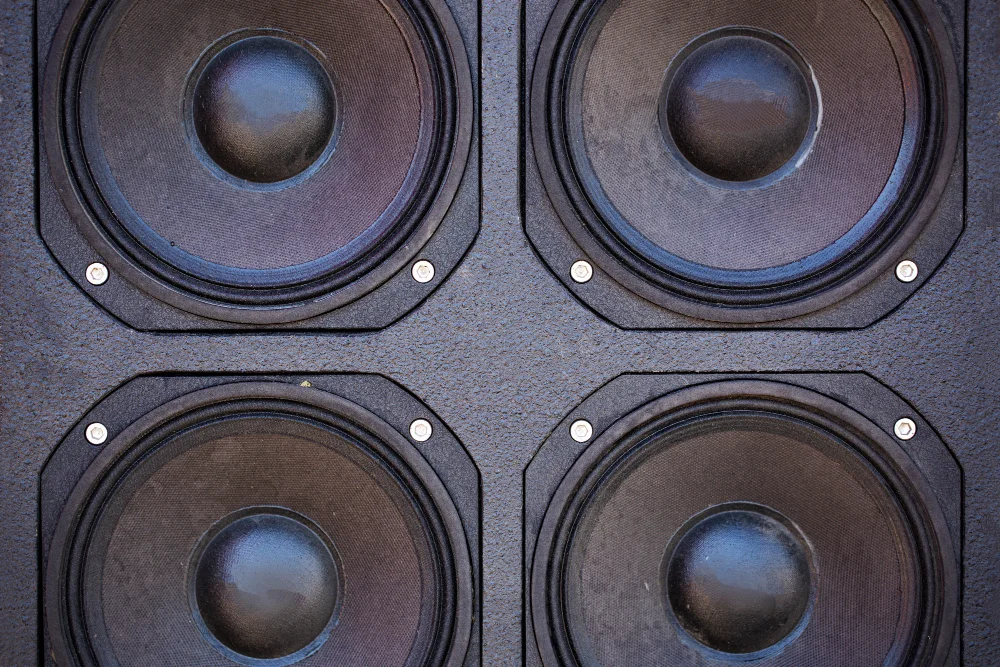
If your idea of a great car audio system is not just clean music but serious volume, speaker efficiency becomes a major part of the equation. The Deaf Bonce Apocalypse M61AC PRO is built for that kind of system, with specifications aimed at strong output from a compact 6.5-inch midrange speaker.
The M61AC PRO is rated at 180 watts RMS, 360 watts maximum power, 4-ohm impedance, and 101.9 dB SPL. It also uses a 1.5-inch CCAW voice coil, pressed-paper cone, cloth surround, ferrite magnet, and aluminum frame. Its published frequency response is 160–12,500 Hz.
But loud car audio is not determined by one number on a specification sheet. Amplifier matching, crossover points, installation, speaker quantity, enclosure or mounting conditions, and signal quality all affect the final result. So, is the Apocalypse M61AC PRO actually a good choice for a loud build? The answer becomes clearer when its specifications are considered together.
Begin With Defined System Requirements
Before choosing a loud midrange speaker, define what the system is expected to accomplish. A daily driver built for balanced listening has different requirements from an open-show or high-output system where vocal projection and midrange presence are priorities.
The M61AC PRO makes the most sense when loud output is an important goal. Its 180-watt RMS rating and 101.9 dB sensitivity give it a strong starting point for high-output applications, but the speaker still needs an amplifier and crossover setup that match its intended use.
Useful questions include:
- Is the system designed primarily for high volume?
- Will one pair of 6.5-inch midrange speakers be used or several pairs?
- What amplifier will power them?
- Are dedicated tweeters or compression drivers included?
- How much low-frequency work will be handled by the subwoofers?
Answering these questions first makes the speaker's specifications much easier to evaluate.
What Does Power Handling Actually Tell You?
Power ratings explain how much electrical power a speaker is designed to handle under specified conditions. For the M61AC PRO, the published rating is 180 watts RMS with a 360-watt maximum rating. Retail specifications also list 180 watts RMS per speaker when the pair is sold together.
The RMS figure is the more useful number when matching an amplifier because it represents continuous power handling rather than a short-term maximum. A loud system should not be built around the 360-watt maximum number alone.
The important questions are:
- How much clean RMS power can the amplifier provide?
- Is the amplifier stable at the speaker's 4-ohm load?
- Is the signal clean at higher volume?
- Are the speakers being protected by an appropriate high-pass filter?
A powerful speaker can still sound bad if the amplifier clips or the system sends frequencies outside the driver's useful operating range.
Efficiency Is a Separate Loudness Question
Power handling and efficiency answer different questions. A speaker that can handle substantial power is not automatically the loudest speaker for a given amplifier.
The M61AC PRO is listed at 101.9 dB SPL, which is a high sensitivity figure for a 6.5-inch midrange. That helps explain why the speaker can produce strong output without requiring enormous amplifier power. However, Deaf Bonce's manual specifically warns that the stated sensitivity should not be treated as the sole indicator of sound pressure inside a vehicle.
This distinction matters because real vehicle installations introduce cabin gain, positioning differences, multiple speakers, reflections, crossover settings, and other variables.
Compare Power and Efficiency Together
Looking at the M61AC PRO as a complete specification set gives a better picture of its loud-audio potential.
The basic combination is:
- 6.5-inch midrange format
- 180 watts RMS power handling
- 360 watts maximum power
- 4-ohm nominal impedance
- 101.9 dB SPL
- 160–12,500 Hz published frequency response
- 1.5-inch CCAW voice coil
These specifications point toward a driver designed for high-output midrange duties rather than deep bass reproduction.
Power Handling + High Sensitivity + Proper Filtering → Stronger Usable Output
That formula is more useful than judging the speaker from its wattage rating alone.
Frequency Response and Loudness Have Different Jobs
Frequency response describes the range in which a speaker is designed to reproduce sound. The M61AC PRO is specified for 160–12,500 Hz, putting its main role firmly in the midrange portion of a larger car audio system.
That means it should not be expected to replace a dedicated subwoofer. Bass frequencies below its recommended operating region should be redirected to the appropriate low-frequency drivers.
Deaf Bonce recommends using a high-pass filter around 150–250 Hz at 24 dB/octave or 250–350 Hz at 12 dB/octave. The manual also lists a low-pass range of 8–12 kHz at 12 dB/octave.
These settings help keep the M61AC PRO focused on the frequencies it is intended to reproduce.
Construction Helps Explain the Loud-Audio Design
Specifications become easier to understand when the physical construction is considered. The M61AC PRO uses a pressed-paper cone, cloth surround, ferrite magnet, aluminum frame, and 1.5-inch CCAW voice coil.
The aluminum frame provides a rigid mounting structure, while the ferrite motor and voice coil form the main magnetic and electrical parts of the driver. The pressed-paper cone is designed for midrange reproduction rather than the large excursion expected from a dedicated subwoofer.
For a loud system, construction matters because the speaker needs to maintain control while reproducing vocals, instruments, and other midrange content at elevated volume levels.
Crossover Settings Require Appropriate Evidence
A loud speaker can be damaged when it is asked to reproduce frequencies it was never intended to handle. This is one reason crossover configuration is just as important as amplifier selection.
For the M61AC PRO, the manufacturer's recommended filtering places the high-pass filter well above the deep-bass region. The manual also recommends keeping the head unit volume at no more than 80% and setting amplifier sensitivity around 50% as a starting point.
That does not mean every vehicle needs identical settings. It means the system should be tuned around the driver's actual operating range rather than simply turning the gain up until the speakers become louder.
Installation and Speaker Quantity Affect Real-World Output
A specification sheet describes the driver, not the entire vehicle installation. Mounting location, door construction, baffle quality, wiring, amplifier channels, and the number of speakers can all change how loud the final system sounds.
The M61AC PRO is a 6.5-inch driver with a published 75 mm mounting depth and approximately 156 mm cutout requirement in current product specifications.
Before installation, check:
- Available mounting depth
- Cutout diameter
- Door or panel clearance
- Speaker wiring
- Amplifier channel configuration
- Crossover access
- Door-panel vibration control
A well-installed pair can outperform a poorly mounted system using more powerful equipment.
Do Not Compare Loudspeakers Without Comparing the Complete System
One of the easiest mistakes is comparing two speakers by RMS power alone. A 300-watt speaker is not automatically louder than a 180-watt speaker.
For the M61AC PRO, the 180-watt RMS rating works alongside its 101.9 dB SPL specification and 4-ohm impedance.
Result → Efficiency → Amplifier → Crossover → Installation
This gives a much better framework for judging loud-audio performance than simply asking which speaker has the biggest wattage number.
Amplifier Matching Can Improve Decision-Making
The M61AC PRO needs an amplifier capable of delivering clean power at its 4-ohm load. The manufacturer's manual lists several Deaf Bonce amplifiers as recommended options, including the ASA-1000.2, ASA-1500.2, ASA-2000.2, and ASA-2500.2.
That does not mean the largest amplifier should automatically be selected. Gain control, crossover configuration, system impedance, wiring, and the number of speakers connected to the amplifier all matter.
For a loud system, clean power is more useful than chasing an oversized amplifier that is poorly matched to the rest of the setup.
Installation Can Affect Consistency
Even a high-output midrange driver needs the right installation conditions. Loose mounting, weak panels, poor wiring, and uncontrolled vibration can reduce the impact of a system even when the speakers themselves are capable of high output.
Before turning the volume up, check:
- Speaker mounting screws are secure.
- Wiring connections are tight.
- The amplifier has adequate ventilation.
- The high-pass filter is correctly configured.
- Gain is set without introducing clipping.
- Door or mounting-panel vibrations are controlled.
These details are easy to overlook when the main focus is speaker power.
Consider Price Alongside Performance
The M61AC PRO should be judged as part of a complete loud-audio system rather than as an isolated product. The cost of the speakers is only one part of the final build.
A useful way to think about value is:
Cost + Amplifier + Wiring + Crossover + Installation + System Matching
If the goal is loud, clear midrange, spending money on an efficient speaker while ignoring amplification or installation can limit the result. A balanced system usually makes better use of every component.
Common Comparison Mistakes
Several mistakes can make a loudspeaker comparison misleading. The most common is treating maximum wattage as the main measure of performance.
Other mistakes include comparing sensitivity figures without considering measurement conditions, ignoring impedance, running a midrange speaker without adequate high-pass protection, and assuming frequency-response numbers tell you how loud a speaker will be.
Another mistake is expecting a 6.5-inch midrange to produce the same type of output as a dedicated subwoofer. The M61AC PRO is designed to contribute strong midrange output, while the rest of the system should handle frequencies outside its intended range.
Final Perspective: Compare the Complete System
So, is the Apocalypse M61AC PRO good for loud car audio? Yes, it is a strong candidate for a high-output midrange-focused build. Its 180-watt RMS handling, 4-ohm impedance, 101.9 dB SPL rating, 1.5-inch CCAW voice coil, and 160–12,500 Hz response give it a specification package suited to loud midrange applications.
The key is using those specifications correctly. Match the amplifier, apply the recommended crossover range, install the speakers securely, and build the rest of the system around their role. When those pieces work together, the M61AC PRO can be a very capable part of a loud car audio setup.
Frequently Asked Questions
1. Is the Deaf Bonce M61AC PRO good for loud music?
Yes. Its 101.9 dB SPL rating and 180-watt RMS power handling make it well suited to high-output midrange applications.
2. How much power does the M61AC PRO handle?
The M61AC PRO is rated for 180 watts RMS and 360 watts maximum power per speaker according to current product specifications.
3. What crossover should I use with the M61AC PRO?
Deaf Bonce recommends an HPF around 150–250 Hz at 24 dB/octave or 250–350 Hz at 12 dB/octave, with an LPF around 8–12 kHz at 12 dB/octave.