Sign up with Google
 Sign in with Zoho
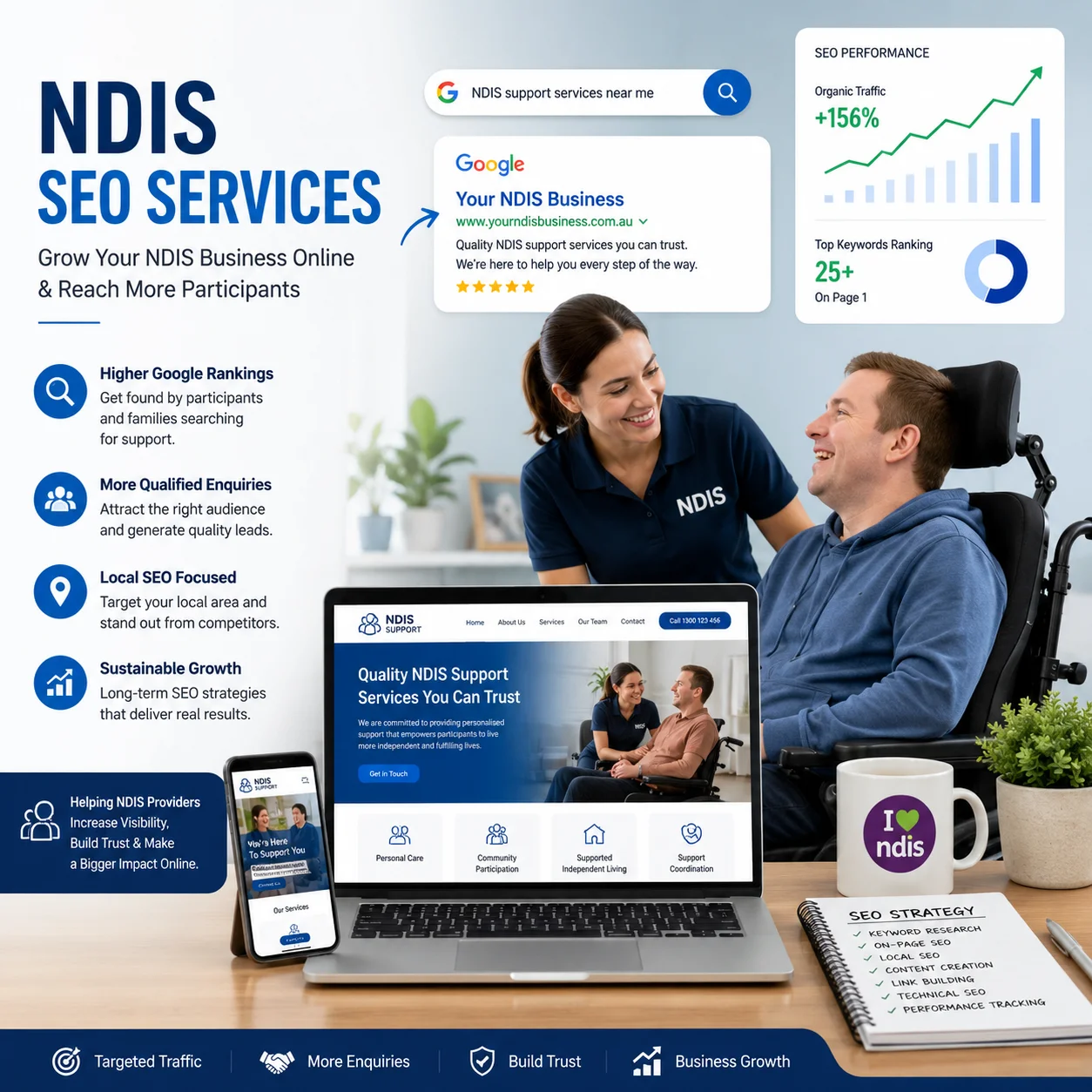
For many NDIS providers, having a professional website is only the first step toward building a strong online presence. Participants, families, carers, and support coordinators increasingly use Google to research disability support services, compare providers, and find businesses operating in their local area.
If your business does not appear when people search for relevant services, potential enquiries can easily go to competitors. The good news is that NDIS providers can improve their visibility through a combination of useful content, local optimisation, technical improvements, and a well-structured website.
Understand What Your Audience Is Searching For
The first step is understanding what potential clients actually type into Google.
People may search for terms such as:
- NDIS providers near me
- disability support services
- NDIS support coordination
- community participation NDIS
- supported independent living
- disability support in Melbourne
- NDIS personal care services
These searches provide valuable insights into what your audience needs.
Instead of creating content based only on what your business wants to promote, consider the questions and problems your potential clients are trying to solve. Creating pages that directly answer those needs can make your website more useful and relevant.
Create a Professional, User-Friendly Website
Your website is often the first impression someone has of your NDIS business. A modern NDIS website design should do more than look professional. It should make information easy to find and help visitors understand your services quickly.
Important website elements include:
- Clear service descriptions
- Simple navigation
- Mobile-friendly layouts
- Fast-loading pages
- Easy-to-find contact details
- Accessible design
- Clear calls to action
- Dedicated pages for individual services
Visitors should not have to search through multiple pages to understand what you offer or how to contact you.
A clean structure also helps search engines understand the relationship between different pages on your website.
Focus on Local Search
Many NDIS providers serve specific suburbs, cities, or regions rather than the entire country. This makes local SEO particularly valuable.
If you operate in several locations, make sure your website clearly communicates where your services are available. You can create useful location pages that explain the services offered in each area, provided the information is genuinely relevant and unique.
Your Google Business Profile should also contain accurate business information, including your business name, address or service area, phone number, website, business category, and operating details.
Encouraging genuine customer reviews can also help establish trust with people researching your business online.
Publish Helpful Content
Google aims to provide users with useful and relevant information. NDIS providers can support their search visibility by publishing content that genuinely helps their audience.
For example, you could create articles about:
- How to choose an NDIS provider
- Understanding different NDIS support services
- Questions to ask before selecting a provider
- How community participation supports independence
- What families should consider when choosing disability support
- Common questions about accessing NDIS services
The purpose of content should not simply be to insert keywords. Instead, focus on providing accurate information that answers real questions.
High-quality articles can also give visitors more reasons to explore your website and understand your organisation.
Optimise Important Website Pages
On-page SEO helps search engines understand the subject and purpose of each page.
Review important elements such as:
- Page titles
- Meta descriptions
- Headings
- Website URLs
- Image descriptions
- Internal links
- Service-page content
Each page should have a clear purpose and focus on a specific topic.
For example, instead of placing all your services on one large page, you may benefit from creating separate pages for services such as personal care, community participation, support coordination, or supported independent living.
This creates a better experience for visitors and provides search engines with more detailed information about your business.
Why SEO for NDIS Service Providers Matters
SEO for NDIS Service Providers is about making your website easier for both search engines and potential clients to discover.
A successful strategy combines several areas of optimisation rather than relying on a single tactic. These may include keyword research, technical SEO, content development, local SEO, on-page optimisation, internal linking, and website improvements.
The goal is to attract relevant visitors who are actively looking for the services you provide.
For example, ranking for a highly relevant local search can potentially bring someone to your website at the exact moment they are researching an NDIS provider.
Improve Website Speed and Mobile Experience
People expect websites to load quickly and work properly across smartphones, tablets, and computers.
A slow or difficult-to-use website can frustrate visitors and may cause them to leave before contacting your business.
Check your website regularly for:
- Large image files
- Slow-loading pages
- Broken links
- Poor mobile layouts
- Complicated navigation
- Unnecessary website elements
Compressing images, improving website code, using reliable hosting, and keeping plugins or software updated can help create a smoother experience.
Build Trust and Credibility
NDIS services involve important decisions, so trust matters.
Your website should clearly communicate who you are, what services you provide, and how people can contact you. Providing genuine information about your team, experience, service areas, and approach can help visitors feel more confident.
You can also include frequently asked questions to address common concerns before someone makes an enquiry.
Avoid making unrealistic promises or unsupported claims. Clear and transparent information is more valuable than exaggerated marketing language.
Consider Professional NDIS SEO Services
Improving search visibility can involve many different areas, and managing everything internally may be challenging for a busy provider.
Professional NDIS SEO services can help businesses develop a structured strategy based on their services, locations, competitors, and audience.
An SEO campaign may include:
- Website audits
- Keyword research
- On-page optimisation
- Local SEO
- Technical SEO
- Content planning
- Competitor analysis
- Internal linking
- Performance monitoring
SEO is generally a long-term process. Rankings can change based on competition, search behaviour, website quality, and ongoing algorithm updates, so consistent monitoring and improvement are important.
Track Your Results
You cannot improve what you do not measure. NDIS providers should monitor important website and search performance metrics to understand whether their efforts are producing useful results.
Some useful measurements include:
- Organic website traffic
- Search impressions
- Keyword rankings
- Click-through rates
- Contact form submissions
- Phone enquiries
- Top-performing pages
- Local search visibility
Remember that traffic alone is not the ultimate goal. A smaller amount of highly relevant traffic can be more valuable than thousands of visitors who have no interest in your services.
Final Thoughts
Getting found on Google requires more than simply adding keywords to a website. NDIS providers need a combination of useful content, a professional website, local visibility, strong technical foundations, and an excellent user experience.
Start by understanding what your audience searches for, improve your important service pages, create genuinely helpful content, and make it easy for visitors to contact you.
With consistent optimisation and a user-first approach, your website can become a valuable source of visibility, trust, and quality enquiries for your NDIS business.