Sign up with Google
 Sign in with Zoho

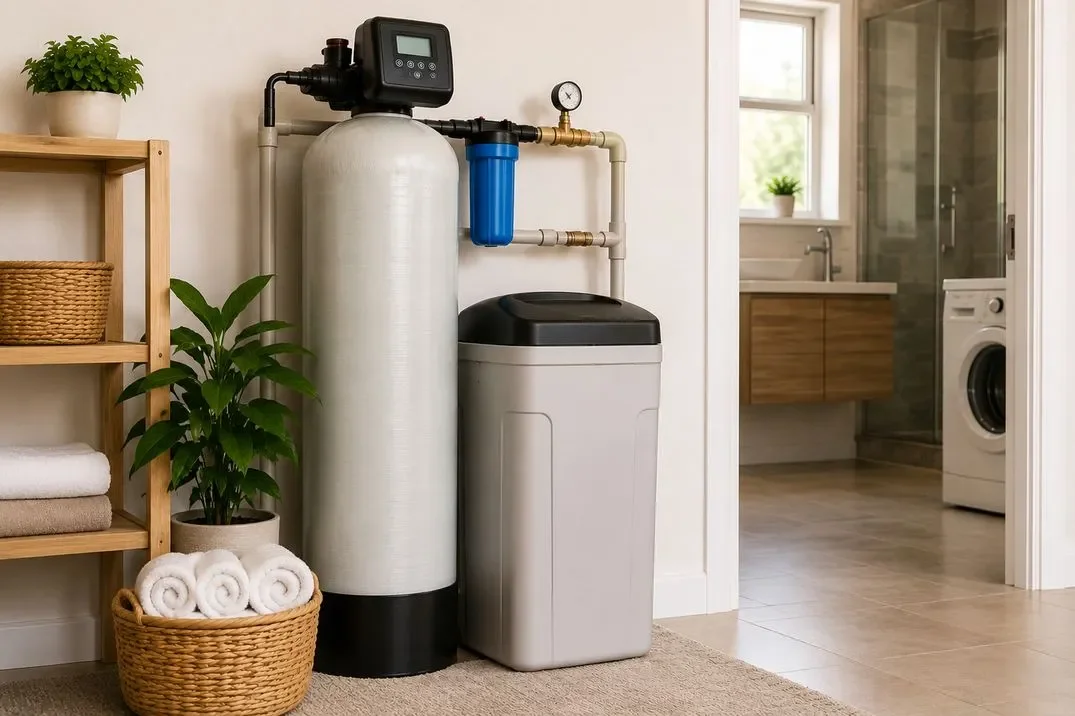
If you've ever noticed cloudy spots on your glasses, a chalky ring around the tap, or soap that just won't lather properly, chances are you're dealing with hard water. It's one of the most common (and most annoying) issues homeowners run into, and it comes down to one thing: too much calcium and magnesium dissolved in your water supply.
Left unchecked, these minerals build up on faucets, cling to bathroom tiles, and slowly wear down the efficiency of appliances you rely on every day. Cleaning takes more effort than it should, and even your skin and hair can start feeling the effects — dry, dull, sometimes irritated.
This is where a water softener for house use comes in. It won't fix everything overnight, but it's one of the more practical, long-term ways to keep hard water from becoming a bigger headache.
So, What Exactly Does a Water Softener Do?
At its core, a water softener is a treatment system built to strip out the minerals responsible for water hardness. Most traditional units rely on ion-exchange — essentially swapping out calcium and magnesium ions for sodium (or a similar ion) as water passes through.
The output? Water that's noticeably gentler on your plumbing, easier on your appliances, and less prone to leaving mineral scale everywhere it touches.
That said, not every softener suits every home. Before settling on one, it's worth thinking through a few things first:
- How hard is your water, really?
- How much does your household use on a daily basis?
- Do you have the space to install a unit?
- How many people are actually living in the home?
Why Bother With a Softener in the First Place?
For homes struggling with noticeably hard water, a softening system can make a real difference in day-to-day life. Think about all the places scale tends to show up — faucets, showerheads, sinks — and how it slowly dulls the shine and clogs things up over time. There's also the soap problem: hard water makes detergents and cleaning products work harder than they should, which often means using more of them just to get the same result.
A good softener helps cut down on both fronts. Surfaces stay cleaner for longer, and you're not constantly scrubbing away at buildup.
Then there's the appliance side of things. Water heaters, washing machines, dishwashers — anything that regularly handles water — is vulnerable to internal scale buildup. Over time, that scale can chip away at efficiency and, eventually, lifespan. Softened water reduces that risk and helps those machines run the way they're supposed to.
Picking the Right One for Your Home
Here's the thing — there's no universal "best" water softener. What works well for one household might be completely wrong for another. That's why it's worth starting with the basics: get a read on your water's hardness level, and get a rough sense of your daily water usage.
From there, look closer at:
- System capacity
- How the regeneration process works
- Ongoing maintenance needs
- Installation requirements and available space
If you're weighing your options, it's worth browsing what's available through Ionix Filters — they offer a range of softeners suited to different household needs.
One more thing worth mentioning: how the unit fits into your existing plumbing matters just as much as the softener itself. Getting it professionally installed goes a long way toward making sure everything runs smoothly and reliably from day one.
Making Hard Water Less of a Hassle
Hard water is frustrating, but it's not something you have to just live with. The right treatment setup can cut down on scale, protect your fixtures and appliances, and genuinely make cleaning less of a chore.
If you're in the market for a water softener for home, the smartest first step is understanding your specific water quality and household needs. For a deeper look at choosing the right fit, check out Ionix Filters' water softener for home guide.
At the end of the day, a well-chosen softener isn't just another appliance sitting in your utility room — it's a small investment that pays off in cleaner surfaces, longer-lasting appliances, and a lot less scrubbing.