Sign up with Google
 Sign in with Zoho

“Why does my child sleep with their mouth open?”“Why does the nose always seem blocked?”“Is that loud snoring every night really normal?”
Parents often have these questions when a child starts having breathing or sleep problems. One possible reason is enlarged adenoids. Adenoids are normal tissue found behind the nose, but when they become enlarged, they can sometimes interfere with comfortable breathing.
The good thing is that enlarged adenoids can be evaluated and treated. In some situations, an ENT specialist may recommend adenoid surgery, while in others, treatment without surgery may be enough.
What Are Adenoids and Why Do They Become a Problem?
Adenoids are located high in the throat, behind the nose. They play a role in the body's immune system, particularly during childhood.
The problem starts when the tissue becomes enlarged. Instead of simply helping the body deal with infections, the enlarged tissue may begin to block the passage of air through the nose.
A child may start breathing through the mouth, snore at night, or seem congested even when there is no obvious cold. Some children may also experience repeated ear problems.
These symptoms don't always mean that the adenoids are the cause, though. Similar problems can happen for other reasons, which is why an ENT examination matters.
Signs That Shouldn't Be Ignored
A blocked nose once in a while is hardly unusual. But when a child regularly struggles to breathe through the nose or snores most nights, it is worth discussing with a doctor.
Some signs associated with enlarged adenoids include:
- Breathing mainly through the mouth
- Regular or loud snoring
- Difficulty breathing through the nose
- A persistently blocked nose
- Restless sleep
- Repeated ear-related problems
- Changes in voice or speech in some cases
Parents may notice these changes gradually rather than all at once. Keeping track of how often the symptoms occur can also be useful when discussing them with an ENT specialist.
Does Every Child Need Adenoid Surgery?
No. This is an important point.
Having enlarged adenoids does not automatically mean that a child needs an operation. Depending on the symptoms and their severity, the doctor may recommend observation, medicines, or other treatment first.
If the enlarged tissue continues to cause significant breathing or sleep problems, or contributes to recurring complications, surgery may become an option.
The decision should be based on the child's individual condition rather than on the size of the adenoids alone.
What Happens During Adenoid Removal Surgery?
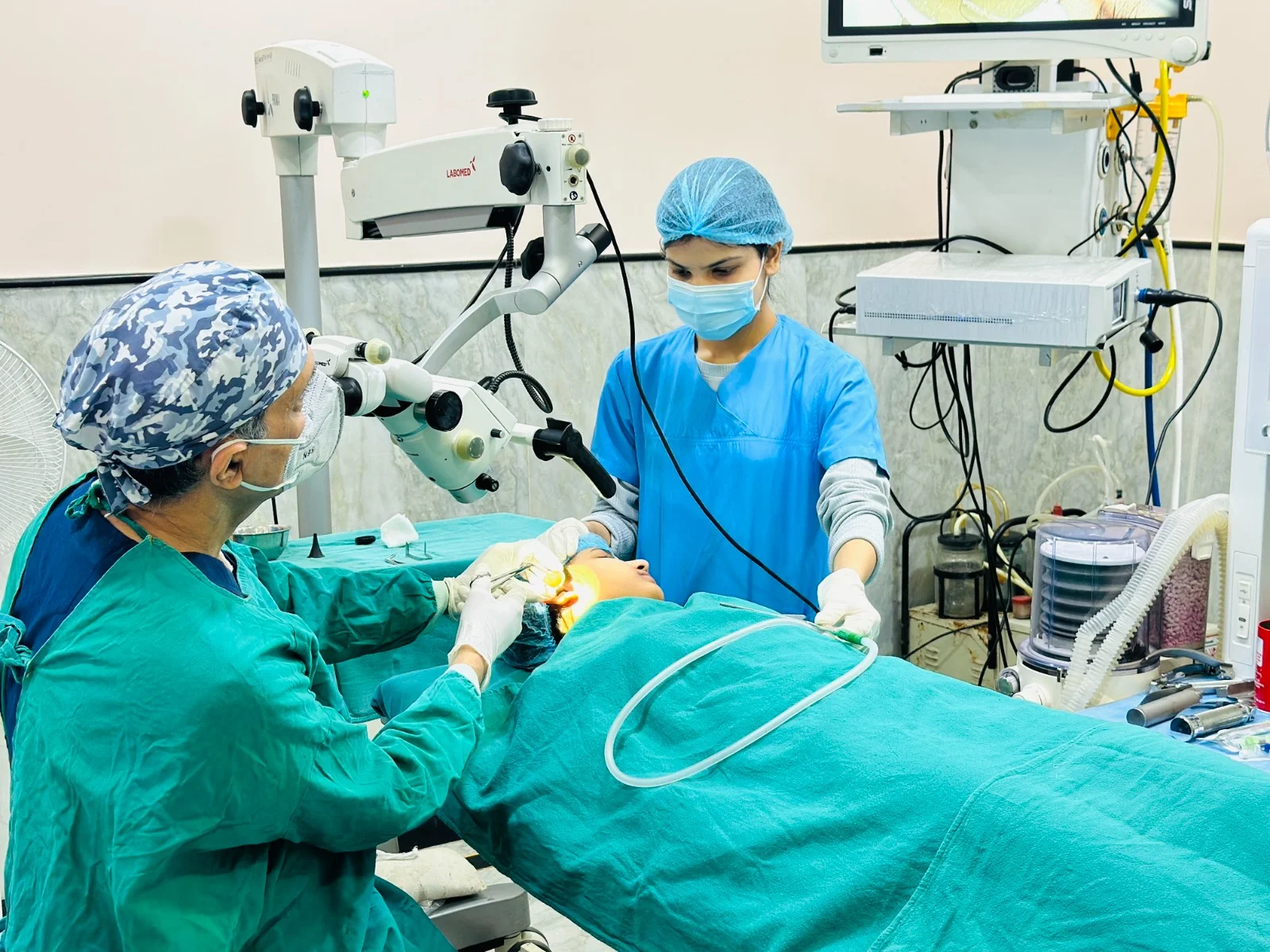
Adenoid removal surgery, also called an adenoidectomy, is a procedure in which the enlarged adenoid tissue is removed.
The operation is performed under anaesthesia. The surgeon reaches the adenoids through the mouth, so there is generally no external cut on the face or neck.
Before the procedure, the ENT specialist explains what preparation is required and what the recovery period may look like. Parents can also ask about anaesthesia, expected discomfort, eating and drinking after surgery, and when normal activities can be resumed.
Having these questions answered beforehand can make the experience less stressful for both the child and the family.
What Other Adenoids Treatment Options Are Available?
Surgery is only one possible approach.
For children with mild symptoms, the doctor may suggest monitoring the condition or using appropriate medical treatment. If infections, allergies, or another condition are contributing to the nasal blockage, treating that underlying issue may also be part of the plan.
The right adenoids treatment depends on the reason behind the symptoms. This is why an ENT consultation is more useful than choosing a treatment based solely on information found online.
How Much Does Adenoid Surgery Cost?
The adenoid surgery cost can vary from one patient and healthcare facility to another. There isn't a universal price that applies to every case.
Several things can contribute to the final bill, including the surgeon's charges, hospital or procedure-room fees, anaesthesia, investigations, medicines, and follow-up care. The type of facility and location can also affect the total expense.
If surgery has been recommended, asking the hospital or clinic for a detailed estimate is the most practical way to understand the expected cost.
Recovery After Adenoid Removal
Every child can have a slightly different recovery experience. Some may return to their regular routine fairly quickly, while others may need a little more time to feel completely comfortable.
Temporary throat discomfort, nasal symptoms, or changes in the voice can occur after the procedure. The treating doctor will provide instructions about medicines, food, rest, and follow-up.
Parents should follow those instructions carefully and contact the medical team if they notice anything concerning during recovery.
When Is It Time to Talk to an ENT Doctor?
If a child has been breathing through the mouth for a long time, snores regularly, sleeps poorly, or repeatedly develops ear-related problems, it is sensible to get the symptoms checked.
An ENT specialist can determine whether enlarged adenoids are involved and explain the available options. Sometimes the answer may be medical treatment or observation. In other cases, adenoid surgery may be recommended.
For additional information about the procedure and treatment, you can refer to the Adenoid Surgery page.
A Simple Takeaway for Parents
Adenoids are a normal part of childhood, but enlarged adenoids can become troublesome when they interfere with breathing, sleep, or other aspects of everyday life.
The important thing is not to assume that surgery is necessary—or that it should be avoided—without first understanding what is causing the symptoms. An ENT evaluation can help clarify the situation and explain whether treatment, monitoring, or adenoid removal surgery is appropriate.
And if surgery is advised, discussing the procedure, recovery and adenoid surgery cost beforehand can help parents know what to expect.