Sign up with Google
 Sign in with Zoho

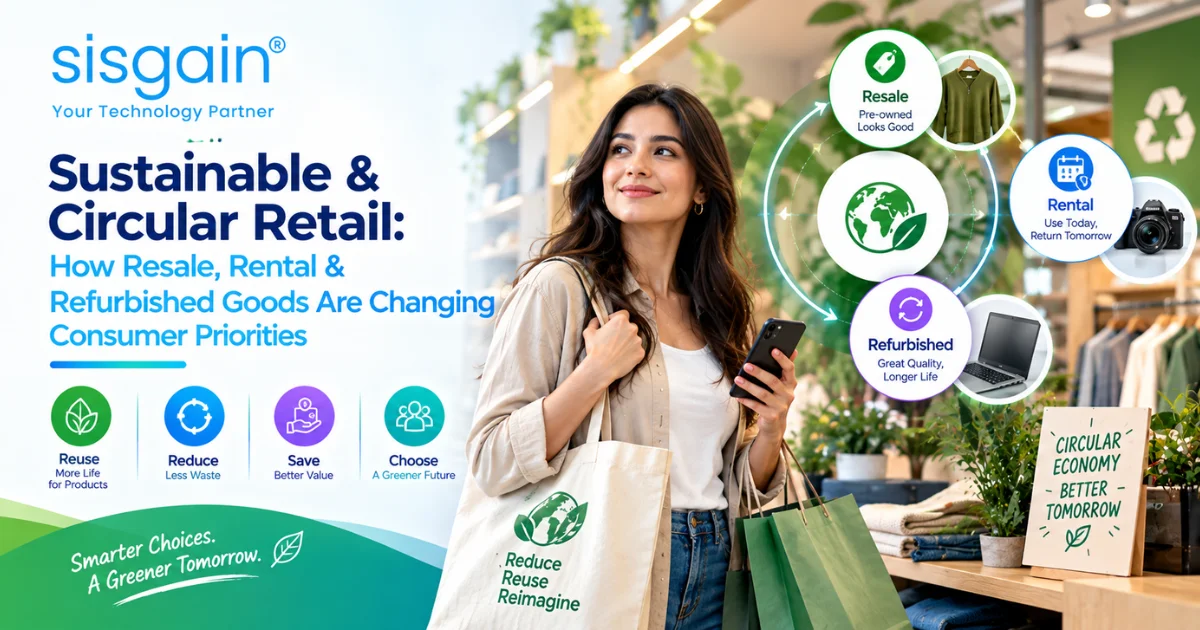
Sustainable and circular retail is no longer a niche brand positioning exercise—it is becoming a core expectation of modern consumers. Shoppers increasingly want retailers to reduce waste, extend product life, offer responsible packaging, and prove that products are sourced ethically and transparently.
The shift toward a circular retail economy is driven by three forces: rising environmental awareness, cost-conscious shopping, and digital tools that make resale, rental, repair, and recycling easier to access.
For retailers, this creates both a responsibility and an opportunity. Businesses that adopt sustainable retail solutions can reduce waste, improve customer loyalty, unlock new revenue streams, and build stronger trust through transparent supply chains.
What Is Sustainable and Circular Retail?
Sustainable retail focuses on reducing the environmental and social impact of retail operations across sourcing, production, packaging, logistics, sales, returns, and end-of-life product management. It includes responsible sourcing, lower-carbon logistics, ethical labor practices, recyclable packaging, and reduced waste.
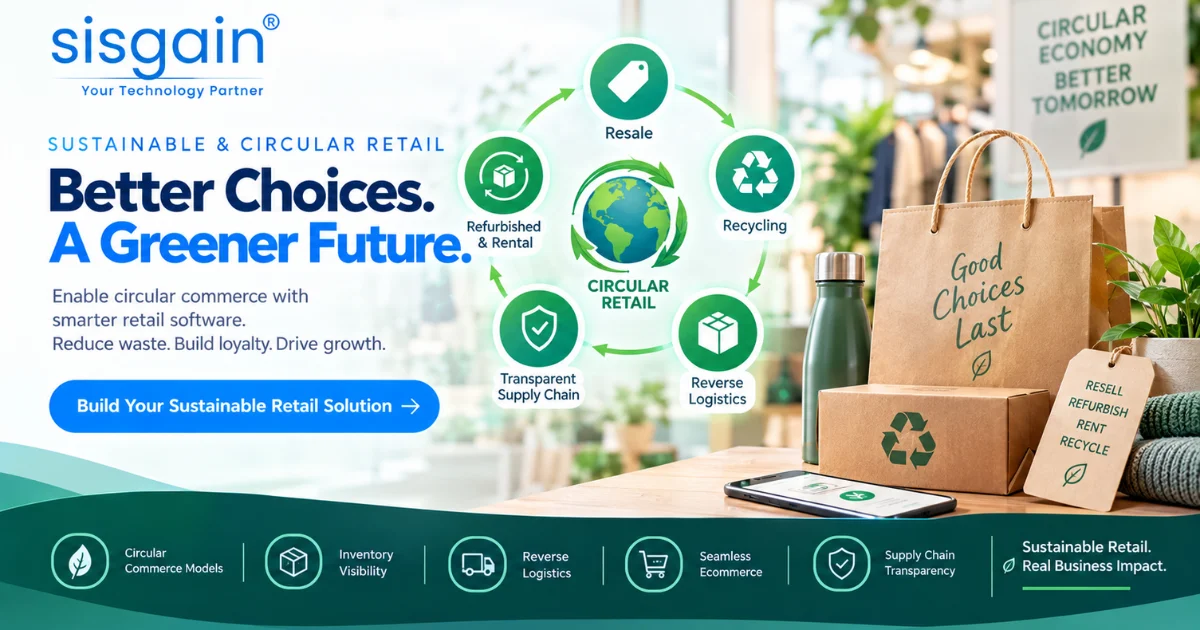
Circular retail goes one step further. Instead of following the traditional “make, sell, dispose” model, it keeps products and materials in use for as long as possible through resale, refurbishment, repair, rental, recycling, and take-back programs.
A practical example is a fashion retailer that accepts used garments through a trade-in program, repairs or refurbishes them, sells them through a branded resale section, and recycles items that cannot be resold. This approach reduces textile waste while creating additional customer touchpoints and revenue opportunities.
Why Consumers Are Choosing Circular Retail
Consumers are becoming more intentional about what they buy and from whom. They want value, convenience, and proof that a brand’s sustainability claims are genuine—not vague marketing messages.
Secondhand shopping is growing rapidly, especially among younger consumers who value affordability, sustainability, and access to unique products. Many shoppers now actively look for pre-owned, refurbished, or rental options before buying something new.
This is not only an environmental trend. Many consumers choose resale or rental because it helps them access quality products at a lower cost. However, sustainability remains an important decision factor, particularly for younger shoppers who expect brands to demonstrate measurable action.
Resale: Turning Pre-Owned Products Into Growth
Resale is one of the most visible pillars of the circular retail economy. It allows retailers to capture value from returned, excess, discontinued, or customer-owned products instead of letting them become waste.
Branded resale programs can include:
- Trade-in programs where customers exchange old products for store credit.
- Certified pre-owned sections on ecommerce websites.
- Consignment models where customers sell items through the retailer.
- Peer-to-peer resale platforms supported by authentication and fulfillment services.
- Outlet channels for refurbished, returned, or excess inventory.
For fashion, electronics, furniture, luxury goods, and sporting equipment, resale can become a high-margin customer-retention channel. It also helps retailers meet sustainability goals by extending the useful life of products.
A successful resale strategy requires more than a “used items” page. Retailers need product intake workflows, condition grading, pricing rules, authentication, inventory visibility, returns handling, and customer communication tools. Modern circular commerce platforms increasingly support these functions through serialized item-level inventory, dynamic pricing, multi-channel synchronization, and analytics.
Refurbished Goods: Quality, Trust, and Value
Refurbished products are pre-owned items that have been inspected, repaired, cleaned, tested, and restored to a sellable condition. They give customers a more affordable way to buy reliable products while reducing demand for new manufacturing.
Refurbishment is especially relevant in categories such as:
- Smartphones, laptops, tablets, and accessories.
- Home appliances and electronics.
- Furniture and interior products.
- Fitness equipment.
- Fashion items that can be repaired, cleaned, or restored.
The biggest barrier to refurbished retail is trust. Customers need clear information about product condition, warranty coverage, replacement parts, return policies, and the refurbishment process. Retailers that provide transparent grading systems—such as “excellent,” “good,” or “fair”—can reduce hesitation and improve conversion.
Technology plays an important role here. A robust retail inventory management system can track each refurbished unit by serial number, condition grade, repair history, warranty status, location, and sales channel. This level of visibility helps retailers prevent stock errors, protect margins, and deliver a consistent customer experience.
Rental Models: Access Over Ownership
Rental is growing because it gives customers access to products without the commitment, cost, or storage burden of ownership. It reflects a broader shift toward flexible, non-permanent consumption.
Common rental models include:
- Clothing rental for events, workwear, maternity wear, and premium fashion.
- Furniture and appliance rental for short-term living or business needs.
- Electronics rental for students, startups, and project-based teams.
- Tool and equipment rental for home improvement or industrial use.
- Try-before-you-buy programs that convert rentals into purchases.
Rental can improve sustainability by increasing product utilization. One item rented repeatedly can serve multiple customers, reducing the overall number of products that need to be manufactured. It can also create recurring revenue, deeper customer relationships, and valuable data on product usage and maintenance needs.
However, rental operations are operationally complex. Retailers must manage bookings, delivery, cleaning, repairs, damage checks, deposits, returns, and inventory availability across locations. This is where sustainable retail software becomes essential: it connects customer orders, product availability, logistics, maintenance, and reverse logistics in one workflow.
Recyclable Packaging: A Visible Sustainability Commitment
Packaging is often the first sustainability signal a customer sees. Excessive plastic, non-recyclable materials, and unclear disposal instructions can undermine even strong product-level sustainability efforts.
Retailers are increasingly moving toward:
- Recycled and recyclable corrugated packaging.
- Compostable mailers and biodegradable fillers.
- Reusable shipping containers and returnable packaging.
- Right-sized packaging to reduce material use and shipping emissions.
- Clear recycling instructions printed directly on packaging.
- Packaging take-back or deposit-return programs.
For ecommerce brands, eco-friendly ecommerce solutions should include sustainable packaging choices at checkout, carbon-conscious delivery options, consolidated shipments, and clear product sustainability information. These features make sustainable behavior easier for customers rather than asking them to compromise on convenience.
Transparent Supply Chains: From Claim to Proof
Transparent supply chains are becoming a baseline expectation rather than a premium feature. Customers want to know where products come from, how they were made, who produced them, and what environmental impact they created.
True transparency requires visibility beyond direct suppliers. Retailers need to understand conditions across multiple tiers of the supply chain, including raw-material sourcing, manufacturing, logistics, packaging, and product recovery.
Digital technologies make this possible at scale. RFID, blockchain, AI, supplier portals, and product passports can help retailers connect procurement, inventory, logistics, certifications, audits, and supplier performance data.
A transparent supply chain can help retailers:
- Verify ethical sourcing and labor standards.
- Track certifications, audits, and test results.
- Identify excess packaging and inefficient logistics routes.
- Measure supplier emissions and environmental risks.
- Support regulatory reporting and due-diligence requirements.
- Give customers credible product-level sustainability information.
The key is to avoid greenwashing. Claims such as “eco-friendly,” “ethical,” or “carbon neutral” must be supported by measurable data, third-party verification where possible, and clear reporting. Consumers are increasingly aware of vague sustainability messaging and expect brands to back claims with evidence.
The Role of Sustainable Retail Software
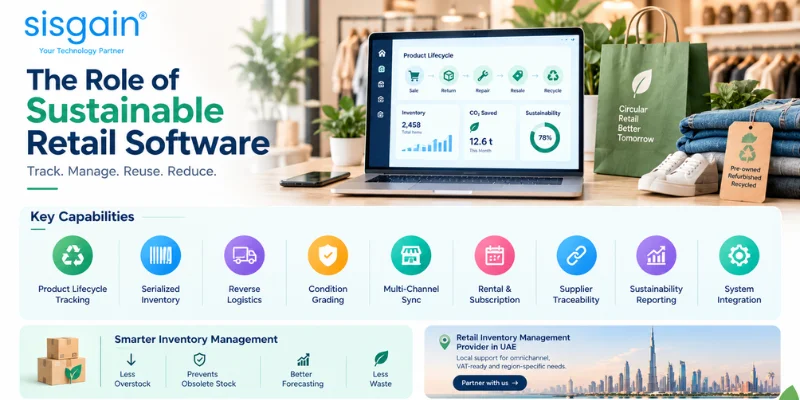
Technology is the backbone of a scalable circular retail strategy. A modern sustainable retail software platform helps retailers manage complex product lifecycles, reverse logistics, inventory visibility, customer engagement, and sustainability reporting.
Important capabilities include:
- Product lifecycle tracking from sale to return, repair, resale, or recycling.
- Serialized inventory management for individual pre-owned or rented items.
- Reverse logistics workflows for returns, trade-ins, and take-back programs.
- Condition grading and refurbishment management.
- Multi-channel inventory synchronization across stores, warehouses, and ecommerce platforms.
- Rental booking, subscription, and deposit management.
- Supplier traceability and certification storage.
- Sustainability dashboards and impact reporting.
- Integration with POS, ERP, CRM, ecommerce, and logistics systems.
An effective retail inventory management system reduces overstock, prevents obsolete inventory, improves demand forecasting, and minimizes waste. Inventory optimization tools can analyze sales patterns, supplier lead times, and transportation variables to determine more resource-efficient stocking levels.
For retailers operating in competitive markets such as the UAE, choosing the right retail inventory management provider in Dubai or retail inventory management provider in UAE can make circular operations more practical. Local providers can support omnichannel retail, warehouse coordination, VAT-ready ecommerce operations, and region-specific customer expectations.
Building an Eco-Friendly Ecommerce Experience
Sustainability should be embedded across the entire ecommerce journey—not limited to a packaging choice or an environmental page on the website. Eco-friendly ecommerce solutions combine responsible operations with a customer experience that makes sustainable choices simple.
Retailers can improve their ecommerce sustainability experience by:
- Adding filters for refurbished, recycled, locally sourced, or repairable products.
- Displaying product condition, warranty, materials, and recycling information clearly.
- Offering trade-in credits during checkout.
- Providing carbon-conscious or consolidated delivery options.
- Using right-sized, recyclable packaging.
- Enabling easy returns and reverse logistics.
- Publishing measurable sustainability progress rather than broad claims.
- Using AI to recommend durable, relevant products and reduce unnecessary purchases.
AI-Powered Personalized Shopping can also support circular retail when it is used responsibly. Instead of simply pushing more products, AI can recommend durable alternatives, compatible repair parts, refurbished options, rental choices, or products that match a customer’s actual needs. This can reduce returns, improve customer satisfaction, and extend product lifecycles.
For brands building new digital storefronts, ecommerce web design & development in Dubai should prioritize fast performance, mobile-first design, accessible product information, secure checkout, and integration with inventory and sustainability systems. Likewise, an ecommerce management system in Dubai should connect product catalogs, orders, inventory, returns, customer data, and reporting in a single platform.
How Retailers Can Start Their Circular Journey
Retailers do not need to transform every operation overnight. The most effective approach is to begin with a focused pilot, measure results, and scale what works.
- Audit current waste and returns. Identify where products, packaging, and inventory are being wasted across the business.
- Choose one circular model. Start with a trade-in program, branded resale section, rental pilot, or packaging-return initiative.
- Standardize product data. Create clear fields for materials, condition, certifications, repairability, recyclability, and supplier information.
- Invest in inventory visibility. Use a retail inventory management system that can track individual items, locations, condition grades, and reverse-logistics status.
- Make sustainability visible. Communicate impact through product pages, packaging, order confirmations, and annual reporting.
- Measure commercial outcomes. Track resale revenue, return recovery value, rental utilization, packaging reduction, repeat purchases, and customer retention.
- Avoid greenwashing. Use specific, verifiable claims and publish progress honestly, including areas that still need improvement.
Frequently Asked Questions
1. What is sustainable and circular retail?
Sustainable retail reduces the environmental and social impact of retail operations, while circular retail keeps products and materials in use through resale, repair, refurbishment, rental, recycling, and take-back programs. Together, they help retailers reduce waste and create longer-term customer value.
2. Why are resale and refurbished products growing?
Consumers are looking for better value, flexible ownership options, and lower-impact purchasing choices. Secondhand shopping and rental models are becoming mainstream because they combine affordability, convenience, and sustainability.
3. How can a retail inventory management system support sustainability?
A retail inventory management system helps retailers track stock levels, product condition, returns, serial numbers, warehouse locations, and resale inventory. Better visibility reduces overstocking, obsolete inventory, lost products, and unnecessary waste.
4. What is an example of a circular retail business model?
A smartphone retailer may accept old devices through trade-in, refurbish and certify them, sell them with a warranty, and recycle components that cannot be reused. This creates new revenue while reducing electronic waste.
5. How can retailers avoid greenwashing?
Retailers should use specific, measurable claims supported by supplier data, certifications, audits, and transparent reporting. Instead of saying only “eco-friendly,” they should explain the material used, the percentage of recycled content, the recycling process, and the measurable environmental outcome.
Conclusion
Sustainable and circular retail is no longer optional for forward-looking brands. Consumers increasingly expect resale options, refurbished products, rental flexibility, recyclable packaging, and transparent supply chains as part of a better shopping experience.
The retailers that succeed will be those that treat sustainability as a business model, not a marketing label. By combining circular commerce models with strong inventory visibility, reverse logistics, customer-friendly ecommerce experiences, and credible supply-chain transparency, retailers can reduce waste while creating new revenue, stronger loyalty, and long-term competitive advantage.
The future of retail is not simply about selling more products—it is about helping customers buy better, use products longer, and keep valuable materials in circulation. Businesses that invest in sustainable retail solutions, sustainable retail software, and a well-designed circular retail economy strategy will be best positioned to meet the expectations of the next generation of consumers.