Sign up with Google
 Sign in with Zoho

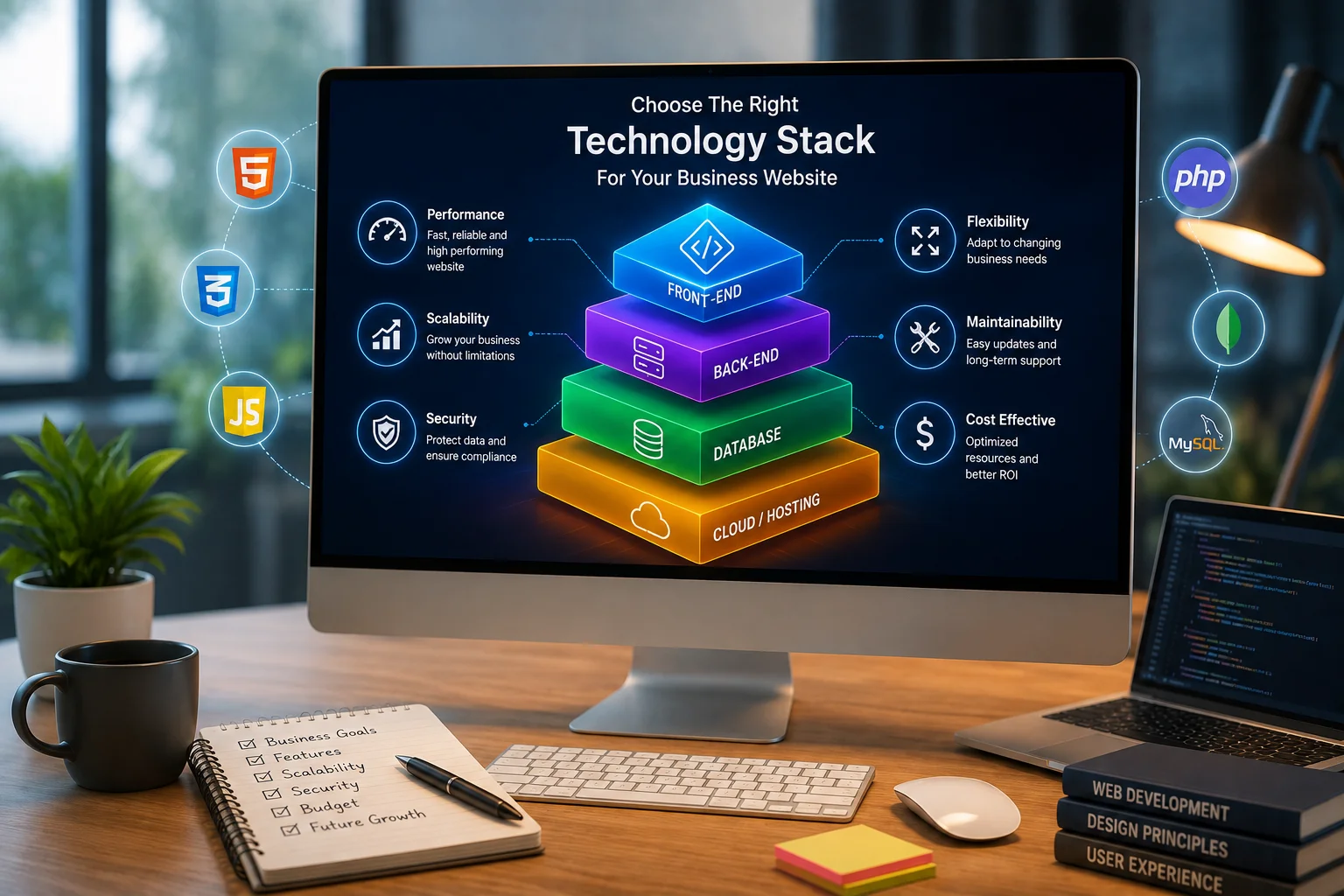
Choosing the technology for a business website is not as simple as picking the newest framework or the programming language everyone is talking about. What works well for an online store may be unnecessary for a small company website. The right choice depends on what you want the website to do today and where you expect your business to be a few years from now.
Think about it like choosing equipment for a business. A small café does not need the same kitchen setup as a large restaurant. In the same way, a company website with ten pages does not necessarily need the same technology as a customer portal with logins, payments, dashboards, and third-party integrations.
If you are planning a new website and are unsure where to begin, it can help to hire web developer India professionals who can look at your requirements first and then recommend a suitable technology stack. The important part is not choosing a technology because it sounds advanced. It is choosing something that your business can actually use, maintain, and grow with.
Start With What Your Website Actually Needs
Before discussing programming languages or frameworks, write down what the website needs to accomplish.
For example, a local service business may only need:
- Service pages
- Contact forms
- Location information
- Customer testimonials
- A blog
- Basic enquiry functionality
An online retailer will have very different requirements. It may need product management, shopping carts, payment processing, customer accounts, order tracking, and inventory integration.
A technology stack should be selected after understanding these requirements. Starting with technology first can lead to unnecessary complexity and higher development costs.
What Makes Up a Technology Stack?
A website technology stack is essentially the collection of tools used to build and run the website.
It usually includes several layers.
Front-End Technology
This is the part visitors see and interact with. It controls things such as:
- Page layouts
- Buttons
- Menus
- Forms
- Animations
- Interactive elements
HTML, CSS, and JavaScript are common foundations, while frameworks can be added when a project requires more advanced interactions.
Back-End Technology
The back end works behind the scenes. It can manage:
- User accounts
- Database operations
- Forms
- Authentication
- Business logic
- APIs
- Orders and transactions
The right choice depends heavily on what the website needs to do.
Database
A database stores information used by the website. Depending on the project, this could include customer information, products, orders, content, bookings, or other business data.
Hosting and Infrastructure
The website also needs an environment where it can run. Hosting, servers, cloud infrastructure, backups, and security configurations all form part of the overall setup.
Don't Choose Technology Just Because It Is Popular
This is one of the easiest mistakes to make.
A technology might be widely used and still be a poor fit for a particular project. Likewise, an older, stable technology can sometimes be a perfectly sensible choice if it meets the requirements.
Imagine a business only needs a simple company website. Building an unnecessarily complicated system could increase development time and make future maintenance harder.
On the other hand, if the same business plans to introduce customer dashboards and advanced integrations later, choosing a solution with limited flexibility could create problems.
The question should always be:
“Does this technology make sense for our project?”
rather than:
“Is this the latest technology?”
Think About the People Who Will Maintain It
A website does not stop needing attention after launch.
Content changes. Security updates are released. New features are requested. Sometimes a business wants to connect another service or redesign part of the website.
This means you should think about maintainability before development begins.
Ask yourself:
- Will developers be available to work with this technology later?
- Is the technology well documented?
- Can new features be added without rebuilding everything?
- Will future developers understand the existing code?
- How difficult will troubleshooting be?
A technology stack that looks impressive on paper is not particularly useful if nobody can comfortably maintain it.
Performance Should Be Part of the Decision
Nobody wants a website that feels slow.
However, choosing a particular framework does not automatically make a website fast or slow. Development practices matter just as much.
For instance, a website can become sluggish because of oversized images, excessive scripts, inefficient database queries, poor hosting, or badly optimized code.
When planning the stack, discuss performance from the beginning. Consider how the website will handle normal traffic today and higher traffic if the business becomes more successful.
Consider Security From the Beginning
Security should not be something added just before launch.
Depending on the website, you may need secure authentication, protected databases, access controls, encrypted connections, regular updates, backups, and monitoring.
A basic business website and a platform handling customer accounts or payments will naturally have different security requirements.
The development team should understand those differences before selecting and implementing the technology.
Plan for Future Growth
One useful question to ask before starting development is:
“What might we need six months or two years from now?”
You may not know the exact answer, but thinking about possibilities can prevent short-term decisions from creating long-term problems.
Future requirements might include:
- An online store
- Customer login areas
- Online bookings
- Payment integration
- CRM integration
- Mobile applications
- Advanced reporting
- Multiple business locations
- Increased website traffic
You do not necessarily need to build all of these features immediately. The important thing is to avoid choosing a foundation that makes future improvements unnecessarily difficult.
CMS or Custom Development?
This is another decision businesses often face.
A content management system can be a practical option when a business wants to update website content regularly without depending on a developer for every small change.
Custom development can make more sense when the website needs unique functionality or business processes that standard systems cannot handle easily.
Neither option is automatically better.
For example, a consulting company with a handful of service pages may not need a highly customized platform. A business running a complex customer portal could have completely different requirements.
The decision should come from functionality rather than assumptions.
Keep the Budget in Perspective
Technology affects development and maintenance costs, but choosing the cheapest option is not always the most economical decision.
A low-cost solution may become expensive later if it is difficult to update, performs poorly, or cannot support new requirements.
At the same time, businesses should avoid paying for complexity they do not actually need.
A better approach is to consider the total cost over the website's expected lifetime, including:
- Initial development
- Hosting
- Maintenance
- Security updates
- Feature additions
- Performance improvements
- Technical support
This gives you a more realistic picture of the investment.
Ask Your Developer to Explain the Recommendation
You do not need to become a programmer to make a good technology decision.
Instead, ask the development team to explain why they recommend a particular stack.
A good explanation should cover:
- Why the technology suits your project
- How it will handle expected traffic
- How future features can be added
- How security will be managed
- What maintenance will be required
- Why the chosen solution fits your budget
If someone recommends a technology simply by saying it is “the latest” or “the best,” ask for a more specific explanation.
A Simple Example
Suppose a growing service company wants a website with 15–20 pages, enquiry forms, a blog, testimonials, and a few third-party integrations.
It may not need the same architecture as an online marketplace serving thousands of customers.
Now imagine that the company plans to add customer accounts, online payments, and a booking system within the next year.
That changes the conversation.
The initial website can still be kept simple, but its underlying architecture should leave enough room for those additions. This is where proper planning can save considerable redevelopment work later.
The Right Stack Is the One That Fits Your Business
There is no universal technology stack that is perfect for every business website.
The best choice is the one that provides the functionality you need without creating unnecessary complexity. It should be secure, maintainable, reasonably scalable, and practical for your budget.
Before making the final decision, focus on your business requirements first. Then evaluate the available technologies based on those requirements.
A good development partner will not simply tell you what technology they prefer. They should be able to explain why that technology makes sense for your particular website.
Frequently Asked Questions
How do I know which technology is right for my website?
Start by identifying your website's purpose, required features, expected traffic, integrations, budget, and future plans. These factors provide a much better basis for choosing technology than popularity alone.
Is newer technology always better?
No. A newer technology can be useful, but stability, security, developer availability, documentation, and long-term maintenance are equally important.
Should a small business build a custom website?
It depends on the requirements. A straightforward business website may work well with an established CMS, while businesses with unique workflows or advanced functionality may benefit from custom development.
Can the technology stack be changed later?
It can, but changing the underlying technology can require significant development work. Planning carefully at the beginning can reduce the likelihood of needing a complete rebuild later.
Conclusion
Choosing a technology stack becomes much easier when you stop looking at technology in isolation and start looking at the business problem you are trying to solve.
A good website should be able to perform reliably, remain secure, support your customers, and adapt as your business changes. Whether you need a simple business presence or a more advanced web application, the technology should serve those goals rather than add unnecessary complexity.
Taking time to make the right decision at the planning stage can save money, development effort, and frustration later.