Sign up with Google
 Sign in with Zoho

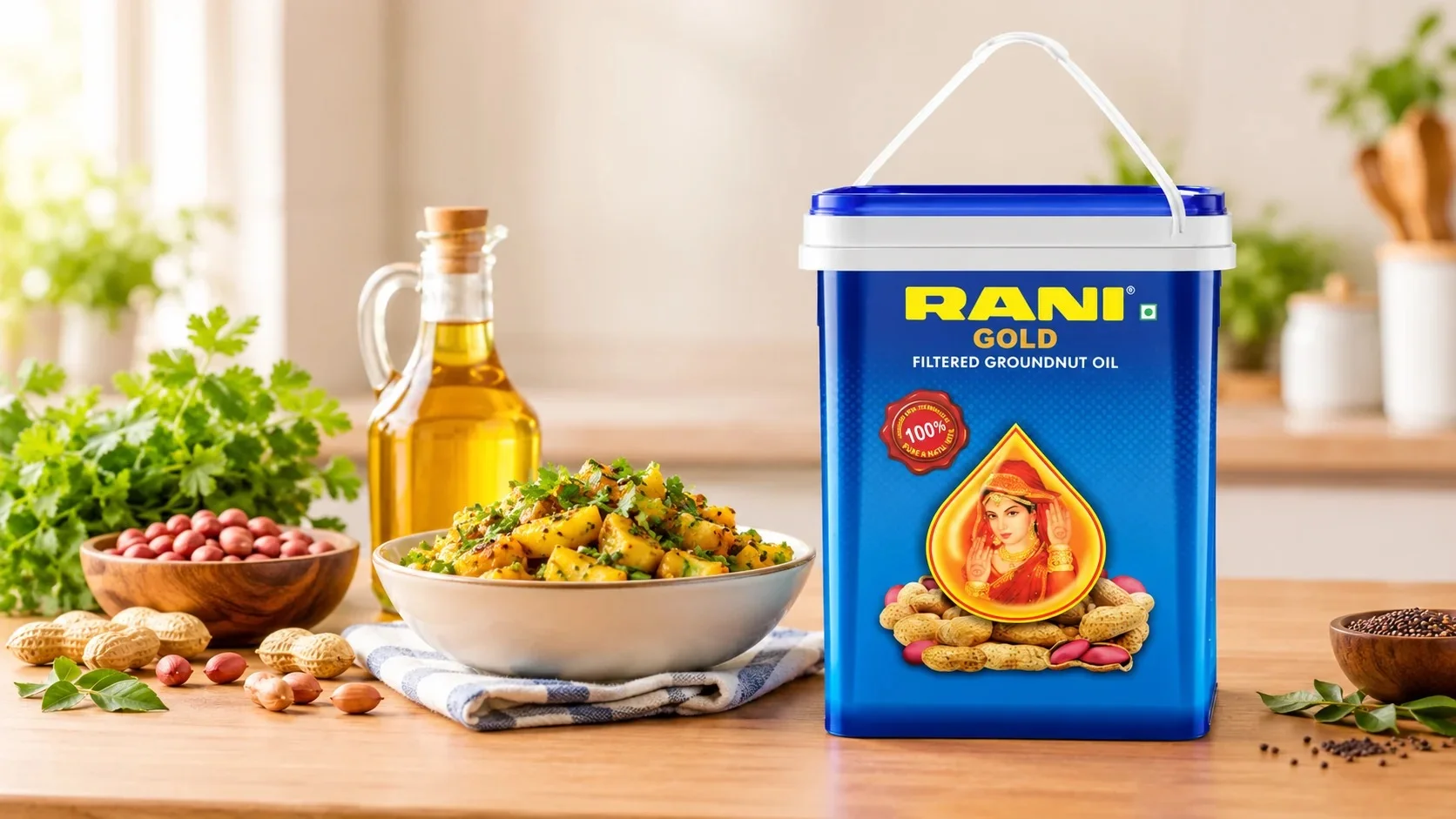
Walk into most Gujarati or Maharashtrian kitchens and you'll find the same steel tin of groundnut oil sitting next to the stove, generation after generation. It's the oil your mother tempered dal in. The oil that made your grandmother's puris puff up just right. And somehow, even with all the newer cooking oils lining supermarket shelves now, it's never really lost its place.
So is groundnut oil actually good for everyday cooking, or is that just nostalgia talking? Honestly, it holds up. Groundnut oil (peanut oil, if you know it by that name) has a fairly high smoke point, a fat profile that leans heavily toward monounsaturated fats, and a mild nutty aroma that fits naturally into Indian cooking. It's not some miracle food, and like any oil it should be used sensibly. But for most Indian households, it's still one of the more reasonable everyday choices sitting on the shelf.
Here's what's actually behind that reputation, what the nutrition really looks like, and a few things worth knowing before you pick up your next tin.
What Is Groundnut Oil and How Is It Made?
Groundnut oil is extracted from peanuts (technically a legume, not a tree nut), which are crushed and pressed to release their oil. Depending on how it's processed, you'll come across a few different types in the market:
• Cold-pressed / wood-pressed groundnut oil – extracted mechanically at low temperature, with no heat or chemicals involved. Keeps the most natural aroma, colour, and nutrients, but has a shorter shelf life.
• Double filtered groundnut oil – the oil is pressed and then passed through mechanical filtration (not chemical refining) to remove impurities while keeping the natural taste and nutrients largely intact.
• Refined groundnut oil – processed further with heat and chemical treatment to strip odour and colour. Neutral in taste, but loses some of the natural vitamin content in the process.
For everyday Indian cooking — tadka, sabzis, frying snacks, deep-frying puris and bhajiyas — filtered or cold-pressed groundnut oil is usually the better pick, since it retains its characteristic nutty flavour and most of its natural goodness.
Groundnut Oil Nutrition: What's Actually in the Bottle
Nutrition labels vary slightly by brand, but here's what a typical 100g (roughly 100ml) serving of groundnut oil looks like, based on standard food composition data:
The two numbers worth paying attention to are the MUFA content and the smoke point. A high share of monounsaturated fat is generally associated with better cholesterol balance, and a high smoke point means the oil can handle high-heat Indian cooking without breaking down and releasing harmful compounds as quickly as lower-smoke-point oils do.
Is Groundnut Oil Good for Everyday Cooking?
Yes, and there's real reasoning behind that, not just a marketing line.
Indian cooking runs hot. Tempering, deep-frying, shallow-frying, all of it pushes an oil close to its limit fairly often. Groundnut oil has a smoke point of around 230°C, comfortably above what most home cooking actually reaches, so you get less smoking, less bitterness, and less of that breakdown you'd rather not eat.
It also tends to hold up better when reused. Oils rich in monounsaturated fat, which groundnut oil is, generally resist oxidation more than oils high in polyunsaturated fat. That matters in a lot of Indian kitchens, where the same oil often gets used for a second batch of pakoras or a fresh round of puris the next morning.
There's a practical side too: because of how it behaves at high temperature, groundnut oil tends to seal food quickly when frying, so less of it actually soaks into whatever's in the kadhai. And unlike a flavourless refined oil, a decent filtered groundnut oil carries a mild, nutty aroma that genuinely adds something to poha, dal tadka, or a plate of Gujarati farsan. That's really the reason it's stuck around in oil-producing states for so long, not just habit.
None of this makes it a “special occasion” oil either. It works just as well for the everyday dal and sabzi as it does for festival-time frying, which is probably why so many households never bothered switching away from it.
Health Benefits of Cooking with Groundnut Oil
The biggest one is heart health. Groundnut oil's fat is mostly monounsaturated, the same category that makes olive oil so popular in Mediterranean diets. Diets built around MUFA instead of saturated fat tend to correlate with better cholesterol numbers, which is a big part of why dietitians often bring up groundnut oil when Indian families ask what to cook with day to day.
It's also a decent natural source of Vitamin E, an antioxidant that helps your cells deal with everyday oxidative stress. You're not going to hit your full daily requirement from cooking oil alone, but a couple of tablespoons used through the day does add up to something meaningful.
Then there's fortification. A lot of the better brands add Vitamin A and D to their groundnut oil, and honestly, that matters more than people realise. Vitamin D deficiency is fairly common across Indian diets, so getting a bit of it passively through the oil you're already cooking with is a small win that doesn't ask you to change anything about how you eat.
Being plant-derived, it's naturally cholesterol-free too, though that's true of basically every vegetable oil, so it's more of a baseline than a selling point. What does stand out is how it behaves under heat: because it resists breaking down as quickly, food fried in it tends to come out lighter and less greasy, and the oil itself lasts a bit longer before you need to toss it.
Things to Consider Before You Switch to Groundnut Oil
No single cooking oil is perfect for everyone, and groundnut oil is no exception. A few honest considerations:
• It's still calorie-dense. Like every cooking oil, groundnut oil is 100% fat and roughly 880+ kcal per 100g. The health benefits come from replacing less favourable fats with it, not from using it liberally. Moderation matters more than the oil you choose.
• Peanut allergy. If anyone in your household has a peanut allergy, groundnut oil needs a doctor's clearance before use, even though highly refined oil generally contains negligible allergenic protein. When in doubt, avoid it.
• Refined vs. filtered vs. cold-pressed matters. Refined groundnut oil is more processed and has a longer shelf life but fewer natural nutrients. Filtered and cold-pressed retain more of the natural aroma and micronutrients but should be stored more carefully. Pick based on how you cook and how quickly you'll use the tin.
• Storage. Keep groundnut oil in a cool, dark place, away from direct sunlight and heat, and always use a clean, dry spoon or ladle to avoid moisture contamination — this is especially important for large packs like a 15kg tin that will be used over several months.
• Balance with other oils. Most nutrition experts recommend rotating between two or three cooking oils rather than relying on just one, to get a wider spread of fatty acids. Groundnut oil can comfortably be your primary frying and tempering oil, with something like sunflower or mustard oil used occasionally for variety.
How to Choose the Best Groundnut Oil in India
With so many brands lining store shelves, picking the best groundnut oil comes down to a few practical checks rather than guesswork:
1. Check the processing method — cold-pressed or double filtered oil retains more natural nutrients than heavily refined oil.
2. Look for FSSAI certification and a clear manufacturing address on the label — this is your basic assurance of food safety compliance.
3. Check for added fortification — Vitamin A and D fortification is a good sign the brand is thinking about nutrition, not just shelf life.
4. Smell and colour matter — genuine groundnut oil has a light golden colour and a mild nutty aroma. If it smells sharp, chemical, or completely odourless, it's likely heavily refined or adulterated.
5. Source region is a real quality indicator. Groundnut oil made from groundnuts grown in Gujarat's Saurashtra belt — one of India's largest groundnut-producing regions — tends to have a richer, more consistent flavour, simply because the raw material quality starts higher.
Why Gujarat and Rajkot Groundnut Oil Stands Apart
If you're looking for the best groundnut oil in Gujarat, you're already looking in the right state. Gujarat, and Saurashtra in particular, grows a large share of India's groundnut crop, which means oil mills here have direct access to fresher, higher-quality groundnuts without the long supply chains that oil made elsewhere often depends on.
Rajkot specifically has built a long-standing reputation as a hub for edible oil production. Many households across Gujarat and neighbouring states specifically look for the best groundnut oil in Rajkot because of this local expertise — generations of oil millers here have refined their pressing and filtration processes around the same crop, year after year. That kind of consistency is hard to replicate in regions where groundnut is a smaller, secondary crop.
This is exactly the backdrop Rani Oil comes from. Produced by Kaneriya Oil Industries out of Rajkot, Gujarat, Rani Double Filtered Groundnut Oil is made from groundnuts sourced directly from Saurashtra's agricultural belt, with 40 years of experience behind the process.
Why Buy Groundnut Oil in a 15 Kg Tin
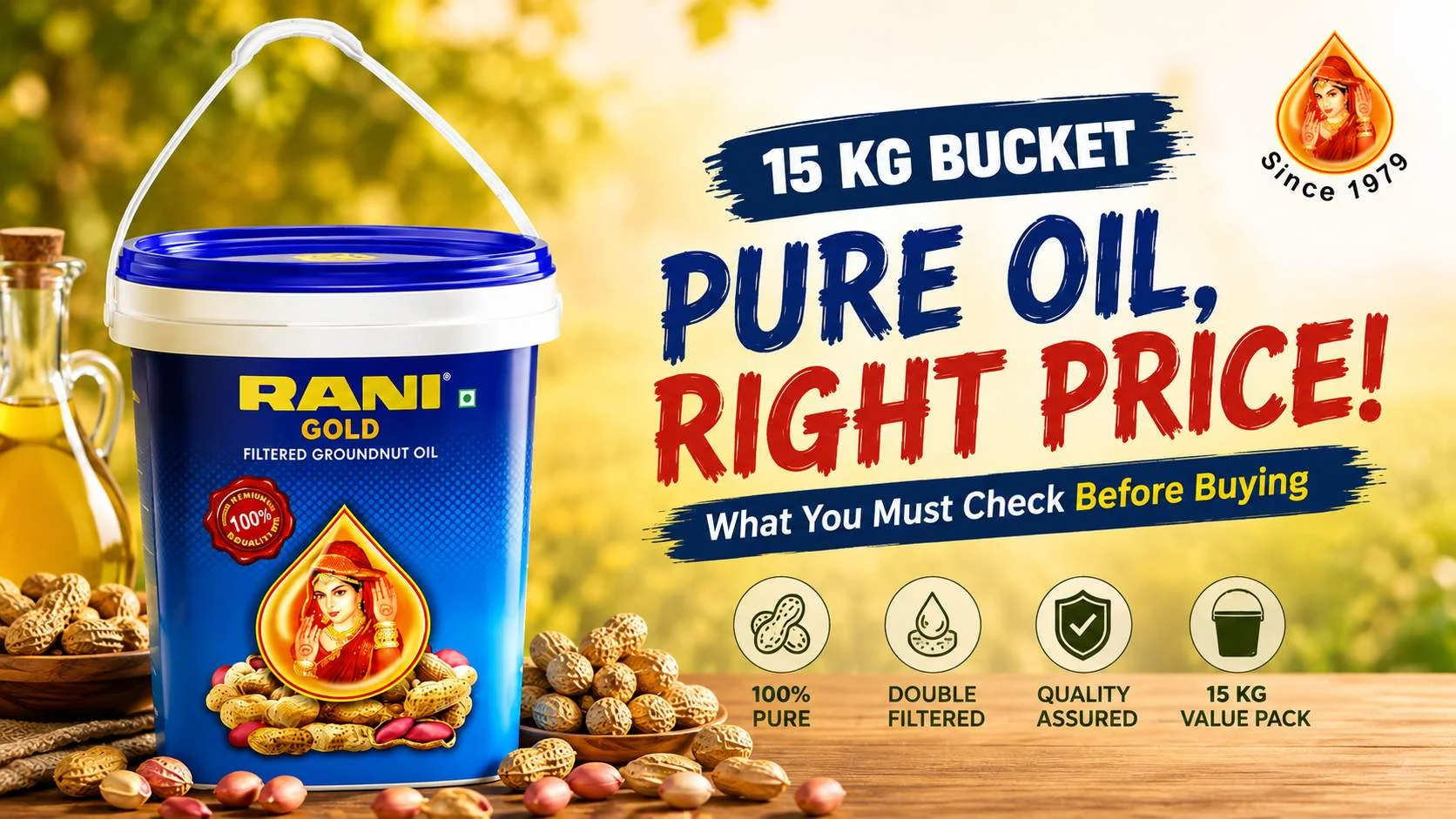
Buying a 1-litre bottle every couple of weeks feels convenient enough, until you actually add up what it costs over a year, plus the packaging you're throwing out and the number of trips back to the store. That's really where a groundnut oil 15 kg tin starts to make more sense than it first appears to.
For one, it's simply cheaper per litre. Buying in bulk almost always works out that way, since you're paying mostly for the oil itself rather than for repeated packaging and handling. It's also not just a “large family” purchase. A 15kg groundnut oil tin fits joint families, small hotels, tiffin services, caterers, or basically anyone whose kitchen doesn't want to run dry mid-recipe.
There's a convenience side too. One tin can carry a mid-sized household through several months, so you're not reordering constantly, hauling heavy bags home every other week, or scrambling for oil right before Diwali cooking starts. And when you buy a large tin from one trusted producer instead of switching between smaller packs and retailers, you get the same taste and quality right through the tin, not the batch-to-batch variation that comes from mixing sources.
If your kitchen goes through oil regularly, a 15 kg tin isn't really a bigger purchase so much as a smarter one.
About Rani Double Filtered Groundnut Oil
Rani Oil's Double Filtered Groundnut Oil is made from groundnuts sourced from Saurashtra's agricultural land and is:
• Produced without any chemical processing — mechanically double filtered instead.
• Fortified with Vitamin A and D to help fill common nutritional gaps.
• Naturally rich in MUFA, supporting a healthier balance of HDL and LDL cholesterol.
• Backed by a high smoke point, making it well suited for deep frying and everyday tempering without excess oil absorption.
• A natural source of antioxidant Vitamin E.
• Backed by 40 years of experience in producing edible oils that Gujarati kitchens trust.
It's available in multiple pack sizes, including the 15 Kg tin, so you can choose what fits your household or business consumption — without compromising on the quality of the oil itself.
Frequently Asked Questions
Is groundnut oil good for daily cooking?
Yes. Its high smoke point, MUFA-rich fat profile, and natural aroma make it well suited for everyday Indian cooking, from tempering to deep frying, when used in moderation.
Which is the best groundnut oil to buy in India?
Look for double filtered or cold-pressed groundnut oil, ideally sourced from Gujarat's Saurashtra belt, with FSSAI certification and no chemical processing. Fortification with Vitamin A and D is an added plus.
Is groundnut oil better than sunflower or refined oil for frying?
Groundnut oil generally has a comparable or higher smoke point than sunflower oil and a more favourable MUFA-to-PUFA ratio, which makes it more stable during high-heat and repeated frying.
How long does a 15 kg tin of groundnut oil last?
For an average household of 4–5 people cooking daily meals, a 15 kg groundnut oil tin typically lasts several months, depending on how much frying and tempering is done regularly.
Is Rajkot known for good quality groundnut oil?
Yes. Rajkot and the broader Saurashtra region are among India's largest groundnut-growing areas, giving local oil producers direct access to fresh, high-quality groundnuts and decades of processing expertise.
How should I store a bulk groundnut oil tin?
Keep it sealed in a cool, dark place away from direct heat and sunlight, and always use a clean, dry ladle when pouring to avoid moisture or contamination over its shelf life.
Conclusion
Groundnut oil isn't really a trend. It's earned its place in Indian kitchens over decades of daily use, and the nutrition behind it backs up why: a high smoke point, a fat profile that leans heart-friendly, and a flavour that actually works with Indian food rather than sitting neutral in the background. Used sensibly, and bought from a brand you trust, it's a genuinely solid everyday choice.
And if it's going to be your household's everyday oil anyway, buying in bulk from a producer rooted in Gujarat's groundnut belt is one of the more sensible ways to do it. Better economics, more consistent quality, and one less thing to keep reordering every few weeks.