Sign up with Google
 Sign in with Zoho

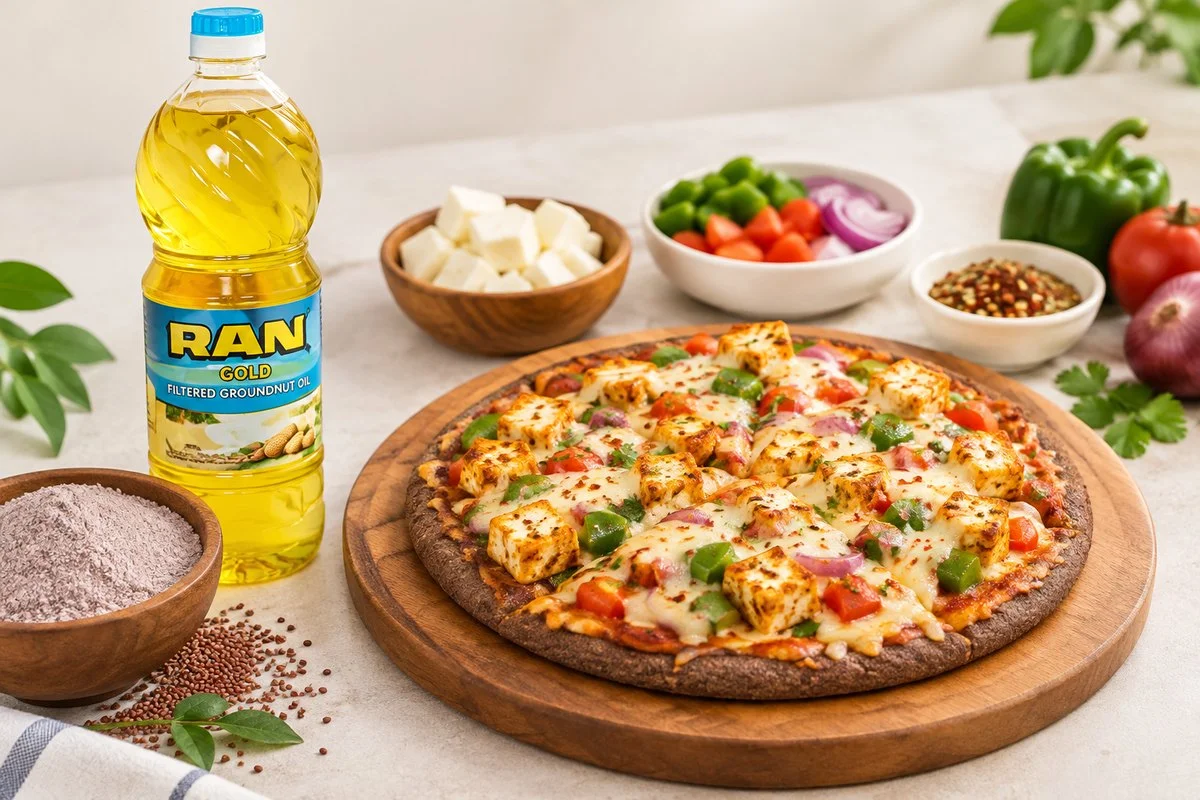
Pizza is one of those foods that most of us enjoy, but making it at home gives you the freedom to change it completely.
Instead of reaching for a regular pizza base, you can make one with ragi. Instead of a heavy sauce, you can cook paneer with onion, tomato, and vegetables using the spices you already have in your kitchen. Add some cheese on top, cook it on a tawa, and you have a homemade pizza ready without needing an oven.
That is what makes this Healthy Ragi Paneer Pizza interesting. It has the look of pizza, but the flavors are much closer to the food we normally enjoy at home.
The ragi gives the base a slightly earthy taste. The paneer mixture is soft and spicy, and the melted cheese brings everything together. It is a simple recipe to try when you want something different for breakfast, an evening snack, or even a light dinner.
And if you are particular about the oil you use in your everyday cooking, this recipe is also a good opportunity to use a cooking oil that suits your family and your usual Indian recipes.
What You Need to Make Ragi Paneer Pizza
You don't need a long shopping list for this recipe.
For the base, you'll need:
- 1 cup ragi flour
- 2–3 tablespoons wheat flour, if required for binding
- Warm water
- Salt
- A little cooking oil
For the topping:
- 100–150 g paneer
- 1 onion
- 1 tomato
- ½ capsicum
- 2–3 tablespoons sweet corn
- 1 teaspoon ginger-garlic paste
- Turmeric powder
- Red chilli powder
- Cumin powder
- Garam masala
- Salt
- Cooking oil
And finally:
- Grated cheese
- Oregano
- Chilli flakes
- Fresh coriander, if you like
You can change the vegetables according to what is available. There is no need to make a special trip to the market just for one missing vegetable.
How to Make Ragi Paneer Pizza at Home
First, prepare the ragi dough
Put the ragi flour into a bowl and add a little salt.
Start adding warm water slowly while mixing the flour. Take your time here. If you pour in too much water at once, the dough can become difficult to handle.
Bring the mixture together with your hands. If you feel that it isn't binding well enough, add a small amount of wheat flour.
Add a teaspoon of oil and knead it gently.
The dough doesn't have to look as smooth as regular wheat dough. Ragi behaves differently, so don't keep kneading it endlessly trying to get the same texture.
Once it comes together, cover it and let it rest for a few minutes.
Shape the Base Carefully
Take a portion of the dough and place it on a lightly greased surface.
Flatten it gently with your fingers or roll it out carefully.
You don't have to worry about getting a perfectly round pizza. In fact, the slightly uneven edges are part of the homemade look.
Try to keep the base reasonably thick. A very thin ragi base can become difficult to lift without breaking.
Once you are happy with the shape, place it on a heated tawa.
Cook the Base
Cook the ragi base over medium heat.
After a little while, you'll notice that the bottom has started to firm up. Turn it over and cook the other side.
At this stage, you don't need to completely cook the base. It will get another round of cooking after you add the topping.
This is one of the places where patience helps. If the tawa is extremely hot, the outside can become dark before the inside has had enough time to cook.
Now Make the Paneer Topping
While the base is cooking, you can prepare the topping.
Heat a little cooking oil in a pan.
Add chopped onion and let it cook until it softens. Then add ginger-garlic paste.
Once the raw smell starts disappearing, add the chopped tomato and capsicum.
Now add turmeric, red chilli powder, cumin powder, garam masala and salt.
Give everything a good stir.
The onion, tomato and spices will start coming together into a thick, fragrant mixture. This is where the pizza starts taking on that familiar Indian flavour.
Add the sweet corn and paneer.
Mix gently rather than stirring too aggressively. Paneer doesn't need much cooking, and keeping the pieces soft makes the finished pizza much nicer to eat.
Cook everything for another couple of minutes and switch off the flame.
Assemble the Pizza
Take your partially cooked ragi base and place it back on the tawa.
Spoon the paneer and vegetable mixture over it.
Spread it out with the back of the spoon, but don't make the topping too thick. If you put too much mixture in one place, the pizza becomes difficult to cook evenly.
Now cover the top with grated cheese.
A sprinkle of oregano and chili flakes is enough to give it that familiar pizza aroma.
If you enjoy coriander, add a little chopped coriander as well. It sounds unusual for pizza, but with the paneer and Indian spices, it works surprisingly well.
The Final Cooking
Put a lid over the tawa and reduce the flame.
Let the pizza cook slowly.
There is no need to rush this part. The gentle heat allows the cheese to melt while the base continues cooking underneath.
After a few minutes, check the bottom. Once the base is cooked and the cheese has melted, take the pizza off the tawa.
Give it a minute before cutting.
Then slice it and serve while it is still warm.
What Does Ragi Paneer Pizza Taste Like?
If you've never tried ragi as a pizza base before, don't expect it to taste exactly like a restaurant pizza.
The base has its own earthy flavor, while the paneer topping brings in the familiar taste of onion, tomato, and Indian spices.
The cheese softens the overall flavor and makes each bite richer.
Personally, the combination works because nothing is trying to overpower anything else. The ragi gives the base character, the paneer mixture provides the spice, and the cheese ties it together.
It's also the kind of recipe where you can adjust things according to your family.
Make it mild for children.
Add green chilli if everyone at home enjoys spicy food.
Add more vegetables if you want a heavier topping.
Or keep it simple with paneer, onion, and capsicum.
A Note About the Oil You Use
Oil may not be the first thing you think about when making pizza, but it is used during several parts of this recipe—from preparing the dough to cooking the vegetables and paneer.
For an Indian kitchen, I prefer thinking about cooking oil as an everyday ingredient rather than something reserved for deep frying.
Groundnut oil, for example, is commonly used in Indian cooking and can be used for sautéing vegetables, preparing paneer, and making many everyday dishes.
People searching for the best cooking oil in Gujarat may have different priorities. Some look at flavor, some at processing, some at packaging, and others simply want an oil they can comfortably use for their regular meals.best cooking oil in Gujarat
The same is true when someone searches for the best cooking oil in Rajkot. There isn't one feature that makes an oil suitable for every household. What matters is choosing a quality product from a manufacturer you trust and using it appropriately in your cooking.
Why Groundnut Oil Is Worth Considering
Groundnut oil has a familiar place in many Indian kitchens, particularly in western India.
Its flavor works naturally with ingredients such as onion, tomato, paneer, and Indian spices. That's why it can be a comfortable choice for this recipe as well as for everyday sabzi, snacks, and other home-cooked dishes.
If you are looking for the best groundnut oil in Gujarat, don't make your decision only because of a low price. Look at the product, its packaging, the manufacturer's information, and whether the oil fits the type of cooking you normally do.
For families buying locally or comparing options in the city, someone searching for the best groundnut oil in Rajkot may also want to consider pack size and how frequently the household uses cooking oil.
A good everyday product should be practical for your kitchen, not just something that sounds good in an advertisement.
A Few Things I Would Keep in Mind
There are a couple of small details that can make this recipe easier.
Don't make the ragi base paper-thin. It needs enough strength to carry the topping.
Don't cook paneer for too long. A few minutes with the vegetables is usually enough.
Keep the flame low after adding cheese. This gives the base time to cook without burning the bottom.
Don't overload the pizza. It is tempting to add a mountain of paneer, vegetables, and cheese, but a moderate layer cooks more evenly.
And don't be afraid to experiment. Recipes like this are meant to be adjusted.
Can You Make This Pizza Without an Oven?.
In fact, that's one of the easiest things about this recipe.
A regular tawa or heavy pan with a lid is enough. Cook the base first, add your topping and cheese, cover the pan, and let everything cook over low heat.
You just need to keep an eye on the bottom so it doesn't become too dark.
So if you don't have an OTG, microwave convection oven, or pizza oven at home, there is no reason to skip this recipe.
Make It Your Own
Once you have made this pizza once, you'll probably start thinking about your own version.
Maybe you'll add mushrooms.
Maybe you'll replace sweet corn with peas.
Maybe you'll add a little green chutney under the paneer topping.
Or perhaps you'll make a completely vegetarian version loaded with capsicum, onion and spinach.
That's the nice thing about homemade food. You don't have to follow a restaurant menu.
Use what your family likes.
Use what is already in your kitchen.
And make the recipe your own.
Healthy Ragi Paneer Pizza Recipe – Quick Recipe Card
Prep time: 15–20 minutes Cooking time: 15–20 minutes Servings: 2–3
Method
- Mix ragi flour, salt, warm water, and a little oil to prepare the dough.
- Add a little wheat flour if extra binding is needed.
- Shape the dough into a round pizza base.
- Partially cook the base on a tawa.
- Sauté onion, ginger-garlic paste, tomato, and capsicum in cooking oil.
- Add the spices, sweet corn, and paneer.
- Cook the mixture briefly.
- Spread it over the ragi base.
- Add grated cheese, oregano, and chili flakes.
- Cover and cook on low heat until the cheese melts.
- Slice and serve warm.
Frequently Asked Questions
Can I make ragi pizza without wheat flour?
Yes, but the dough may be more delicate because ragi does not have the same gluten structure as wheat. Handle the base gently while shaping and transferring it to the tawa.
Can I use homemade paneer?
Yes. Homemade paneer works very well in this recipe. Just make sure it isn't excessively wet before adding it to the topping.
Which vegetables can I add to ragi pizza?
Capsicum, onion, tomato, sweet corn, peas, mushrooms, and spinach are all good choices. Use whatever combination your family enjoys.
Can children eat ragi paneer pizza?
Ragi paneer pizza can be included as part of a varied diet. For children, you can reduce the chilli and adjust the topping to suit their taste.
Can I use groundnut oil to cook the topping?
Yes. Groundnut oil can be used for sautéing the onion, vegetables and paneer. Choose a cooking oil that suits your family's normal cooking needs.
Can this recipe be made on a tawa?
Yes. You don't need an oven. A tawa with a lid works well when the pizza is cooked over low heat.
Enjoy a Homemade Pizza With an Indian Twist
There is something satisfying about making a pizza completely from scratch.
You prepare the base yourself, cook the paneer filling the way your family likes it, choose the vegetables, decide how much cheese you want, and even choose the oil that goes into the recipe.
This Healthy Ragi Paneer Pizza is not about making pizza complicated. It is simply a different way of bringing familiar Indian ingredients together.
And if you're already looking for a reliable cooking oil for your kitchen, RanI Oil groundnut oil can be an option to consider for everyday Indian cooking.
From paneer and vegetable recipes to regular sabzi, snacks, and other homemade dishes, choosing an oil that fits your cooking habits can make your everyday kitchen routine simpler.