Sign up with Google
 Sign in with Zoho

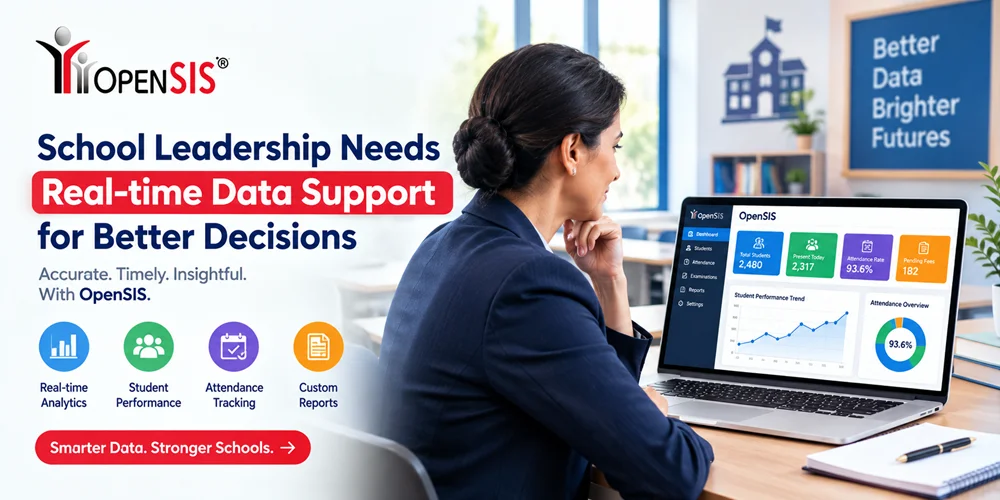
The best decisions are made using the right data at the right time. In education, this matters a great deal because data is an asset in academia. Over time, the academic landscape is expanding, and it is dealing with a multitude of changes. From student expectations to course creation, education leaders are managing multiple aspects of the education industry. In addition to these, they have to take care of the evolving regulations and emerging technologies as well. And you cannot handle all these smoothly with delayed reports and limited data visibility. Because access to current information has turned into a necessity, more and more schools are waking up to the need for digitization. A well-implemented Student Management Software system like openSIS will centralize your school departmental data so that you can view it whenever required.
Modern Education Leaders Have A Different Responsibility Now
The academic landscape has changed. It has been through a massive transformation due to technological advancements. The expansion has caused many branches to open for the students. However, the expansion has also brought forward a complex ecosystem that demands immediacy. The current landscape constantly deals with
- Evolving student needs
- Multiple communication branches
- Multiple departments
- Remote learning needs
- Online classrooms
- Personalized courses
And added to all these, you have increasing student numbers, which means more data. The older operational model of waiting for monthly reports is beginning to delay the process of progress. Modern leaders need data visibility, and the School Management Software systems are designed to allow real-time data access.
A modern education leader needs access to –
- Enrollment data
- Grade data
- Academic performance data
- Progress report
- Risk prediction
- Trend forecast
A well-designed School Management Software system can provide centralized access to many of these reports. It bridges the gap between data and the leaders who need access to information. If you observe carefully, you will see that the leaders’ job has become dynamic under the technological advancement era. To keep pace with the job requirements, the information supporting systems need to be dynamic as well. A static system might delay the whole process.
Old School Leadership Vs New Operative Administrators
In the past, the school administration could rely on paper files and spreadsheets. The information around the school could move slowly when the student number is relatively low. However, when the number expands, you need more than just a traditional system to back your operations.
The modern education landscape is rapidly moving toward an environment that demands quick decision-making. The modern education industry is more about speed and accuracy. And to provide them both, you need a Student Management Software system designed to provide accurate data reports whenever needed.
The traditional operation relied heavily on –
- Manual records
- Fragmented data system
- Individual manual efforts
While there is nothing wrong with manual efforts or human intervention, a large volume of student information needs digital management because errors can stall a process entirely. The time has come when you need to spend fewer hours on data collection and management, and more time on course creation and strategic growth planning.
Education Has Changed – Leadership Needs to Catch Up
In a short time, the education world has adopted many changes. Digitization has expanded. Remote learning has become more common. Student expectations have changed. Communication has become digital. At the same time, schools are dealing with year-end work pressure, new enrollment patterns, and demand for better operational efficiencies.
All these together can overwhelm even the most experienced operational team. The modern system needs a digital partner that can automate the whole process and connect all the departments to create a centralized data ecosystem.
Modern education needs –
- Digital administration
- Centralized student information
- Better digital communication
- AI analytics for operational planning
This shift needs a robust digital solution. You need a core system where all the files can be saved. This digital infrastructure will support your strategic growth and offer you real-time data visibility for better decision-making.
Real-time Data – Why It Is Important
Before discussing the importance, it is essential to understand what real-time data stands for. It refers to data that is updated and can be accessed quickly. In academics, this means –
- Updated attendance
- Updated grade
- Updated enrollment
- Updated student details
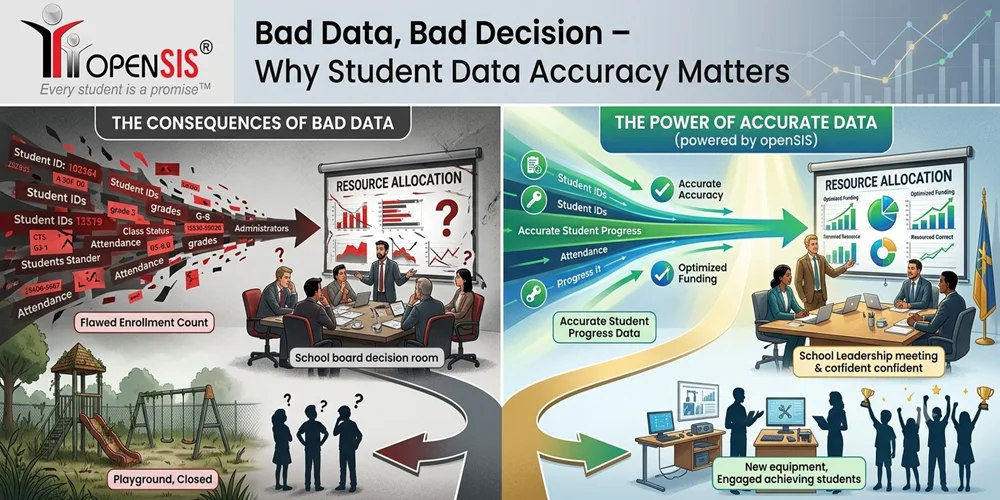
Maintaining real-time data in a fragmented data ecosystem can be difficult because it runs the risk of entry errors and duplication. And a decision made on wrong or old information may lead to multiple challenges, including a series of data searches. Real-time data offers an overview of the past and the present at the same time. It helps in analyzing where a particular situation is heading. Student Management Software systems bring the whole ecosystem under one dashboard and make information accessible to authorized people.
Lastly
The right data and timely intervention can improve the education environment. When leaders find an emerging pattern, they can move immediately to prevent it from growing further. A modern Student Management Software system gives schools the ability to read this pattern through real-time data reports.
FAQ
1. What is real-time data in education?
Real-time data is current information that gives school leaders timely visibility into student and operational activity.
2. Why is real-time information important for educational leaders?
It helps leaders identify changes quickly and make decisions using current rather than outdated information.
3. How can an SIS support real-time decision-making?
An SIS centralizes student and operational data so authorized users can access updated information more efficiently.
4. What challenges can limit real-time data visibility in schools?
Disconnected systems, manual data entry, delayed updates, duplicate records, and weak integrations can limit visibility.