Sign up with Google
 Sign in with Zoho
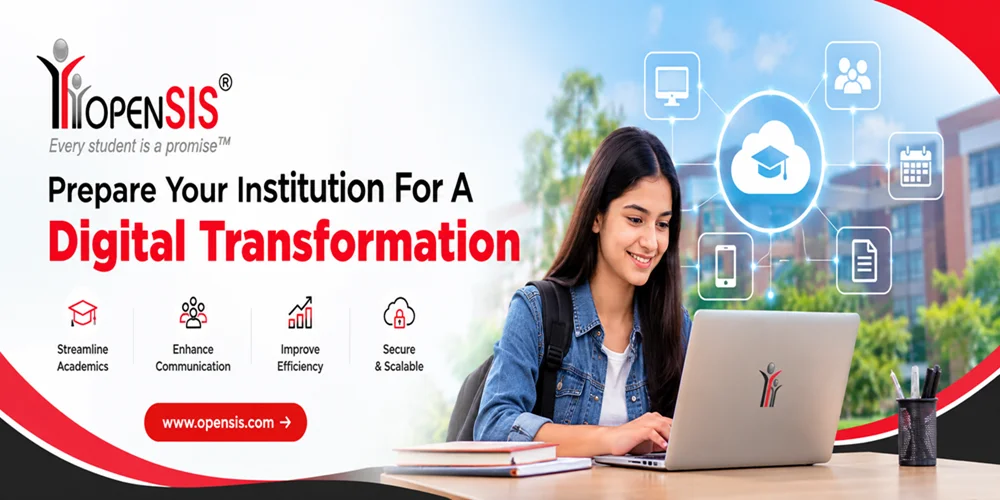
Digital transformation looks impressive from a distance. In reality, it takes a lot more effort than just a few system implementations. If you are going for an advanced student information system with LMS integration like openSIS, you will require more than just a few software updates. For an educational institution, it is not simply a matter of buying new software or transforming from paper to online. Real transformation changes how data moves and how people work. That is why preparation matters. Before introducing a new system, you need to understand the current workflows and identify the frictions. The technology matters. But research work and preparation matter just as much.
Start With The Problems – Not With Features
The easiest way to make digital transformation complicated is to begin with a long list of features. Instead, you should start with the issues your school is experiencing. Maybe admissions rely on manual data entry. Or attendance information is scattered in several places. Before evaluating LMS integrated student information system, identify the operational frictions. You can look for -
- Repetitive administrative tasks
- Duplicate data entry
- Paper-based processes
- Disconnected student records
Digital transformation works better when technology influences decision-making and problem-solving.
Monitor Fragmentation
Your digital transformation should centralize your whole school. It should not separate admissions, finance, and administration. Students don’t want to go through so many layers. They look for a single space to operate from. Focus on -
- Application and admissions
- Enrollment and registration
- Course selection
- Scheduling
Start looking at each point and try to find how many systems the school is using to monitor these tasks.
Audit Your Tech Ecosystem
Before adding an advanced LMS integrated student information system to your operations, find out what you are already using. Most institutions implement technology slowly. It takes time to understand what you need next. It takes time to understand what is working and what is not working. This is why spending some time to prepare is the best thing you can do. Watch out for -
- Student information systems
- Learning Management Systems
- Finance and accounting platforms
- Payment systems
While you are at it, don’t forget about communication. It is essential to monitor what parents are asking, what students are looking for, and what administrators are struggling with.
Decide What Should Be Connected.
Digital transformation does not mean putting everything into one giant platform. Different systems can serve different purposes. The important thing is that they can exchange data when necessary. This is why an advanced student information system with LMS integration can be a great addition to your operations. For example, an LMS may manage courses while a Student Information System manages administration. Connecting these systems can create a smooth technology ecosystem. Your institute may benefit from -
- Enrollment information flowing into the LMS
- Student records connecting with academic systems
- Attendance information becoming part of broader student records
This is where a digital tool with proper integration features can be immensely handy. The point is not discarding your existing systems. The point is making them work together without any friction.
Pay Attention To Student Records
Digital transformation becomes difficult when everyone has a different version of data. A fragmented data system can create obstacles to decision-making. This is where a modern SIS can build a strong data foundation. A Student Information System acts as a structured source for core student data. It also connects with other institutional platforms. The objective is to establish a reliable information layer that authorized users and connected systems can work from. A single source of data is useful for leaders and administrators.
The real power of digital transformation comes when information moves without friction. Modern SIS makes this possible. The right SIS connects different systems without difficulties. The right SIS makes working from one platform easy. This is why, when you are about to implement a digital tool, you must spend time researching integration features. However, you need to spend some time on your data before implementing your LMS integrated student information system. If student records have duplicates, outdated information, or missing information, entering that information into a new platform might cause more friction. Before integration, you need to establish a data-auditing process. Review -
- Duplicate student records
- Outdated contact information
- Inconsistent naming conventions
- Missing information
Decide which information should be entered, rectified, or removed before proceeding with anything.
Train Your People
Technology upgrades often focus heavily on implementation and very little on adoption. A new system can be great and still fail if employees do not understand it or how it works. Staff need to know what is changing and how it functions. Therefore, your employees need training to understand the system you are implementing. Set aside time to help your people get used to the digital tool. However, everyone does not have to know every feature. A teacher does not need to know how the financial features work.
Lastly,
An advanced LMS integrated student information system often increases access to information. That does not mean everyone should access everything. Role-based access allows authorized people to view their work-related data. This can help increase security.
FAQ
1. What is digital transformation in educational institutions?
Digital transformation involves using technology to improve institutional workflows, student experiences, information management, and decision-making.
2. How can an institution prepare for digital transformation?
Institutions can prepare by auditing existing systems, identifying workflow problems, cleaning data, training staff, and establishing clear technology goals.
3. Why is a Student Information System important for digital transformation?
A Student Information System centralizes core student information, supports administrative workflows, and helps institutions connect data across different platforms.
4. What is a Student Information System with LMS integration?
A Student Information System with LMS integration connects student records and administrative information with learning platforms to improve data exchange and workflow coordination.