Sign up with Google
 Sign in with Zoho

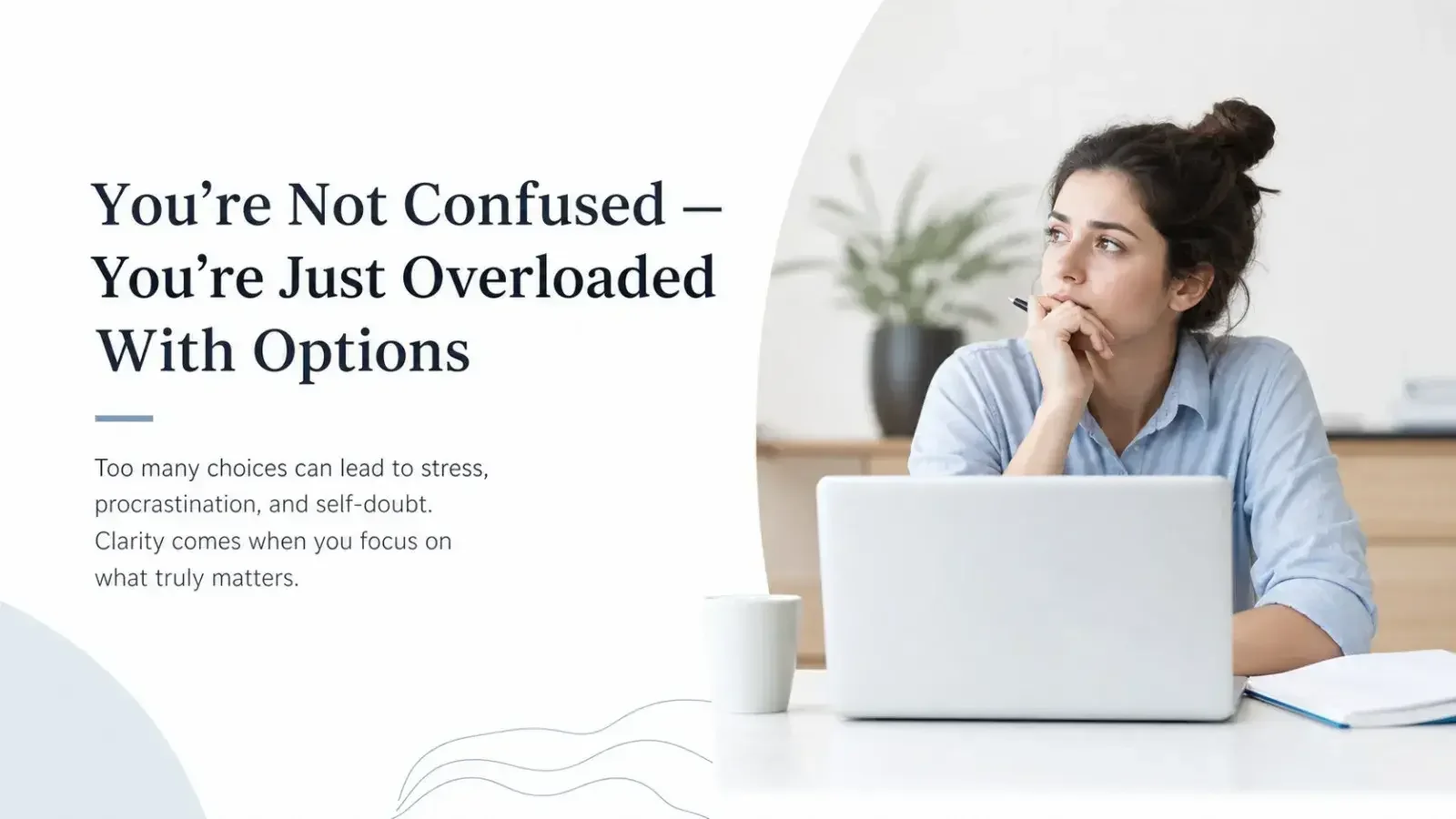
Many students today believe they are “confused” about their career. But in reality, most of them are not confused — they are simply overloaded with too many choices, too much information, and too many opinions.
In 2026, students are exposed to thousands of courses, colleges, career paths, and online suggestions. Social media, advertisements, coaching institutes, and peer pressure all add to the noise. With so many directions pulling at once, making a clear decision becomes difficult.
This article helps students understand why this happens and how to move from overload to clarity.
Why Students Feel Overwhelmed Today
Career confusion is not new, but the level of exposure today is much higher than before.
Students feel overwhelmed because:
- There are 500+ career options available
- Every platform gives different advice
- Social media shows only “success stories”
- Friends and family suggest different paths
- Coaching institutes promote specific streams
- Information is often incomplete or biased
The problem is not lack of opportunities — it is lack of filtering.
Information Overload vs Real Confusion
Most students are not unsure about what they like. They are unsure about how to choose from too many possibilities.
This leads to:
- Overthinking every option
- Switching interests frequently
- Delaying decisions
- Feeling pressure to choose “perfectly”
- Fear of making the wrong choice
In reality, no career decision is perfect — it is about the best possible match, not perfection.
1. You Don’t Need More Options — You Need Filters
Instead of searching for more careers, students should create simple filters to eliminate unsuitable ones.
Ask yourself:
- Does this match my interest?
- Does this fit my strengths?
- Can I see myself doing this daily?
- Does it align with my long-term goals?
Filtering options is more powerful than collecting more information.
2. Stop Following Every Opinion
One of the biggest reasons for overload is outside influence.
Students often hear:
- “Engineering is best”
- “Commerce has no scope”
- “Medical is safest”
- “Creative fields are risky”
But these are general opinions, not personal guidance.
Every student is different. A good career decision must be based on individual strengths, not public noise.
3. Understand That Every Path Has Multiple Outcomes
Many students delay decisions because they want a “safe” or “perfect” career.
But in reality:
- No course guarantees success
- Every field has competition
- Growth depends on skills, not just degree
- Career paths can change over time
Flexibility matters more than perfection.
4. Break Big Decisions into Smaller Steps
Instead of choosing a full career in one step, students should break it down.
Start with:
- Stream selection (Science / Commerce / Arts)
- Course selection (B.Tech, BBA, BA, etc.)
- Skill development (coding, communication, design, etc.)
- Internship exposure
- Career exploration
Small steps reduce pressure and improve clarity.
5. Focus on Skills, Not Just Courses
In 2026, skills matter as much as degrees.
Students should focus on:
- Communication skills
- Digital skills
- Technical skills (based on interest)
- Problem-solving ability
- Practical experience
Courses open doors, but skills create opportunities.
6. Explore, But With a Time Limit
Exploration is important — but unlimited exploration leads to confusion.
Set a timeline:
- 2–4 weeks for research
- 1–2 weeks for shortlisting
- Final decision deadline
Too much time spent exploring leads to hesitation and anxiety.
7. Talk to Real People, Not Just Content
Instead of relying only on online content, students should talk to:
- Seniors studying the course
- Working professionals
- College alumni
- Career counsellors
Real experiences help filter out unrealistic expectations.
8. Accept That No Decision Is Final
One of the biggest mental blocks is the fear of choosing wrongly.
But careers today are flexible:
- You can switch fields
- You can learn new skills anytime
- You can pursue higher studies later
- You can build multiple career paths
A decision is a direction, not a permanent lock.
Final Thoughts
Students are not confused because they lack intelligence or capability. They are overwhelmed because they are surrounded by too many options and too much information.
The solution is not more information — it is better clarity, better filters, and simpler decision-making.
A good career choice in 2026 is not about finding the perfect path. It is about choosing a direction that feels right and building from there step by step.
For more guidance on careers, colleges, courses, and admission updates, students can explore CollegeNirnay for structured and reliable information.