Sign up with Google
 Sign in with Zoho

Hair does not usually become damaged overnight. A few months of frequent straightening, colouring, rough brushing, or simply not giving dry hair enough care can gradually change how it looks and feels. The ends may become rough, tangles may appear more often, and even freshly washed hair can seem difficult to manage.
A Damage Hair Repair Oil can be useful when dryness, rough texture, frizz, or breakage is the main concern. But oiling should not be treated as a quick fix. The better approach is to choose a suitable formulation and combine it with gentle washing, conditioning, careful handling, and less heat exposure.
Start by Finding What Is Making Your Hair Feel Damaged
Before buying another product, look at your routine. Sometimes the problem is not the absence of oil but what happens to the hair every day.
Heat Can Slowly Affect the Hair
Regular use of straighteners, curling irons, and hot blow-drying can leave strands dry and fragile. Using these tools less often, or at a lower temperature, can make the routine gentler.
If you use heat several times a week, changing that habit may be more useful than simply adding another product.
Chemical Treatments Need Extra Care
Colouring, bleaching, relaxing, and similar treatments can leave hair more vulnerable to dryness and breakage. Treated hair often feels better when washing and detangling are kept gentle.
The Way You Handle Hair Matters
Pulling a brush through stubborn knots or tying hair tightly every day can put unnecessary stress on the strands. Wet hair also needs careful handling because it can be more prone to stretching and breakage.
How to Choose the Right Hair Oil
There is no need to choose an oil simply because someone else uses it. Think about how your own hair behaves.
If the lengths feel dry, a conditioning formulation may be useful. For rough or frizzy hair, look for ingredients that provide lubrication and help the strands feel smoother. Fine hair may need a lighter application, while thicker hair may tolerate more.
Your scalp matters too. Someone with an oily scalp may not enjoy the same amount of oil as someone with a dry scalp. Start small and see how your hair responds instead of applying a large quantity from the beginning.
Ingredients That Can Fit a Botanical Hair Routine
Botanical ingredients are often chosen for their traditional use and conditioning qualities. What matters most is the complete formulation and whether it suits your particular hair concern.
Black Sesame Hair Oil
Black sesame hair oil can be considered when dry or rough hair needs additional conditioning. Oil can reduce friction between strands, making hair feel softer and easier to handle.
That does not mean every sesame-based product will work the same way. The other ingredients, texture of the formulation, and your hair type all matter.
Hibiscus Hair Oil
Hibiscus hair oil is another familiar ingredient in botanical hair-care routines. Hibiscus has traditionally been used in hair and beauty practices and is included in various modern formulations.
For someone building a simple routine, it can be one part of regular hair care rather than something expected to solve every hair concern on its own.
Do Not Confuse Hair Breakage With Hair Fall
This is an easy distinction to miss.
When hair breaks, the strand snaps somewhere along its length. You might notice short pieces around your shoulders, rough ends, split ends, or more frizz than usual.
Hair shedding is different. A complete hair strand comes away from the scalp as part of the hair cycle. Persistent shedding can have many causes, so changing hair oil repeatedly may not address the real issue.
If you notice sudden heavy shedding, visible thinning, bald patches, or continuing scalp problems, it is worth getting the cause assessed by a dermatologist.
A Better Way to Oil Your Hair
You do not need a complicated ritual. A few basic steps are enough.
Use less than you think you need. Start with a moderate amount and add more only if necessary.
Be gentle around the scalp. Apply with your fingertips rather than scratching or rubbing forcefully.
Do not ignore the lengths. If the ends are the driest part of your hair, distribute some oil there instead of putting everything on the scalp.
Give it reasonable contact time. Follow the instructions provided for your particular formulation rather than assuming longer is always better.
Wash without excessive scrubbing. Concentrate cleansing on the scalp and avoid rough treatment of the lengths.
Condition after washing. Conditioner can make detangling easier and help improve the feel of dry hair.
The goal is a routine that you can actually maintain, not one that takes up half your day.
Your Scalp Deserves Attention Too
Healthy-looking hair starts with a scalp-care routine that feels comfortable and suits your washing needs.
Heavy product buildup, excessive scratching, or applying several products at once can make the scalp feel uncomfortable. If you experience ongoing itching, redness, scaling, pain, or unusual changes, do not assume that more oil will solve the problem.
Scalp care also means paying attention to changes in shedding. A cosmetic hair product and a medical treatment are not the same thing.
Matching the Routine to Different Hair Concerns
Someone with dry, chemically treated hair may need a different oiling approach from someone whose main concern is an oily scalp.
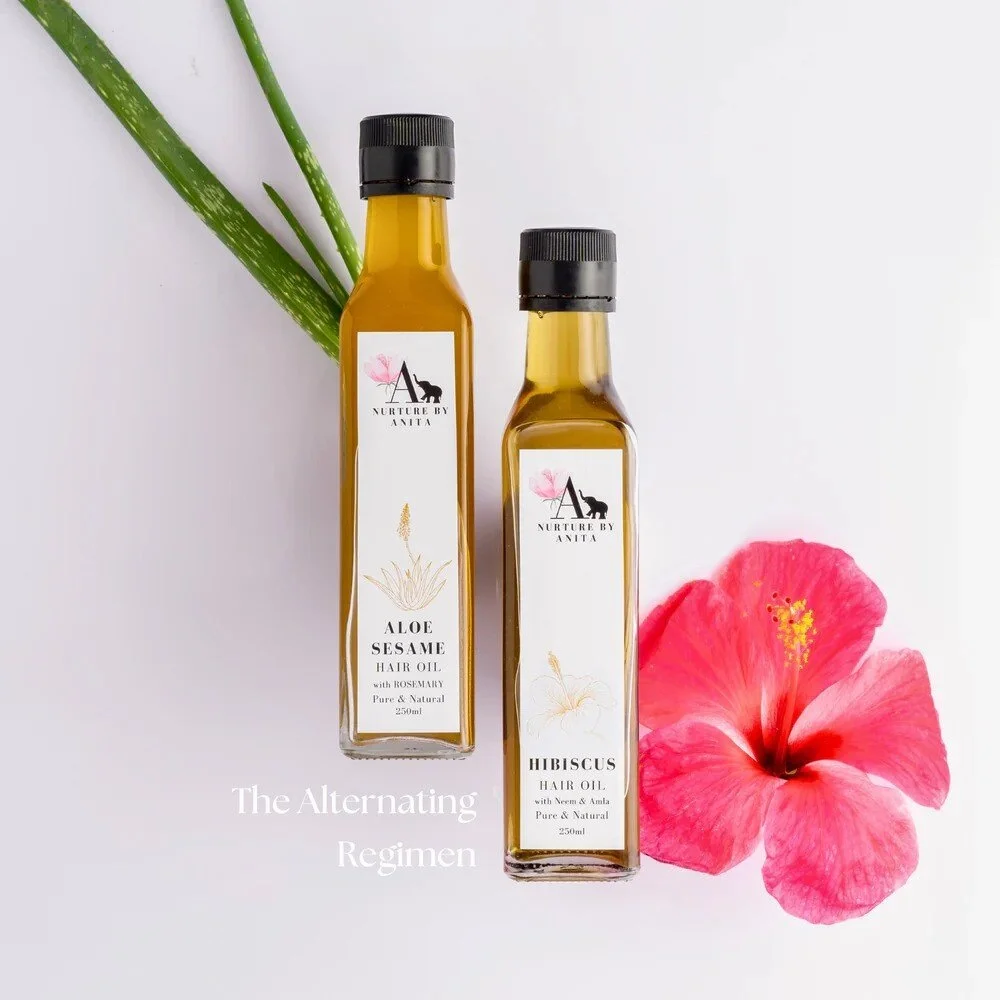
For example, Nurture By Anita offers botanical formulations aimed at different hair-care concerns. Its AloeSesame Hair Oil combines Black Sesame, Aloe Vera, Rosemary, and Castor and is intended for dry, frizzy, breakage-prone, and damaged hair. Its Hibiscus Hair Oil is positioned around hair-fall care.
The useful takeaway is not that one product is right for everyone. It is that the formulation should make sense for the concern you are actually trying to manage.
Small Changes Can Protect Your Hair
An oil can only do so much if the same damaging habits continue.
Try keeping your routine simple:
- Reduce frequent straightening and curling.
- Avoid very tight hairstyles.
- Use conditioner regularly.
- Detangle slowly instead of pulling through knots.
- Be gentler when drying your hair.
- Avoid unnecessary chemical treatments.
- Give dry ends extra attention.
- Do not keep changing products before giving a routine enough time to understand how your hair responds.
These changes are easy to overlook because none of them feels dramatic. Together, however, they can make everyday hair care less stressful.
When Is It Time to Look Beyond Hair Oil?
Dryness and breakage can often be managed as part of a better hair-care routine. Persistent hair loss is different.
If shedding suddenly increases or continues for a long period, especially with noticeable thinning or scalp changes, consider professional evaluation. Hair loss can be connected to factors that an oil cannot address.
Knowing the difference can save you from trying product after product without understanding what is actually happening.
Key Takeaways
- Look at your daily routine before choosing another hair product.
- Heat, chemical treatments, tight hairstyles, and rough handling can contribute to hair damage.
- Choose an oil according to your hair texture, scalp type, and main concern.
- Use a moderate amount and apply it gently.
- Conditioning and careful detangling are just as important as oiling.
- Hair breakage and hair shedding are different concerns.
- Persistent or sudden hair loss should be professionally assessed.
FAQs
1. What is a Damage Hair Repair Oil?
It is an oil-based hair-care formulation generally used to condition dry, rough, frizzy, or breakage-prone hair. It can improve the feel and manageability of strands but cannot reverse severe structural damage.
2. Can black sesame hair oil be used on dry hair?
Yes, a black sesame-based formulation can be included in a routine for dry or rough hair. The best choice depends on the complete formulation and how your hair responds.
3. Is hibiscus hair oil suitable for everyday hair care?
It can be part of a regular botanical routine. However, your overall approach should also include suitable cleansing, conditioning, gentle handling, and attention to your scalp.
4. How much hair oil should I apply?
There is no fixed amount for everyone. Start with a small quantity and adjust according to your hair length, thickness, and scalp type. Using more oil does not automatically mean better results.
5. Can hair oil fix hair loss?
Hair oil can help with conditioning and manageability, but it cannot address every cause of hair loss. Persistent or sudden shedding needs attention to the underlying cause.
Conclusion
Taking care of damaged hair does not have to mean using a long list of products. Start by identifying what is making your hair dry, rough, or prone to breakage, then build a routine around those needs.
A suitable Damage Hair Repair Oil can have a place in that routine, especially when paired with regular conditioning and gentler hair-handling habits. Botanical ingredients such as black sesame and hibiscus can also be considered, provided expectations remain realistic.