Sign up with Google
 Sign in with Zoho
A doctor can do a course of Fertility Management, be aware of IVF and various techniques about Assisted Reproductive Technologies. However, does certifying a doctor in a certifying programme imply that he/she is ready to comprehend and control the intricacies of the cases of infertility? In today's world, it is indeed an important question in the field of reproductive medicine.
Infertility treatment is a special branch of medicine, where theoretical concepts are an important part of treatment, and needs to be supplemented with clinical knowledge, exposure and understanding of individual patients' needs. Each couple that enters the clinic of a fertility expert has an alternate medical history, reproductive state and expectation for treatment. The basic certification programmes are suitable for introducing the basics of infertility management to the health care workers, while structured medical education is more suitable to develop their knowledge of the subject by offering them academic education, clinical observation and practical training. This is particularly important for doctors looking to a career in the long-term, in the medical profession involving reproduction.
The division of basic certificate and medical standardisation.Knowing the difference between simple and standardised medical courses.
The basic programmes are typically certification programmes in which a few of the ideas are integrated in a brief amount of time. This can involve factors related to reproduction or exploring the issue of infertility, induction of ovulation and the underlying principles of IVF. These programs could be beneficial in gaining a general knowledge and understanding of the latest advances in fertility treatment.
Properly managing infertility, however, is an art, and not knowing how to treat each procedure. The decision regarding appropriate management requires a medical practitioner who will be able to take into account the patient's history, results of her investigations, hormonal testing, ovarian reserve and the response to previous treatment. Sometimes it is not possible to acquire knowledge of these clinical connections in a short certificate course.
Depending on the programme, it incorporates an academic teaching, discussion on clinical aspects, demonstration training and simulation training and supervised clinical exposure. For instance, an IVF Fellowship can be offered to a qualified medical practitioner to enhance his/her knowledge and understanding of the management of infertility rather than specifically on techniques.
It's more than just to pass a course or earn a certificate. The aim is to enable to tackle cases of infertility more systematically, by building up the knowledge and clinical understanding.
How knowledge is not enough for the management of infertility. It does not take knowledge to tackle infertility management.
Suppose that a man and woman have been unable to conceive for three years. Both the female and male partners have less than normal ovarian reserves and irregular menstrual cycles.Both partners have less than normal ovarian reserve and irregular menstrual cycles. The couple has also had fertility treatment in the past which has failed.
What would you like to do now? If yes, should the woman undergo additional testing of her hormones? Do any other male factor investigations need to be undertaken? Should they be offered induction of ovulation and/or IUI or should they be investigated for IVF?
These decisions can't be taken by simply looking at a definition in a book or using a treatment algorithm. The doctor should be familiar with the relationships between different clinical parameters, and should consider the individual characteristics of a couple.
It is here that structured clinical education comes into its own. Learners will be able to learn from the real-life experiences of a pro experienced specialist who discusses, observes, and delivers clinical care in complex scenarios, reviews investigation reports, considers options and presents their treatment recommendations to the patient.
Like many things in life, it's important to understand the "why" of the treatment recommended as well as the "how".
The facts of the Medical Education?
There should be a comprehensive infertility training programme available that can include different components of reproductive medicine. All the subjects are contributing to the comprehension of the whole fertility treatment procedure.
This is because, the causes of infertility need to be understood and knowledge of female and male reproductive health is essential. The training should be comprehensive and cover the following points: menstrual history, tubal, ovulatory, ovarian reserve and other investigations. This will be useful to professionals in understanding the importance of a multidisciplinary (joint) assessment of the patient in the context of considering infertility.
Hormonal regulation is important in the reproductive health and in reproductive endocrinology and induction of ovulation. The medical practitioner should know the physiology of ovary, investigations of hormones, development of follicles and the principles of ovarian stimulation. They can learn about how to observe their patients' responses and why treatment is different for each patient, through hands-on learning.
It is extremely important to understand the difference between IUI and IVF, and understand the procedures of both methods: Intrauterine Insemination and In Vitro Fertilisation. It is important to include patient selection, treatment planning, monitoring and the various steps in these procedures in training. It should also specify the coordination that is required between the clinical and lab teams.
Embryology and Andrology: These processes carried out in the laboratory, directly support the ART processes, are a special process of Embryology and Andrology. The preparation, fertilisation, development, cryopreservation and laboratory quality control of the sperm will be discussed and an understanding of their importance gained.
Counselling and patient management: It may be a very difficult and troubled situation for couples experiencing infertility. Professionals need to be able to convey the results of the investigation, and to discuss the treatment options, the realistic expectations and maintain patient confidentiality. Ethical and patient centred communication is a key element of fertility education and must be a fundamental and essential component.
A structured IVF Fellowship merges these disciplines, and gives academic grounding for those with a keen interest in reproductive medicine.
The significance of clinical experiences and simulation training.
There are some disadvantages with theoretical learning alone, as it is not necessarily able to replicate a fertility centre environment. While it is one thing to understand what ovum pick-up and/or embryo transfer involves—it is another to actually see the equipment, workflow and the coordination involved in these procedures.
The gap can be addressed through simulation based education, which provides a controlled learning environment for the learner to learn about the procedure and practise skills that are relevant for their learning.
Embryo transfer simulation is one such instance where the trainee gets accustomed on handling the catheter, with the embryo and get used to the instruments. Likewise, an ovum pickup simulation is used to give an introduction to the equipment and the various phases of an ovum extraction. Laparoscopy and hysteroscopy may be also be simulated to get the knowledge about the instruments and familiarization with the procedure of laparoscopy.
Yet, simulation training and clinical experience are not the same, though. Whilst simulation provides an opportunity for learners to gain understanding and practice of specific techniques in a controlled environment, clinical attachment will allow opportunity to observe the application of this in real delivery of fertility care services.
Experience via practical training and/or simulation should also be differentiated from independent clinical competence. Appropriate recognised qualifications, supervision, institutional authorisation and regulatory compliance must be in place to undertake procedures on patients.
What are the criteria doctors should take into account while selecting the IVF fellowship?
There are a number of courses on how to train infertile, and it's essential to take into account examining the educational institution where you wish to select to train. Selection of a programme is not dependent on the certificate itself or length of the course.
There are a number of factors to take into account before enrollment:
Does the curriculum cover female infertility, male infertility, reproductive endocrinology and advanced ART (AART)?
Does it feature the discussion of clinical cases and/or assessment of patients?
Do there exist simulation or demonstrations of practices?
Have a chance to do clinical attachments with a known fertility centre?
Have a faculty member who has experience in clarifying clinical concepts?
Are assessments used to assess learning used within the programme?
Do the requirements to be eligible, academic affiliation and qualifications given are clearly explained?
Special significance of the curriculum. The comprehensive programme should cover the introduction to a learner on various steps involved in the assessment of ovarian reserve, induction of ovulation, intrauterine insemination, IVF stimulation protocols, embryology and andrology and counselling in ART.
Academic and practical knowledge about the programme helps the decision making process of the aspiring professionals to make their choice of medical education.
How Medline Academics is bridging the gap in Skills through its Fellowship in Infertility in India.
Medline Academics specializes in specific field of medical education of Reproductive Medicine, Infertility, IVF, Embryology and Andrology. The Fellowship in Reproductive Medicine is a combination of theory, practice and clinical work to improve the knowledge for medical practitioners who are eligible for this Fellowship regarding infertility and ART.
The hybrid approach allows for the theory component to be completed online, the weekly contact, practical/simulation and clinical attachment. The above programme has been divided into 9 months of online theory, 5 days of simulation training and a clinical placement of 15 – 30 days and revision classes. The course and batch are subject to change and it will be confirmed by the candidates prior to enrolling themselves for the course.
This course covers all the essentials of infertility, reproductive endocrinology, embryology, andrology, IUI, advanced ART for clinicians, ovarian reserve assessment, IVF stimulation protocols and counselling in ART.
The various procedures and techniques used in simulation training are such as, ovum pick-up, embryo transfer, IUI, basic laparoscopy and hysteroscopic training on simulators.
The Fellowship in Infertility at Medline Academics is designed to give a learner the opportunity to integrate academic sessions, practical demonstrations and clinical observation to help them relate theoretical concepts to the working of a fertility centre. It provides a chance for the medical profession to gain a concept of the field of reproductive medicine in an organized educational framework.
Learning from an Established Multidisciplinary Fertility Care Environment was the theme of this year's conference. This year's theme was Learning from an Established Multidisciplinary Fertility Care Environment.
Several medical and laboratory experts need to be coordinated in the treatment of infertility. The couple is assessed by a reproductive medicine consultant who formulates a suitable treatment plan, and the embryologists, who control specific laboratory procedures. Additional treatment team members such as andrologists, nursing, and other support teams also play a critical part of the treatment.
It is vital to know how the various departments function together as an important aspect of reproductive medicine education.
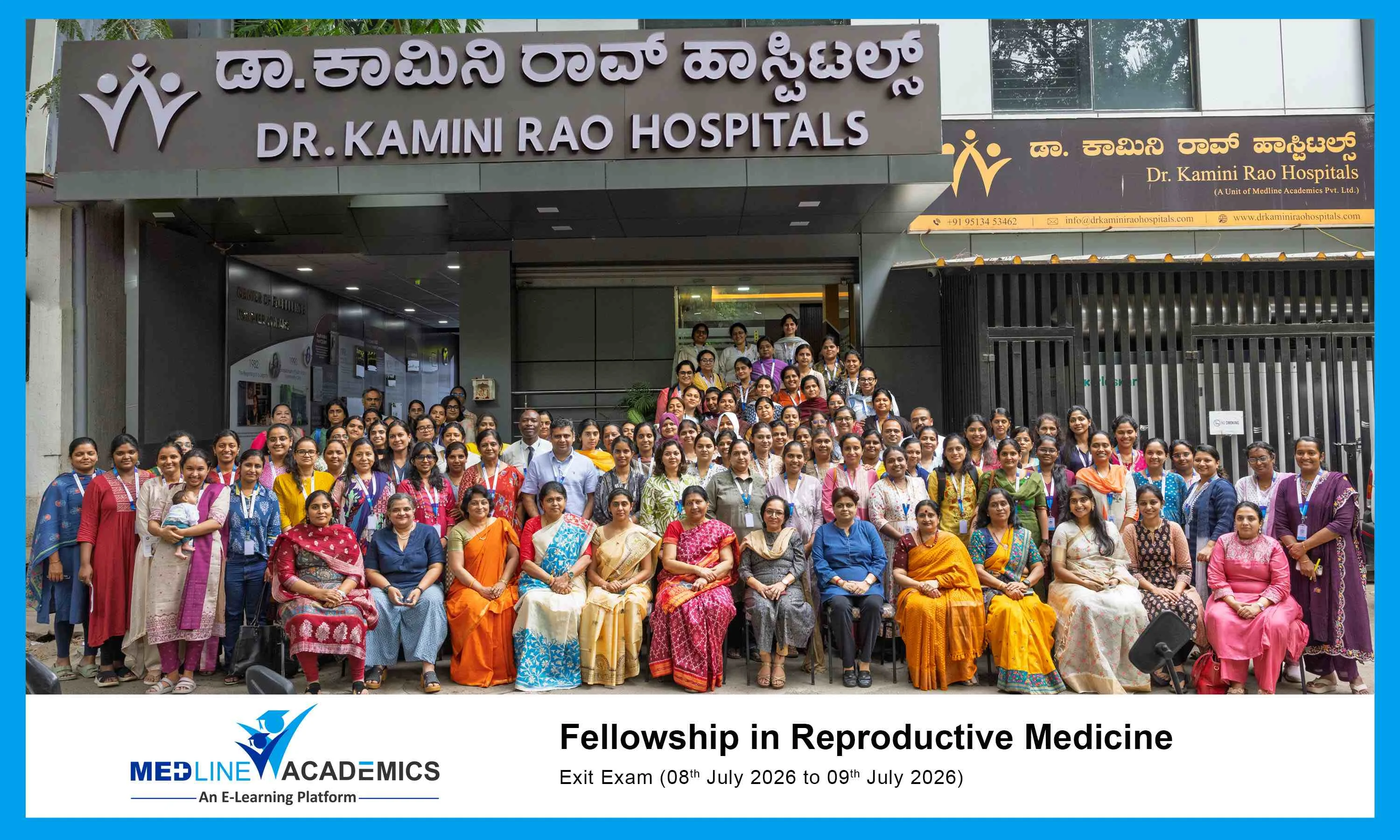
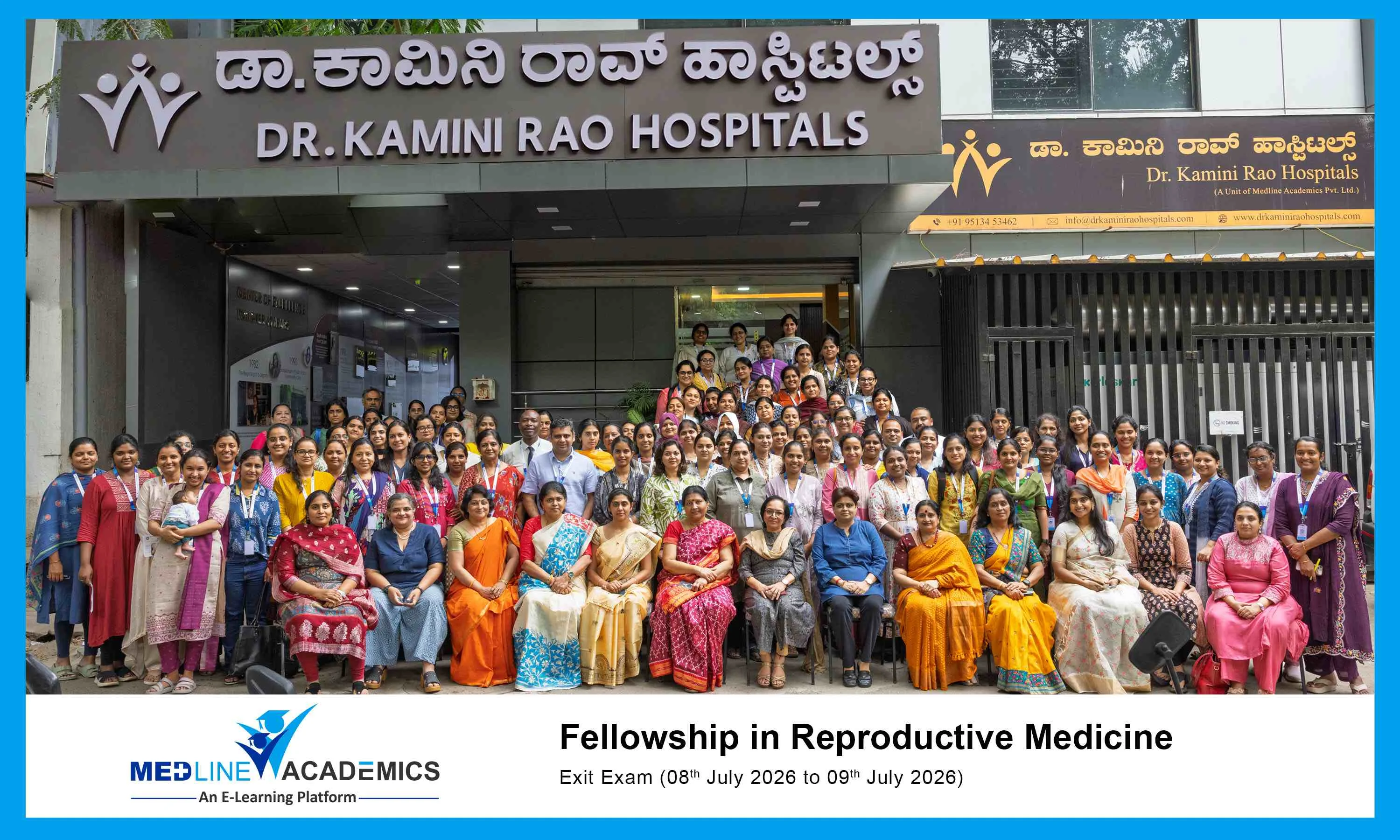
Dr. Kamini Rao Hospitals is a women's health hospital, infertility treatment hospital and a reproductive health hospital. Experience at a reputed clinic like Dr. Kamini Rao Hospitals can equip the young aspirants with the knowledge of various steps involved in evaluating the patients, treatment planning, coordination with the laboratory etc.
It is crucial to understand that while the reputation of a fertility center and the academic quality of a training program are separate and distinct elements, medical professionals need to focus on both. It's important for medical professionals interested in exploring this opportunity at the Best Fertility Treatment Center in Bangalore to understand that the reputation of a fertility center and the academic quality of a training program are two different considerations. They should be assessed separately.
A multidisciplinary approach to fertility care will offer the opportunity to gain insight into the application of clinical knowledge in practice and how the various fertility care specialists work together with one another and with the patient in determining how the patient is managed.
Choosing Education That Builds Long-Term Professional Competence
The demand for skilled reproductive medicine professionals continues to grow as fertility treatments become more advanced and patient expectations evolve. Basic certification programmes may provide an introduction to infertility management, but professionals seeking deeper knowledge should evaluate the benefits of structured academic education, clinical observation and practical training.
A comprehensive IVF Fellowship can provide a more systematic learning experience by bringing together reproductive endocrinology, infertility assessment, ART procedures, embryology, andrology and patient counselling.
For doctors planning to strengthen their knowledge in this speciality, the IVF fellowship offered by Medline Academics provides an opportunity to explore reproductive medicine through a combination of theoretical and practical learning.