Sign up with Google
 Sign in with Zoho

Sometimes it's not easy to make the journey to parenthood and for many couples who are trying to conceive, it is not an easy one. For some couples, the process of conceiving naturally is easy, but for others it can be difficult because of other health issues or infertility. Among the most popular fertility treatments of today is known as In Vitro Fertilization (IVF).
IVF is helping millions of couples make a baby since 1978. But even if it is becoming popular, there are a number of misconceptions about the treatment. Some people think that IVF is just for couples who are unable to conceive naturally, others think that each and every time IVF can guarantee pregnancy.
It's vital to have a clear understanding of what IVF is, who can benefit from it and what's the truth and what's not before making a choice regarding reproductive health.
The "in vitro" (Latin for in glass) fertilization is performed outside the body in a laboratory.
Steps can involve drugs which stimulate the ovaries to release more eggs, egg tracking, egg retrieval, in-vitro fertilization of eggs with sperm, growing embryos in the lab, and transferring an acceptable embryo into the uterus.
Depending on the medical history of the couple and fertility reason, there may be other procedures or tests recommended.
Please be aware that IVF is not a one-size-fits-all approach, and may not be appropriate for everyone. Even before someone or a couple thinks about IVF or other fertility treatments, a fertility specialist will take a look at them to determine their health.
Who Needs IVF?
IVF can be offered for various fertility problems. It is determined based on a variety of factors, including, but not limited to, age, fertility history, medical issues, prior treatment(s), and fertility testing results.
IVF is often a treatment option for cases such as:
1. Failure of the fallopian tubes to open or become damaged.
2. The fallopian tubes play an important role in women's natural conception because it is there that the egg and sperm cells join together. If both tubes are blocked or damaged, then the chances of having a baby conceived naturally may be difficult or impossible to achieve. The IVF process can get around the fallopian tube where the egg is fertilized and then proceed in the lab.
3. Ovulation problems
Sometimes women may experience irregular periods, which can cause irregularities in their conception. Sometimes ovulation can be stimulated by taking medication. If other treatments don't work or if there are other factors affecting fertility, however, IVF may be suggested.
4. Endometriosis
Fertility can be impacted in a variety of ways by endometriosis. IVF can be considered one of the treatments if the condition is serious and the patient's condition requires it.
5. Unexplained infertility
Certainly, in a few instances, it is not possible to find out why a couple cannot conceive during a typical fertility examination. This is referred to as "unexplained" infertility. Depending on the factors such as length of time the couple has been trying for a baby and age IVF might be considered.
6. They had been undergoing all of the previous fertility treatments but none had been successful.
Should these methods be unsuccessful, for some couples a combination of these (in addition to medication) or timed sex or intrauterine insemination (IUI) may be attempted. In this instance, depending on the individual, IVF may be recommended by a fertility specialist.
7. Fertility preservation
IVF procedures can also be a part of fertility preservation, including egg and embryo freezers. There are a number of factors that may contribute to deciding why it is necessary to consider fertility preservation, such as individual factors or some medical treatments that could impact fertility.
Finally, do not think that the IVF treatment is always needed for a specific disease. After a thorough evaluation by a fertility specialist, the individual or couple can determine if IVF is right for them.
How Does IVF Work?
While every treatment is different, IVF generally consists of a few steps.
Ovarian stimulation: Drugs can be administered to stimulate multiple maturing eggs from the ovary.
Monitoring the process: The follicles are monitored by ultrasound and sometimes blood tests to check the follicles and find out the timing for the eggs to be retrieved.
Picking up eggs: The eggs are extracted from the ovaries with a medical procedure.
Fertilisation: The eggs are mixed with the sperm in a lab. ICSI can be used in some instances, in which a single sperm is directly injected into an egg.
Embryo monitoring: Monitoring of fertilised eggs to embryos.
Embryo transfer - An embryo selected can be transferred into the uterus. If successful, pregnancy can result.
However, not every IVF cycle results in a pregnancy and there are significant differences in success rates among centers, depending on age, the quality of the eggs and sperm, medical issues and more.
Myths about IVF.
Even with the developments in fertility medicine, there are still many myths about IVF.
Myth 1: IVF is only for women who don't have the ability to conceive naturally.
The fact is there are lots of situations in which IVF may be advised. It could be taken into consideration in cases of male and female infertility, cases where no cause of infertility is known, unsuccessful treatments and other cases.
Fact #1: Age
The ruling is not because of age, but due to an individual's medical situation.
Knowing that there are fertility concerns, irregular periods, previous fertility problems, or other factors that may impact fertility, in particular, earlier evaluation may be important.
A fertility specialist will be able to recommend the tests required and the options available for treating the patient's condition, depending upon the circumstances.
Gain more knowledge about Infertility Care and IVF.
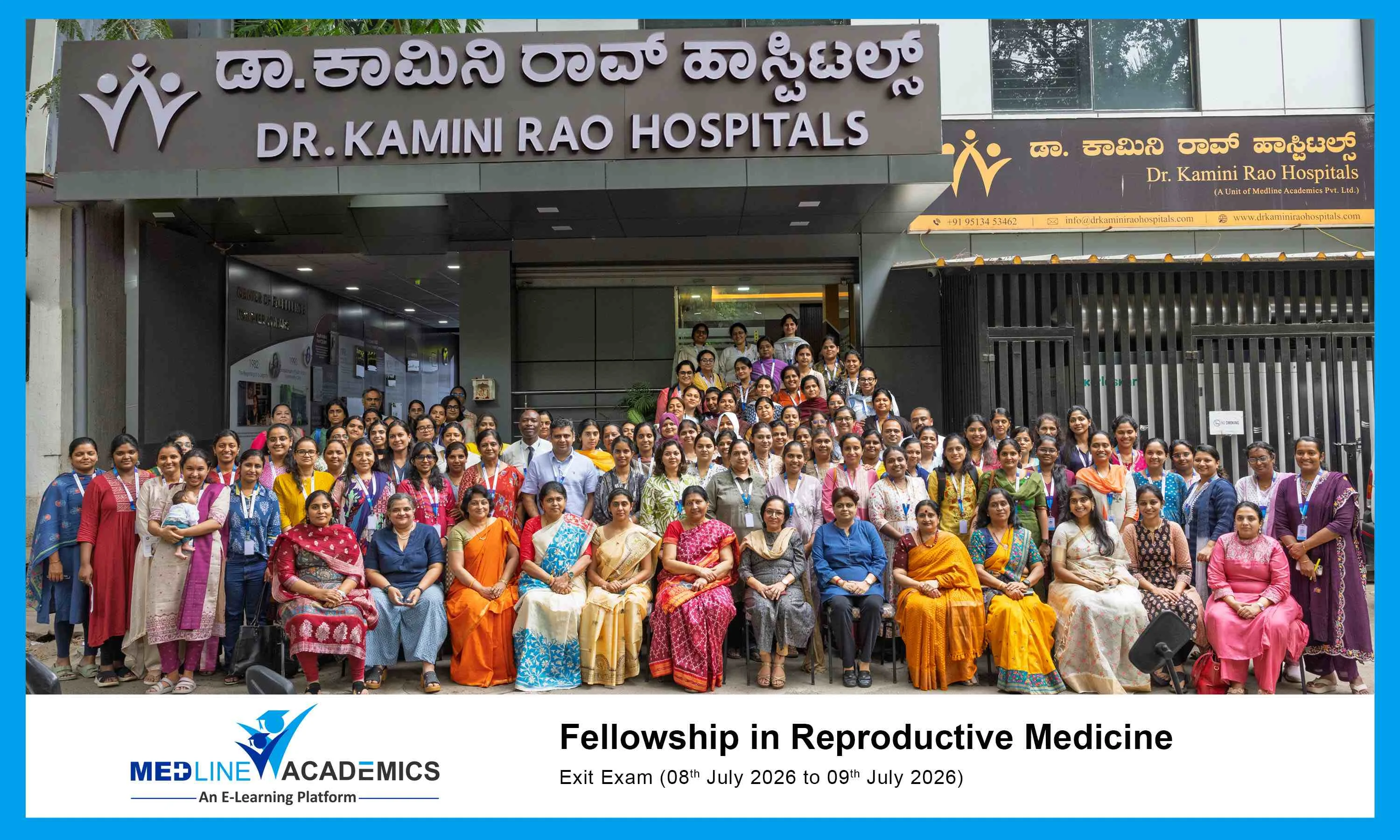
Medical practitioners, who are interested in developing their expertise in the field of reproductive medicine and infertility, are offered a structured Fellowship by Medline Academics which entails theory and practical experience. This fellowship covers many aspects of Infertility assessment, Reproductive endocrinology and embryology, IUI and IVF-ICSI, Ultrasound in infertility, Fertility preservation, Male infertility, Endometriosis, and Recurrent implantation failure (RIF) and other topics related to assisted reproductive technology (ART). It includes both online theory and simulation training and clinical attachment, and is available for candidates who have completed their MD/MS/DNB (Obstetrics and Gynaecology), MRCOG and those who have experience working in DGO.
Dr. Kamini Rao Hospitals, Bangalore provides specialised treatment for the management of infertility and IVF with a team of reproductive medicine and fertility specialists who are looking for fertility treatment for themselves or their partners. Dr. Kamini Rao is a pioneer, in the field of reproductive medicine, who has been awarded the Padma Shri for her contributions to the field and has over 40 years of experience in the field.
For a medical professional seeking Fellowship in IVF and Reproductive medicine or for a couple in search of best IVF hospital it is crucial to select a centre that has qualified specialists, has the right technology, evidence-based treatment and complete patient care. Medline Academics and Dr. Kamini Rao Hospitals are two intertwined aspects of education and health care in the domain of reproductive medicine, which work towards the dissemination of knowledge and best possible fertility care.