Sign up with Google
 Sign in with Zoho

Introduction
Bread has always been a staple food, but the way it is produced is changing. Bakeries today have to manage rising consumer expectations, changing eating habits, inconsistent raw materials, and the need to produce large quantities without compromising quality. These factors are influencing the way bread improvers are formulated and used.
Bread improvers help bakers deal with many of the practical challenges involved in bread production. They can improve dough handling, loaf volume, texture, softness, fermentation tolerance, and freshness. What is changing is the type of solutions manufacturers are looking for.
Instead of simply focusing on better-looking bread, bakeries are increasingly interested in ingredients that provide several benefits at once. Cleaner labels, longer freshness, specialty breads, enzyme technology, and production efficiency are among the trends shaping the Bread Improvers Market.
Clean-Label Products Are Changing Formulations
Clean-label demand has become difficult for bakery manufacturers to ignore. Many shoppers now look more closely at ingredient lists and prefer products made with ingredients they recognize or consider more natural.
This has pushed bakeries to rethink the way they use traditional dough conditioners and other functional ingredients. The challenge is that removing an ingredient does not automatically produce a successful reformulation. Bread still needs to have good volume, texture, appearance, taste, and shelf life.
As a result, ingredient suppliers are working on improver blends that can provide the required functionality while fitting into simpler formulations. Enzymes and naturally derived ingredients are receiving particular attention because they can help improve bread quality without making the ingredient declaration unnecessarily complicated.
Enzymes Are Playing a Bigger Role
Enzyme technology is one of the most interesting areas of development in bread improvement. Different enzymes can perform different jobs during dough preparation and baking.
For example, certain enzymes can help with crumb softness, while others can support dough stability, volume, or moisture management. Using combinations of enzymes allows manufacturers to develop solutions for specific recipes instead of depending on a single ingredient for every application.
This is especially useful for industrial bakeries. When a production line is running continuously, even a small change in dough behavior can create problems. Consistent ingredients can make the process easier to control and help reduce variations between batches.
Freshness Has Become a Major Priority
Consumers want bread that stays soft and enjoyable for longer. At the same time, retailers and manufacturers want to reduce returns and food waste. These two needs are closely connected.
Bread improvers are increasingly being developed with freshness in mind. The goal is not simply to make a loaf larger or softer immediately after baking. Manufacturers also want the product to retain its desirable texture several days later.
This matters particularly for packaged bread and other bakery products that travel through distribution networks before reaching consumers. Better shelf-life performance can give manufacturers more flexibility with transportation and inventory while helping reduce discarded products.
Healthier Bread Creates New Technical Challenges
The growing popularity of whole-grain, multigrain, high-fiber, and protein-enriched bread is another factor influencing product development.
Adding nutritious ingredients can make bread more complicated to produce. Whole grains and fibers, for instance, can absorb considerable amounts of water and may affect gluten development. The resulting dough can be heavier and more difficult to process than conventional dough.
Bread improvers can help overcome some of these difficulties. Manufacturers are therefore looking for solutions that can maintain volume and softness while allowing them to add more nutritious ingredients to their recipes.
This trend is likely to continue as consumers look for bakery products that combine convenience with nutritional value.
Gluten-Free Baking Encourages Innovation
Gluten-free bread remains a technically demanding category. Traditional wheat bread relies heavily on gluten to create elasticity and trap the gases produced during fermentation. Without that structure, achieving the familiar appearance and texture of bread becomes much harder.
To address this issue, manufacturers are experimenting with combinations of hydrocolloids, enzymes, proteins, fibers, and other functional ingredients. The objective is to produce gluten-free bread that is less crumbly and has better moisture retention and texture.
The growing use of alternative grains and flours is adding another layer of complexity. Rice, sorghum, millet, buckwheat, and other ingredients behave differently during mixing and baking. This means improver manufacturers have more opportunities to create products designed for individual flour systems.
Automation Is Raising the Bar for Consistency
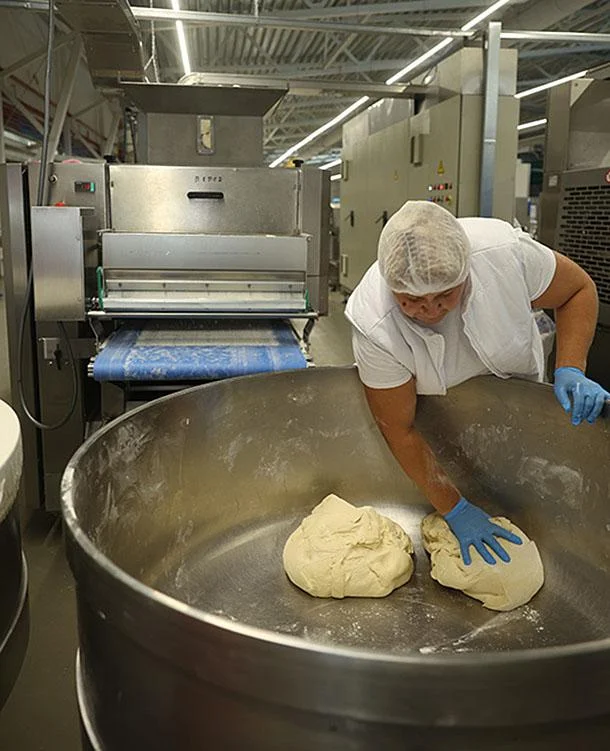
Large bakeries are increasingly dependent on automated production lines. Dough may pass through mixing, dividing, molding, proofing, and baking equipment with limited manual intervention.
Automation can improve productivity, but it also leaves less room for inconsistent dough behavior. If dough becomes too sticky, too weak, or difficult to shape, it can disrupt an entire production process.
This is increasing interest in bread improvers that provide reliable dough handling and fermentation tolerance. Consistency has become just as important as the final appearance of the loaf.
Customized Improvers Are Becoming More Common
There is no single bread recipe that works everywhere. Flour quality, production equipment, hydration, fermentation time, climate, and baking conditions can all vary.
Because of this, bakeries are increasingly looking for improvers suited to their particular processes. A solution developed for soft sandwich bread may not be ideal for crusty artisan bread or flatbread.
Suppliers that can provide technical assistance and adjust formulations to meet individual requirements have an advantage. Product development is becoming less about selling a standard blend and more about solving a specific bakery problem.
Sustainability Is Becoming Part of the Conversation
Sustainability is also finding its way into ingredient decisions. Bakeries are under pressure to use resources efficiently and limit unnecessary waste.
Bread improvers can contribute to this goal in several ways. Better dough consistency can reduce production losses, while improved shelf life can help prevent unsold bread from being thrown away.
Ingredient producers are also exploring fermentation-based processes and biotechnology as they search for more efficient ways to develop functional ingredients. Sustainability may not always be the primary reason a bakery chooses an improver, but it is becoming an increasingly important consideration.
Sourdough Is Influencing Product Development
Sourdough has moved well beyond small artisan bakeries. Its distinctive flavor and traditional image have made it attractive to mainstream consumers as well.
Large-scale producers face a challenge, however. They need to reproduce some of the characteristics associated with fermentation while keeping production predictable and commercially practical.
This has encouraged interest in ingredients and processing approaches that can support sourdough-style products without sacrificing consistency. Fermentation cultures and enzyme technologies are likely to remain relevant as manufacturers try to balance traditional characteristics with modern production requirements.
Regional Preferences Matter
Bread consumption varies considerably from one market to another. Consumers in different regions have their own preferences for texture, shape, flavor, and types of bread.
That difference is encouraging manufacturers to develop more application-specific products. The requirements for a soft sandwich loaf, for example, can be very different from those for a flatbread or crusty European-style loaf.
Local production conditions matter as well. Flour characteristics, climate, equipment, and baking practices can influence how an improver performs. Suppliers that understand these differences can develop solutions that are better suited to individual markets.
Technology Is Improving Formulation
Technology is gradually changing how bakery manufacturers approach ingredient selection. Automated dosing, laboratory testing, process monitoring, and digital production systems allow bakeries to track changes more closely.
Better measurement can also help manufacturers determine how much of an improver is actually needed. Rather than adding ingredients based mainly on standard recipes, producers can make adjustments according to flour quality and production conditions.
This could lead to more precise formulations and better control over production costs while maintaining consistent bread quality.
What Lies Ahead?
The Bread Improvers Market is moving toward solutions that are more targeted, multifunctional, and compatible with changing consumer expectations.
Clean-label formulations and enzyme-based technologies will remain important as manufacturers look for ways to improve bread without relying heavily on traditional additives. At the same time, demand for whole-grain, high-fiber, protein-rich, and gluten-free products will create new formulation challenges.
Longer freshness is another area that will continue to receive attention, particularly as businesses try to reduce food waste and improve distribution efficiency.
Ultimately, the direction of the market will be determined by a fairly simple question: can an improver make bread better while fitting the way consumers want it produced and sold? Suppliers that can answer that question with practical, flexible solutions are likely to find the strongest opportunities in the years ahead.