Sign up with Google
 Sign in with Zoho


Picking a cosmetic dentist isn't something you should decide based on a slick website or a catchy ad. The dentist's actual training, real results from real patients, the technology in their office, and how personalized their approach feels — these are the things that actually matter. Pay attention to them, and you'll end up with someone who cares as much about your long-term oral health as they do about a good-looking smile.
Here's something most people don't find out until it's already too late: two dentists can use the same porcelain and the same lab, and still hand you completely different results. The material isn't what makes the difference. It's the hands doing the work — and the seven things below will tell you a lot about whose hands those are.
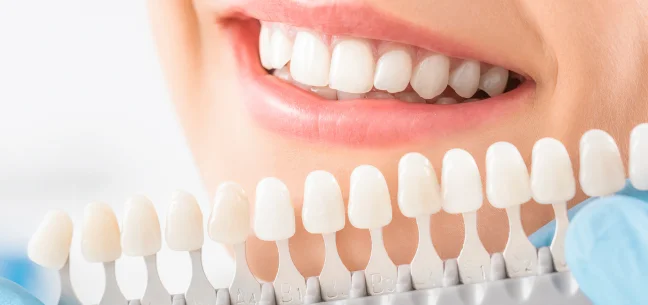
1. Real Cosmetic Training, Not Just a Dental License
Every practicing dentist is licensed, sure. But licensing is the bare minimum. Cosmetic work is a different skill set, and the dentists who are actually good at it usually went out of their way to get trained in it.
Groups like the American Academy of Cosmetic Dentistry (AACD) run programs built around smile design, porcelain work, and case planning — the kind of hands-on training, peer review, and live case study that most general dentists never touch again after dental school.
So before you book anything, look for a specific credential. If a dentist's "about" page only mentions a general degree and nothing cosmetic-specific, that's worth noticing. And don't be shy about asking directly:
- How long have they focused specifically on cosmetic cases?
- What share of their practice is cosmetic versus everyday restorative work?
- Do they hold any recognized cosmetic credential, like AACD?
2. A Before-and-After Portfolio With Real NYC Patients
Any dentist worth seeing should be able to show you real before-and-after photos — not stock images, not someone else's marketing. A genuine portfolio usually covers a range of cases: different starting points, different goals, different problems solved.
Ask to see cases like yours specifically. Gapped teeth, chipped edges, deep staining — whatever brought you in, ask to see that exact issue handled by that exact dentist. If the practice is confident in its work, someone will pull those photos up on a tablet right there in the room, no hesitation.
Also worth checking: the in-between photos, not just the final reveal. A dentist who's willing to show you the temporary veneers stage, or the shade-matching process, or a mid-treatment photo, is being upfront that this isn't an instant, one-visit fix — and that kind of honesty tends to carry through the rest of your treatment.
What a strong portfolio should include:
- Cases matching your specific concern (gaps, chips, discoloration, etc.)
- A range of starting conditions, not just the easiest cases
- Mid-treatment photos, not only the final result
- Patients with a similar smile type or dental history to yours
3. Digital Smile Design and 3D Imaging
Would you ever buy a house without seeing a single photo of it first? That's basically what you're doing if you agree to veneers based on nothing but a verbal description.
Digital smile design fixes that problem. Intraoral scanners and digital imaging let a dentist actually map out your smile and show you a preview before anything is touched, which makes the whole process more predictable and a lot less nerve-wracking.
It also saves time. With CAD/CAM technology, some practices can design and mill a restoration in a single visit instead of making you come back two weeks later. If a practice mentions CEREC, digital scanning, or CAD/CAM, take that as a sign they've invested in cutting down both your chair time and the room for error.
4. Everything Under One Roof
A clinic that only does whitening, or only does Invisalign, is going to send you elsewhere the second your case needs anything more. That means extra offices, extra appointments, and a treatment plan split between dentists who probably never talk to each other about your case.
A practice that handles veneers, bonding, whitening, Invisalign, and full smile makeovers can treat your case as one connected plan instead of a pile of separate fixes. Months later, that's the difference between a bite, a color, and an alignment that were actually planned together — versus three unrelated procedures done by three different people working off three different charts.
Sticking with one practice for everything just makes life easier: better communication, one consistent plan, and a lot less running around.
Look for a practice that offers most or all of the following:
- Porcelain veneers
- Composite bonding
- Professional teeth whitening
- Invisalign or clear aligners
- Full smile makeovers
- Restorative work (crowns, implants) if your case needs it
5. Reviews Worth Actually Reading
A high star rating looks nice, but it doesn't tell you much. The real information is buried in the reviews themselves — how a dentist handled something going wrong, whether the final result matched what was promised at the first visit, whether the timeline they quoted actually held up.
Reviews on Google Business Profile or RealSelf tend to be more reliable than testimonials sitting on a practice's own website, simply because they're harder to cherry-pick. Skip the five-word reviews and go read the long ones — the people who sat through six weeks of veneer appointments are the ones who'll actually tell you about communication gaps, surprise costs, or delays nobody mentioned upfront.
One more tip: search the dentist's actual name, not just the practice name. Bigger clinics often have several dentists on staff, and reviews left for "the practice" don't always tell you who really did the work.
6. A Consultation That Actually Feels Personal
Pay attention to the first ten minutes of a consultation. Does the conversation start with your goals and your budget — or does it jump straight to the most expensive procedure on offer?
A dentist who's genuinely invested in your case will walk you through more than one option — bonding versus veneers, say — and explain honestly what each one costs, how long it lasts, and how much of your natural tooth gets removed along the way. Photos, scans, or X-rays taken during that same visit, followed by an actual written plan instead of a vague verbal number, are good signs you're in a real consultation and not a sales pitch.
It also helps to notice whether the dentist tells you what could go wrong. Sensitivity after whitening, needing a nightguard after veneers — a confident, honest provider will mention these instead of pretending the procedure is flawless. That kind of honesty upfront usually says more about how they'll treat you mid-treatment than anything on their website ever could.
Signs of a genuine, personalized consultation:
- Starts with your goals and budget, not a sales pitch
- Multiple treatment options presented, with real trade-offs explained
- Photos, scans, or X-rays taken during the same visit
- A written treatment plan, not just a verbal estimate
- Honest mention of possible side effects or risks
7. A Location You Can Actually Get To
Veneers and Invisalign don't wrap up in one visit — they stretch across weeks, sometimes months, of follow-ups. A location that's genuinely easy to reach, whether that's near your office, close to a subway stop, or walkable from wherever you spend most of your day, ends up mattering more than people expect. It's often the difference between finishing treatment on schedule and pushing appointments back for the third time.
The office itself matters too. Updated equipment and a comfortable space usually say something about how seriously a practice takes the patient experience — and an outdated setup can be a sign the practice hasn't kept up in other ways either.
Scheduling flexibility is worth checking as well. Evening or weekend appointments make a real difference for anyone trying to fit dental visits around a full-time job in Manhattan, and it usually means the practice has built its hours around patients rather than the other way around.
At the end of the day, finding the right cosmetic dentist in NYC comes down to a mix of experience, real technology, a personalized plan, and results you can actually verify. Weigh these seven factors against each other, and you'll walk into your first consultation with a much clearer sense of who deserves your smile.
Frequently Asked Questions
How much does cosmetic dentistry cost in NYC?
It depends on the procedure, the materials used, how complex the case is, and the dentist's experience level. The only way to get a real number is through a consultation tailored to your specific goals.
Is cosmetic dentistry covered by insurance?
Usually not. Insurers treat things like veneers and whitening as elective. Procedures with a restorative purpose — crowns, implants — sometimes qualify for partial coverage.
How do I know if a cosmetic dentist in NYC is legitimate?
Look for AACD affiliation or other advanced cosmetic training, ask for a real patient portfolio, and read detailed reviews on Google or RealSelf rather than relying on testimonials posted on the practice's own site.
Does getting veneers or whitening hurt?
Whitening can cause mild, temporary sensitivity for some people. Veneer prep is done under local anesthesia, so the procedure itself shouldn't hurt much, though some soreness afterward is normal.
How long does a full smile makeover take?
It depends on how many teeth are involved and which procedures are combined, but most full smile makeovers in NYC take somewhere between two and six weeks across several visits.
What's the difference between veneers and bonding?
Veneers are custom porcelain shells bonded onto the tooth, built to last longer. Bonding uses composite resin applied straight to the tooth — quicker and cheaper, but you'll need to replace it sooner.