Sign up with Google
 Sign in with Zoho

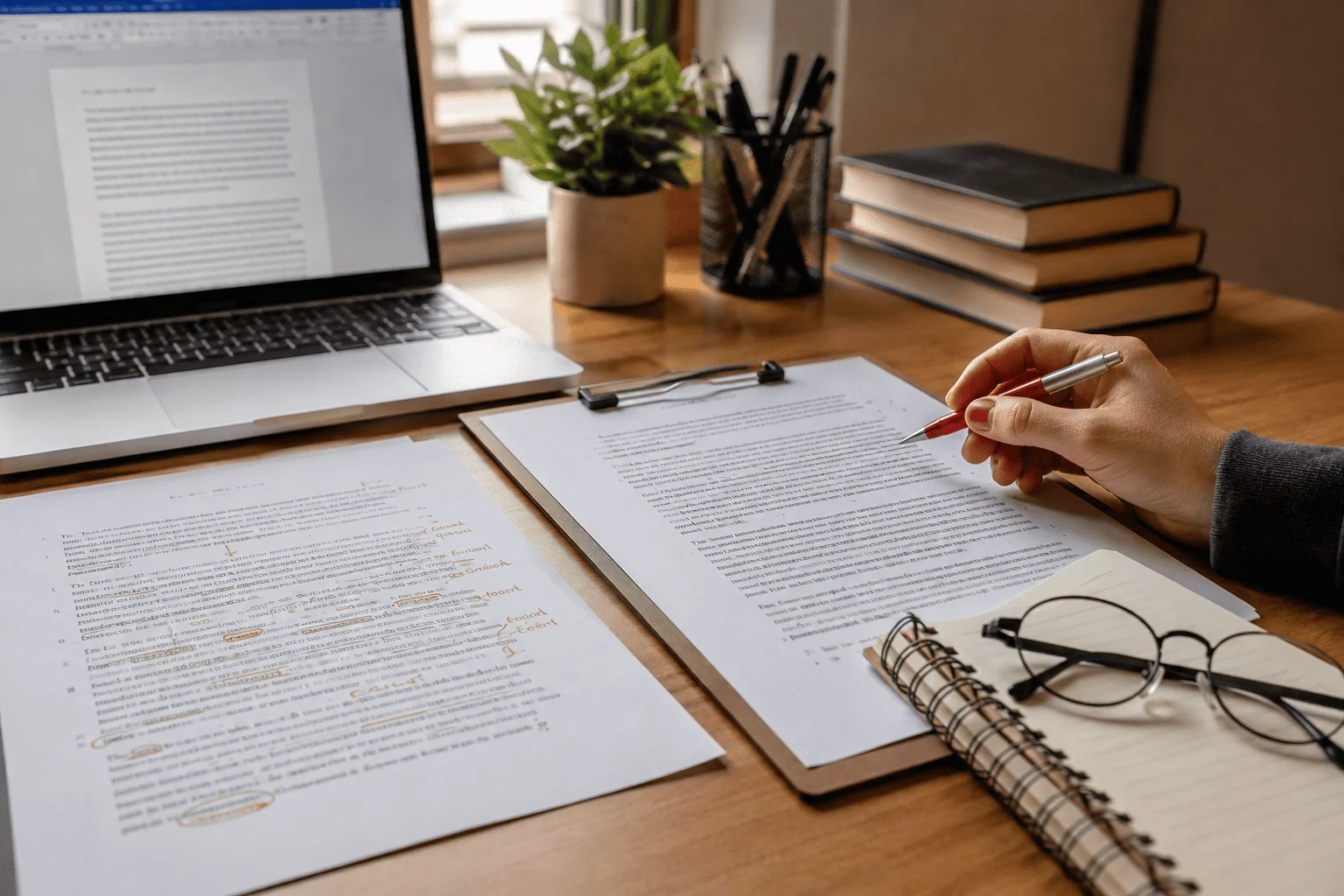
Writing a book is not just about finishing the first draft. Before a book is ready for readers, it needs to be checked and improved. This is where editing and proofreading come in.
Many people think editing and proofreading are the same thing. They are actually two different steps. Both are important, but they focus on different parts of your writing.
So, what is the difference between editing and proofreading? Let's understand it in simple words.
What Does Editing Mean?
Editing means improving your writing.
An editor looks at your content and checks whether your ideas are clear, well-organized, and easy to read. They may suggest changes to sentences, paragraphs, or even larger parts of the book.
Editing can help with:
- Making sentences easier to understand
- Removing unnecessary words
- Improving the flow of the content
- Fixing confusing ideas
- Improving word choice
- Checking the tone of the writing
- Removing repeated information
- Making paragraphs more organized
For example, you may have written a sentence that is too long or difficult to understand. An editor can make it simpler and clearer while keeping your original meaning.
What Does Proofreading Mean?
Proofreading is the final check for mistakes.
Once the editing is finished, a proofreader goes through the manuscript carefully. Their main job is to find small errors that may still be left in the text.
Proofreading usually checks:
- Spelling mistakes
- Grammar errors
- Punctuation
- Typing mistakes
- Missing words
- Extra words
- Capital letters
- Spacing problems
- Formatting issues
For example, if you accidentally type “their” instead of “there,” proofreading can catch that mistake.
What Is the Main Difference Between Editing and Proofreading?
The easiest way to remember the difference is:
Editing makes your writing better.
Proofreading makes your final writing cleaner and more accurate.
Editing looks at the bigger picture, while proofreading focuses more on small mistakes.
Editing focuses on:
- Content
- Structure
- Sentences
- Word choice
- Flow
- Clarity
- Overall readability
Proofreading focuses on:
- Spelling
- Grammar
- Punctuation
- Typing errors
- Formatting
- Small inconsistencies
Both steps help make your book more professional.
Why Is Editing Important for Authors?
A first draft is rarely perfect. Even experienced writers need to review and improve their work.
Editing can help an author:
- Make the story easier to follow
- Improve weak sections
- Remove unnecessary content
- Make the writing more enjoyable
- Keep the reader interested
- Make ideas clearer
- Improve the overall quality of the book
For fiction books, editing can also help with characters, story flow, and plot problems.
For nonfiction books, it can help make information clear, organized, and easy to understand.
Why Is Proofreading Important?
Even after editing, small mistakes can remain. That is why proofreading is important.
A professional proofreader can find mistakes that an author may not notice.
Proofreading helps:
- Catch spelling mistakes
- Fix grammar problems
- Correct punctuation
- Find missing words
- Check headings and spacing
- Keep formatting consistent
- Give the final manuscript a clean look
A book with too many small mistakes can make readers question its quality. A final proofreading check helps avoid that problem.
Which One Comes First: Editing or Proofreading?
Editing should come first, and proofreading should come later.
A simple publishing process can look like this:
- Write the first draft
- Review and improve the content
- Complete the editing
- Format the book
- Proofread the final version
- Publish the book
There is a good reason for this order.
If you proofread your book first and then make major changes during editing, you may create new mistakes. You would then need to proofread everything again.
Can You Edit and Proofread Your Own Book?
Yes, you can do some of it yourself. However, it is easy to miss your own mistakes.
When you have read the same book many times, your brain already knows what you wanted to say. Because of this, you may read what you think is written instead of what is actually written.
You can still improve your own work by:
- Taking a break before reviewing it
- Reading slowly
- Reading the text out loud
- Checking one section at a time
- Using spelling and grammar tools
But having another person review your manuscript can often reveal mistakes you missed.
Do You Really Need Both Editing and Proofreading?
For most books, yes.
Editing and proofreading do different jobs.
Without proper editing:
- Your ideas may not flow well
- Some sections may feel confusing
- Your writing may contain unnecessary content
Without proofreading:
- Spelling mistakes may remain
- Grammar errors may appear
- Small formatting problems can be missed
Using both services gives your manuscript a better chance of being clear, polished, and ready for readers.
What Should Authors Remember?
If you're preparing a book for publication, remember these simple points:
- Editing improves your writing.
- Proofreading checks the final version.
- Editing comes before proofreading.
- Proofreading focuses on small errors.
- Both can improve the quality of your book.
- A second pair of eyes can catch mistakes you may miss.
You don't have to make your book perfect in the first draft. Good writing usually takes time, review, and a few rounds of improvement.
Final Thoughts
Editing and proofreading may sound like the same thing, but they have different purposes. Editing improves the content, while proofreading checks the final text for mistakes.
If you are writing a book, don't rush straight from the first draft to publication. Give your manuscript time to be edited, reviewed, and proofread.
A clean and well-checked book gives readers a better experience and helps you present your work with confidence. With the right publishing support from Larma Publishers, authors can take their manuscripts through the important steps needed to prepare a professional final book.
Frequently Asked Questions
1. What is editing in simple words?
Editing means improving your writing so that it is clear, organized, and easy to read.
2. What is proofreading in simple words?
Proofreading is the final check that looks for spelling, grammar, punctuation, and other small mistakes.
3. Which comes first, editing or proofreading?
Editing comes first. Proofreading is usually done after editing and formatting are completed.
4. Can I proofread my own book?
Yes, but you may miss mistakes because you are already familiar with your writing. Another person can often spot errors more easily.
5. Do books need both editing and proofreading?
Yes. Editing improves the quality of the writing, while proofreading helps make the final version clean and error-free.




 (1) (1).webp)