Sign up with Google
 Sign in with Zoho

Somewhere right now, a nurse in Toronto is rolling out a mat at 6 a.m. while a teacher in the Himalayan foothills begins his morning class on the other side of the world. Ten years ago, that picture would have sounded like a stretch. Today it is an ordinary Tuesday in the world of yoga education.
For a long time, becoming a certified yoga teacher meant a hard set of trade-offs. You needed a few free weeks, a plane ticket, a leave of absence from work, and the confidence to leave your family behind. Plenty of sincere practitioners never made it to the starting line, not because they lacked devotion, but because life simply would not bend that far. Rishikesh, the town on the Ganges in Uttarakhand that has drawn yoga students for generations, felt like a destination reserved for people with unusually flexible calendars.
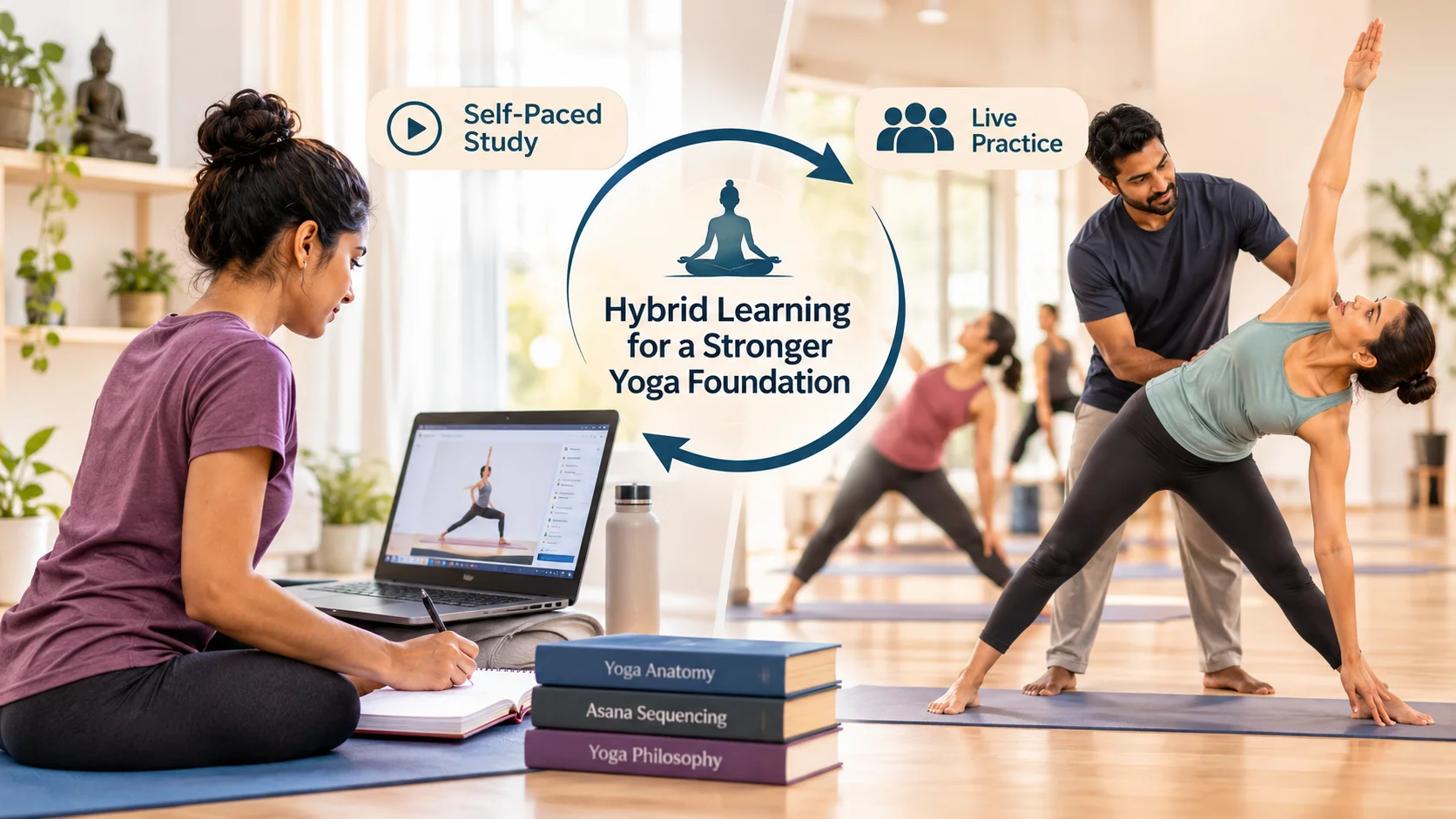
That has quietly changed. A well-structured online 200 hour yoga teacher training now lets a student in Melbourne, Manchester, or Mumbai learn from teachers rooted in the Rishikesh tradition without leaving home. The 200-hour mark is widely treated as the entry-level benchmark for teaching yoga professionally, and it is the standard that most studios and many employers look for first. What the online format adds is access: the same curriculum shape, delivered to a living room instead of a shala.
The Teacher on Your Screen Is Not the Whole Story
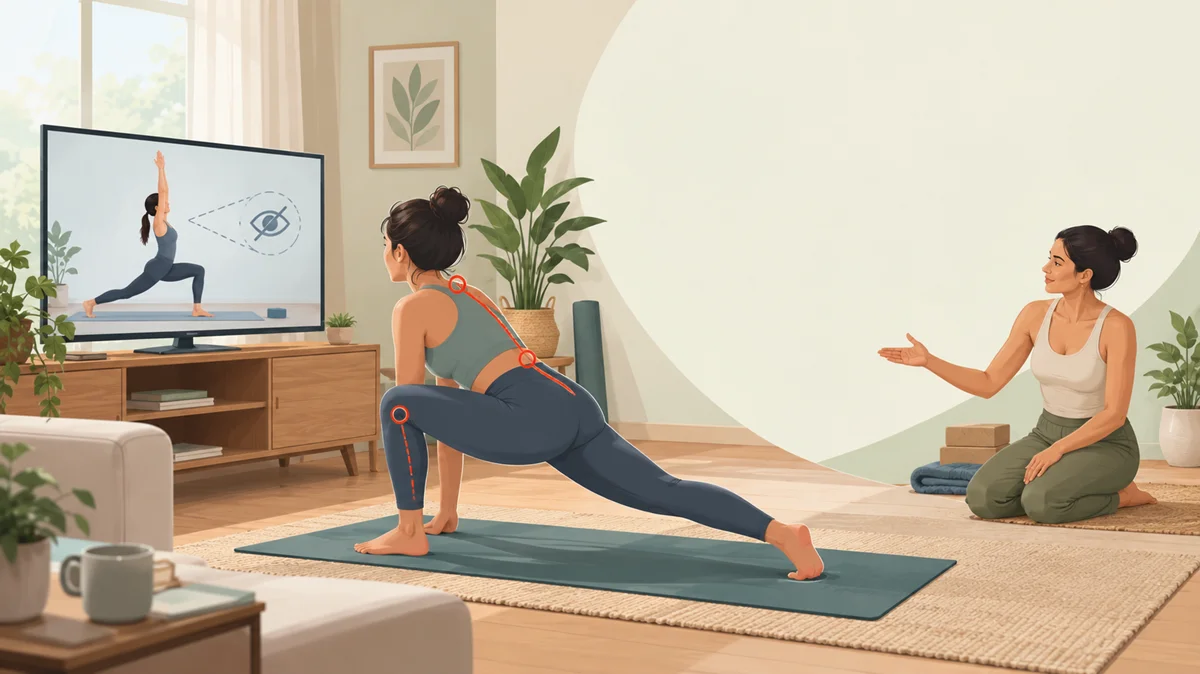
It is tempting to judge a virtual course by its video quality. That is the wrong test. What matters is whether the teacher can see you, correct you, and answer you.
Yoga is a practice of subtle adjustment. A lifted heel, a collapsed shoulder, a held breath: these are things a good teacher catches in seconds, and a recorded lecture never will. So when you compare programs, look for live sessions with small enough groups that you are actually observed, and for feedback on your own practice and your own teaching, not only on theory. Ask how many students share one session and whether you will be asked to teach back to the group. A course that only plays you videos is an audiobook with poses.
What a Credible 200 Hours Should Actually Contain
Yoga Alliance, the best-known international registry for yoga teachers, organizes its 200-hour standard around several educational areas, including techniques and practice, teaching methodology, anatomy and physiology, yoga humanities (philosophy, ethics, and history), and professional essentials. You can read the current requirements on the Yoga Alliance website, since standards are revised from time to time, and it is worth confirming the details there rather than relying on any single article.
Use that list as a checklist when reading a syllabus. Does the course go beyond asana into pranayama, meditation, and the philosophy behind the practice? Does it teach you how to sequence a class, cue clearly, and adapt for an injured or stiff student? Does anatomy appear as something you will use, or as a token chapter? A syllabus that is heavy on postures and light on everything else may leave you able to practice beautifully but unsure how to hold a room.
Why Rishikesh Still Carries Weight
Rishikesh is often called the yoga capital of the world, a title that is more reputation than official designation, but a reputation earned over a long time. The town gained international attention in the 1960s when the Beatles visited the ashram of Maharishi Mahesh Yogi, and it has remained a pilgrimage point for students ever since.
Place alone does not make a teacher good. What the Rishikesh lineage can offer is a way of teaching that places philosophy, breath, and discipline alongside physical practice, rather than treating yoga as exercise with better music. When you study online with a school that grew out of that environment, you are borrowing a tradition, not a backdrop. Just check that the teachers themselves have real depth, and ask about their training and years of teaching before you enroll.
Practical Questions Before You Commit
Time zones deserve more thought than they usually get. India Standard Time sits at UTC+5:30, so a live class that suits a student in Delhi may land at an awkward hour in California. Ask whether sessions are recorded, whether schedules can be adjusted, and what happens if you miss a week.
Then ask about certification honestly. If registration with a body like Yoga Alliance matters for your plans, verify the school's status directly in the public directory instead of taking a brochure's word for it. Ask what you will receive at the end, how you are assessed, and what support exists after graduation. A trustworthy school will answer these plainly and will not mind being asked.
The Real Test Happens After the Course
The certificate is the beginning of the work, not the end of it. The students who thrive are the ones who start teaching quickly, even if the first class is only three friends and a borrowed living room. Online training makes this easier than residential training ever did, because you are already practicing in your own space, with your own distractions, building habits that will survive the course.
Distance is no longer the barrier it once was. What remains is the choice of a teacher and a program that will take your practice seriously, and that is a choice worth making slowly.