Sign up with Google
 Sign in with Zoho

Summer heat can make an otherwise comfortable home feel unbearable, especially when several rooms struggle to stay cool at the same time. If fans and window units are no longer doing the job, installing central air conditioning can be a worthwhile improvement. A well-designed system can cool the entire house more evenly and make it easier to manage indoor humidity during the warmer months.
But buying an air conditioner and putting it in place are two different things. The home's size, insulation, ductwork, electrical system, and cooling requirements all affect the installation. If you're considering a central air conditioning install, knowing what happens before the equipment arrives can help you make a better decision.
What to Consider Before Installing Central Air Conditioning
A new AC system should be selected around the home—not simply around a price tag or a particular equipment size.
An HVAC technician will typically look at the home's square footage, insulation, windows, layout, sun exposure, existing ductwork, and other factors that influence cooling demand. This evaluation is important because an AC unit that is too large can switch on and off frequently, while a unit that is too small may struggle to reach the desired temperature.
This is especially relevant for central air conditioning Long Island NY projects. Long Island summers can bring stretches of hot, humid weather, so cooling capacity and humidity control both deserve attention.
Existing ductwork is another part of the equation. Leaky or poorly insulated ducts can waste cooled air before it reaches the living spaces. In some homes, repairing or modifying the duct system may be just as important as choosing the new equipment.
How Installing Central Air Conditioning Usually Works
Every property is different, but a professional installation generally follows a few important stages.
Home assessment: The technician examines the existing HVAC setup and determines what type and capacity of equipment the property needs. They may also check the electrical panel, ductwork, drainage, thermostat, and proposed location of the outdoor unit.
Equipment selection: Once the cooling requirements are understood, the contractor can recommend suitable equipment. Efficiency, operating costs, warranty coverage, available features, and refrigerant requirements can all factor into the decision.
Site preparation: The outdoor condenser needs a stable location with sufficient clearance for airflow and future servicing. Inside the house, the air handler or evaporator coil must be properly connected to the ductwork and other necessary components.
Installation and testing: After the equipment and connections are installed, the system should be tested. Proper airflow, thermostat operation, electrical connections, condensate drainage, and system performance all need to be checked before the job is considered complete.
Refrigerant-related work is not a DIY task. In the United States, technicians who perform work that could release regulated refrigerants from stationary refrigeration equipment generally need the appropriate EPA Section 608 certification.
Is Central AC the Right Choice for Every Home?
Not necessarily. Central air is a convenient option when a property already has usable ductwork, but installing new ducts throughout an older home can be disruptive and expensive.
That's where mini split AC installation can make sense.
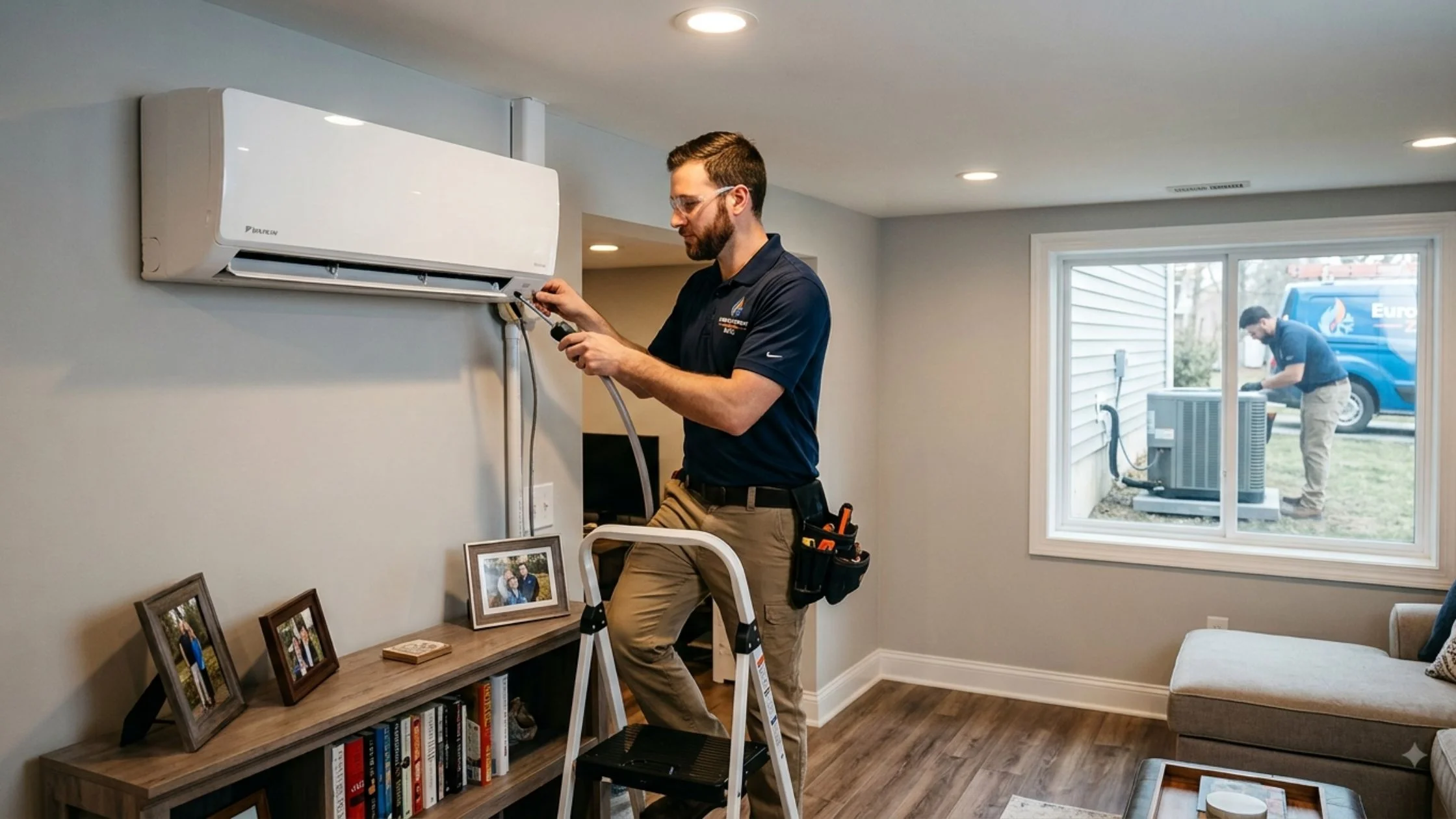
A ductless mini-split system connects an outdoor unit to one or more indoor units. Instead of sending conditioned air through a network of ducts, each indoor unit delivers cooling directly into its designated space. This makes the technology particularly useful for additions, finished rooms, garages, older properties, or areas that have always been difficult to cool.
For example, imagine a second-floor bedroom that stays noticeably warmer than the rest of the house. Extending central ductwork to that room might not be the most practical solution. Installing a ductless mini split could provide independent cooling without requiring major construction.
When comparing ductless mini split AC installation services, homeowners should ask about the number of zones, indoor unit placement, electrical requirements, outdoor unit location, and expected maintenance.
For properties that need this type of setup, ductless AC Long Island solutions can offer a flexible alternative to traditional central cooling.
Choosing the Right HVAC Contractor
The contractor you hire can have just as much impact on the result as the equipment itself.
Start by asking how the company determines the appropriate system size. Be cautious if someone recommends a unit based only on the home's square footage without looking at the property's other characteristics.
It is also worth asking what the quoted price includes. Does it cover removal of the old equipment? Electrical work? Duct modifications? Thermostat installation? Testing after startup? Getting these details in writing can prevent misunderstandings later.
Experience matters, too. An established HVAC professional should be able to explain why a particular system is appropriate for your home rather than simply presenting a list of equipment options.
For homeowners in Nassau County and Western Suffolk, Euro Comfort Zone offers AC installation and replacement services designed around the property's cooling requirements and existing HVAC setup.
Don't Forget About Maintenance
A new air conditioner isn't maintenance-free just because it is new.
Simple habits can make a difference. Keep the area around the outdoor condenser reasonably clear, replace or clean filters as recommended by the equipment manufacturer, and pay attention to changes in airflow or unusual sounds.
It is also smart to have the system professionally inspected periodically. A technician can look for issues involving electrical components, drainage, airflow, coils, and other parts that aren't always obvious to a homeowner.
Good maintenance isn't only about preventing breakdowns. A system that is clean, correctly adjusted, and operating as intended is more likely to provide consistent comfort throughout the cooling season.
Final Thoughts on Installing Central Air Conditioning
For a home that already has suitable ductwork, installing central air conditioning can be an effective way to improve whole-house comfort. However, the right solution depends on the property. Some homes are better candidates for central AC, while others may benefit from a ductless system that provides cooling exactly where it is needed.
Before signing an installation contract, have the home properly evaluated, ask questions about equipment sizing, understand what the estimate covers, and make sure the installation will be handled by qualified professionals.
A little planning before the installation can make a noticeable difference once the summer heat arrives.
FAQs
1. How long does installing central air conditioning take?
The time required varies from one property to another. A straightforward replacement using existing ductwork may be completed relatively quickly, while a new installation involving duct modifications, electrical work, or other changes can take longer.
2. Is central AC better than a mini-split system?
It depends on the home. Central AC works well when suitable ductwork is already available. Mini-splits can be a practical choice for individual rooms, additions, older homes, or spaces where installing ducts would be difficult.
3. How is the correct AC size determined?
An HVAC professional should consider more than square footage. Factors such as insulation, windows, ceiling height, home orientation, ductwork, and local climate can influence the cooling load and equipment recommendation.
4. Can I install a ductless mini split myself?
Professional installation is generally the safer choice because these systems involve electrical connections, refrigerant lines, drainage, and equipment commissioning. Refrigerant-related work may also be subject to federal certification requirements.
5. When should an old central AC system be replaced?
Frequent repairs, declining cooling performance, increasing energy costs, age, and difficulty finding compatible replacement parts can all be signs that replacement deserves consideration. An HVAC professional can assess the system and explain whether repair or replacement is more practical.