Sign up with Google
 Sign in with Zoho

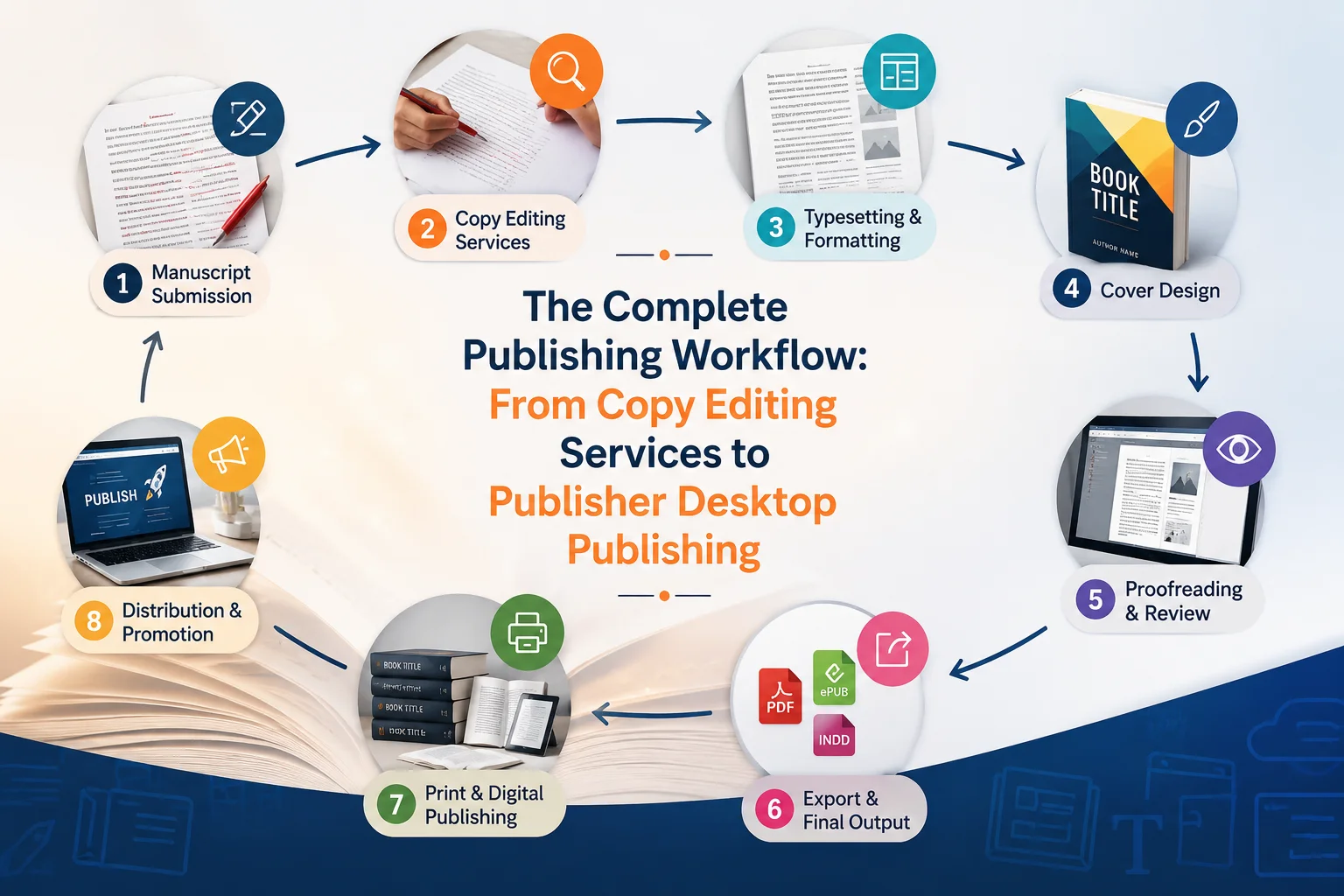
In the intricate world of publishing, bringing a manuscript to life is a journey that demands precision, expertise, and a keen eye for detail. This journey, often envisioned as a linear path, is in reality a complex interplay of various specialized services, each contributing to the final polished product. At the heart of this transformation lie copy editing services and publisher desktop publishing (DTP), two critical stages that ensure content is not only grammatically sound but also visually compelling and ready for its intended audience.
The Foundation: Copy Editing Services
Before any text can take its final form, it undergoes a rigorous process of refinement known as copy editing. This stage is far more comprehensive than a simple spell check; it delves into the very fabric of the writing, ensuring clarity, consistency, and correctness.
What Copy Editing Entails:
• Grammar, Spelling, and Punctuation: The fundamental layer of copy editing involves correcting mechanical errors that can detract from readability and professionalism.
• Clarity and Conciseness: Copy editors refine sentence structure, eliminate jargon, and rephrase awkward passages to ensure the message is conveyed effectively and efficiently.
• Consistency: This includes maintaining a consistent style, tone, and voice throughout the document, as well as ensuring uniformity in formatting, capitalization, and numerical representation. For publishers, adherence to a specific style guide (e.g., Chicago Manual of Style, AP Stylebook) is paramount.
• Accuracy: While not typically fact-checking, copy editors may flag potential factual errors or inconsistencies that require author verification.
• Flow and Readability: Editors assess the overall rhythm and coherence of the text, making adjustments to improve the reader's experience.
Why Professional Copy Editing Services are Indispensable:
Engaging professional copy editing services is an investment in the credibility and impact of your publication. A well-edited manuscript reflects professionalism and respect for the reader, enhancing the author's reputation and the publisher's brand. In an age where content proliferates, quality stands out, and copy editing is the gatekeeper of that quality. It catches errors that automated tools often miss and provides a human touch that understands nuance and context.
The Transformation: Publisher Desktop Publishing (DTP)
Once the text has been meticulously refined through copy editing, it moves into the visual realm of publisher desktop publishing (DTP). This is where the raw manuscript is transformed into a visually appealing and print-ready or digitally distributable format. DTP combines graphic design principles with specialized software to create layouts that enhance readability and engage the audience.
Key Aspects of Publisher Desktop Publishing:
• Layout and Design: DTP professionals arrange text, images, and other graphic elements on a page to create an aesthetically pleasing and functional design. This includes decisions on margins, columns, headers, footers, and page numbering.
• Typography: Selecting appropriate fonts, sizes, leading (line spacing), and kerning (space between letters) is crucial for readability and conveying the desired tone. Typography plays a significant role in the overall visual impact of a publication.
• Image Integration: Incorporating photographs, illustrations, charts, and graphs, ensuring they are correctly sized, positioned, and have appropriate captions and resolutions for the intended output (print or digital).
• Pre-press Preparation: For print publications, DTP involves preparing files for commercial printing, including color correction, bleed settings, and ensuring all elements meet printer specifications. This stage is vital to avoid costly errors in the printing process.
• Digital Output: For e-books, websites, and other digital formats, DTP adapts layouts for various screen sizes and devices, ensuring responsive design and optimal user experience.
The Impact of Effective Publisher Desktop Publishing:
Effective publisher desktop publishing is not merely about making a document look good; it's about optimizing the reading experience and reinforcing the content's message. A professionally laid-out book, magazine, or digital publication is more inviting, easier to navigate, and leaves a lasting positive impression on the reader. It translates the intellectual effort of writing and editing into a tangible, high-quality product that stands out in a competitive market.
The Seamless Workflow: From Edit to Publish
The synergy between copy editing services and publisher desktop publishing is what defines a complete and successful publishing workflow. These two stages are interdependent, with the quality of one directly impacting the effectiveness of the other. A clean, consistent manuscript from copy editing simplifies the DTP process, reducing errors and saving time and resources. Conversely, a well-executed DTP can highlight the strengths of a meticulously edited text.
Publishers who prioritize both professional copy editing and expert desktop publishing ensure that their content is not only accurate and articulate but also visually engaging and accessible across all platforms. This integrated approach is the hallmark of high-quality publishing, delivering a superior product that resonates with readers and achieves its intended purpose.