Sign up with Google
 Sign in with Zoho

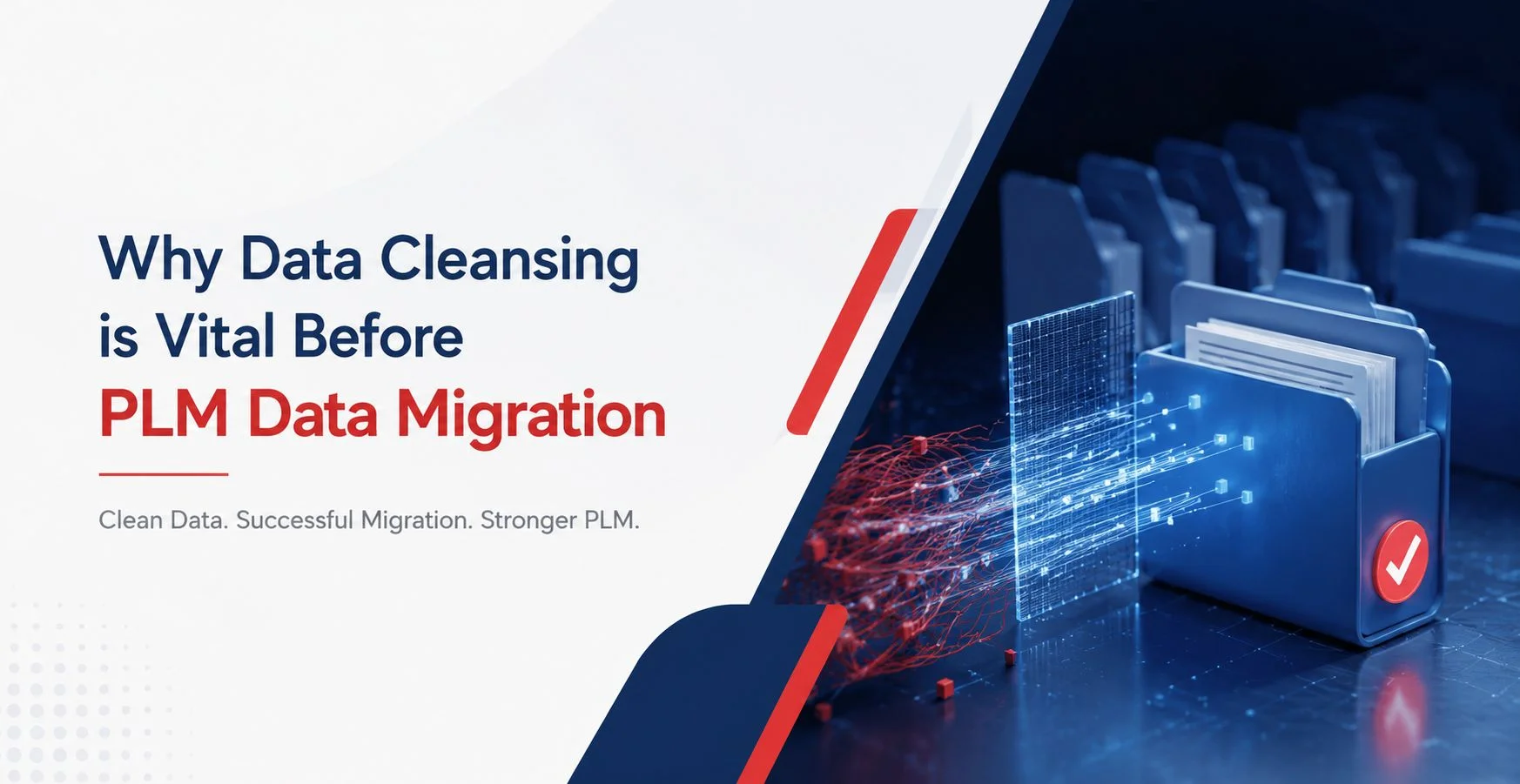
Engineering organizations often treat PLM data migration as a technology project, yet the biggest risks usually originate from the quality of the data being transferred. Migrating duplicate, outdated, incomplete, or inconsistent engineering information into a new Product Lifecycle Management (PLM) platform can reduce user confidence, increase implementation costs, and create operational bottlenecks. The most successful migration projects begin with systematic data cleansing because clean data enables accurate product structures, reliable traceability, and faster user adoption from day one.
Why PLM Data Migration Depends on High-Quality Data
Successful PLM data migration starts with trusted engineering information rather than migration software.
Many manufacturers have accumulated decades of CAD models, engineering drawings, specifications, supplier records, and product documentation. While valuable, these repositories often contain obsolete revisions, duplicate components, inconsistent naming conventions, and incomplete metadata.
Migrating these issues into a new PLM platform simply transfers existing problems instead of solving them. Data cleansing creates a reliable foundation that allows the new environment to operate as intended.
Organizations in Aerospace & Defense, Automotive, Medical Devices, and Industrial Manufacturing often discover that data quality not technology is the largest migration challenge.
How Poor Data Quality Impacts Engineering Operations
Engineering teams depend on accurate product information throughout development, manufacturing, and service.
Common data quality issues include:
- Duplicate CAD models
- Conflicting Bills of Materials
- Missing lifecycle states
- Inconsistent part numbering
- Broken CAD references
- Outdated engineering documents
- Inactive supplier information
- Invalid metadata fields
Each issue increases engineering effort during design changes, product releases, procurement, and regulatory audits.
Projects frequently exceed planned timelines because teams spend weeks resolving problems that could have been identified before migration.
What Should Be Included in a Data Cleansing Strategy?
An effective data cleansing initiative evaluates both technical quality and business relevance.
Identify Redundant Engineering Data
Organizations should determine which information remains actively used and which records can be archived.
Examples include:
- Obsolete product revisions
- Retired product families
- Duplicate assemblies
- Unused CAD libraries
- Legacy project documentation
Removing unnecessary information reduces migration complexity and improves long-term system performance.
Standardize Product Information
Engineering organizations often develop inconsistent conventions across business units.
Standardization typically includes:
- Part numbering
- Naming conventions
- Metadata attributes
- Classification structures
- Units of measurement
- Lifecycle status definitions
Consistent standards simplify reporting and improve collaboration across global engineering teams.
Validate Relationships
PLM systems rely on relationships between product objects.
Validation should verify:
- BOM hierarchy accuracy
- CAD-to-part associations
- Document references
- Change records
- Requirements traceability
- Manufacturing relationships
Broken links discovered after migration are significantly more expensive to repair.
How Business Process Audit Supports Better Migration Outcomes
A business process audit helps organizations understand how engineering information flows through the business before migration begins.
Instead of transferring historical processes without evaluation, engineering leaders can identify:
- Inefficient approval workflows
- Duplicate engineering activities
- Manual data entry
- Inconsistent change management
- Department-specific process variations
Cleaning business processes alongside engineering data prevents legacy inefficiencies from being replicated in the new PLM environment.
Experienced implementation teams frequently recommend process optimization before technical migration because workflow improvements often reveal unnecessary data that should not be migrated.
Why Migration Projects Fail Despite Modern Technology
Technology rarely causes migration failure.
Projects struggle when organizations assume every historical record deserves to be transferred.
Experienced engineering teams recognize several warning signs:
- No defined data ownership
- Missing governance policies
- Inconsistent engineering standards
- Limited stakeholder involvement
- Lack of validation checkpoints
Organizations that establish cross-functional ownership across engineering, manufacturing, quality, and IT generally experience smoother migrations because data decisions reflect operational requirements rather than technical assumptions alone.
The Role of Cloud Managed Services During Migration
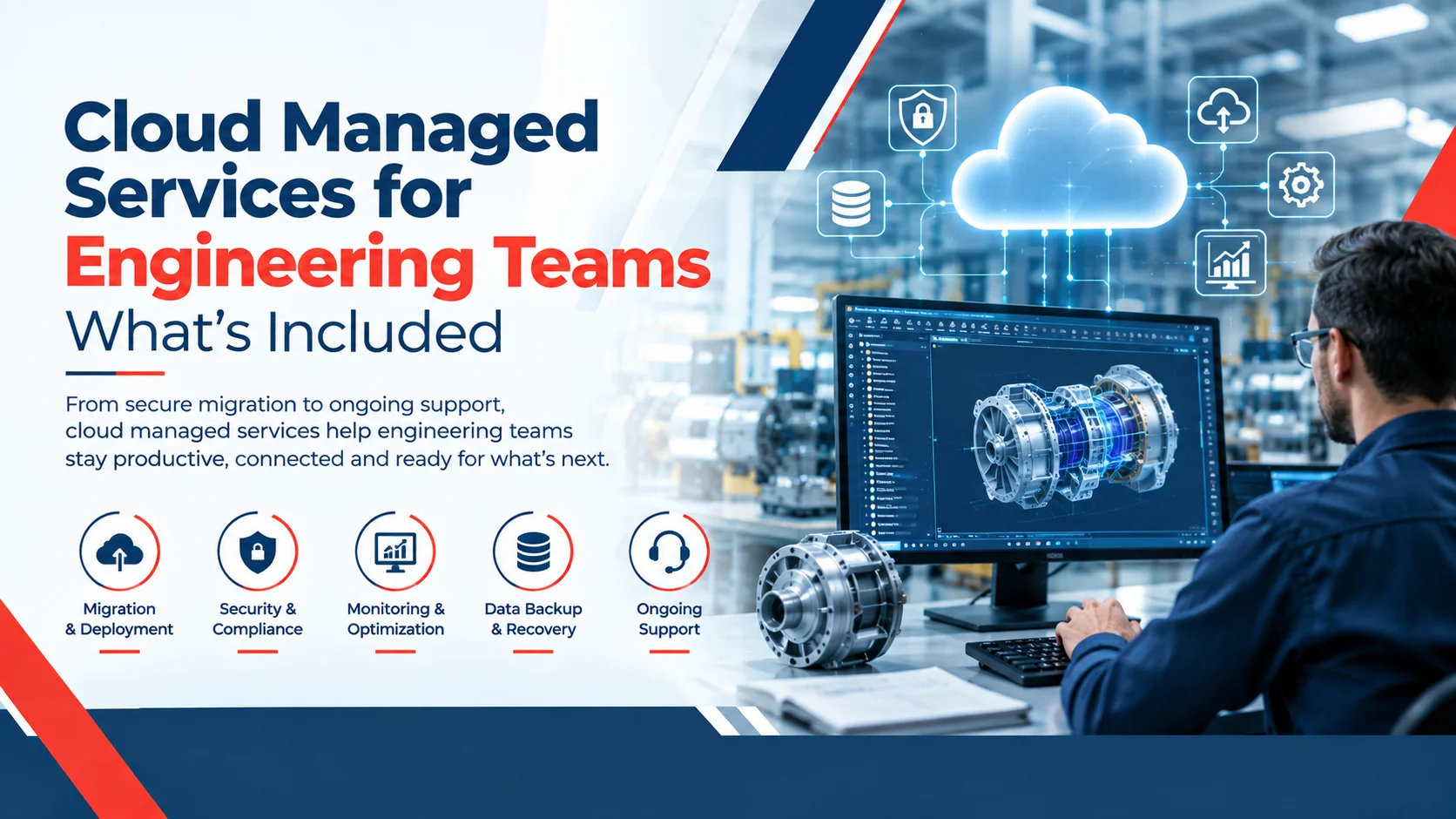
Modern cloud managed services provide scalability, monitoring, security, and operational continuity throughout migration projects.
Cloud-based environments enable organizations to:
- Test multiple migration scenarios
- Validate large engineering datasets
- Scale compute resources when required
- Protect engineering information through controlled access
- Simplify disaster recovery planning
Cloud infrastructure also supports phased migrations where different engineering teams transition without disrupting ongoing product development.
How Digital Transformation Consulting Services Improve Migration Planning
Technology implementation should align with broader business objectives.
Many organizations engage digital transformation consulting services to evaluate:
- Existing engineering maturity
- System integration requirements
- Data governance strategy
- Change management readiness
- Enterprise architecture alignment
- Long-term scalability
Rather than viewing migration as a one-time project, consulting teams typically position it as one phase within a broader engineering transformation roadmap.
For organizations evaluating modernization initiatives, resources covering PLM implementation services and migration planning can provide additional context on preparing engineering environments before large-scale system transitions.
Common Mistakes to Avoid Before PLM Data Migration
Several avoidable decisions increase project risk.
Common mistakes include:
- Migrating every legacy record without evaluation
- Ignoring duplicate engineering objects
- Skipping metadata validation
- Overlooking historical workflow inconsistencies
- Treating migration as an IT-only initiative
- Delaying user validation until after deployment
A structured governance framework with engineering participation significantly reduces these risks.
Practical Example
Consider a global manufacturer consolidating multiple engineering systems into a single PLM platform.
Before migration, the project team discovers duplicate part numbers, obsolete assemblies, inconsistent lifecycle states, and disconnected CAD references across regional business units.
Instead of migrating the data immediately, the organization establishes governance rules, archives inactive records, standardizes metadata, and validates product relationships. Although the preparation phase extends the project timeline slightly, the production rollout experiences fewer engineering disruptions, cleaner reporting, and faster user adoption because teams trust the migrated information from the beginning.
Conclusion
The success of PLM data migration depends less on migration tools and more on the quality of the engineering information entering the new platform. Data cleansing establishes consistency, improves traceability, reduces implementation risk, and supports long-term operational efficiency. Organizations that combine data governance, business process evaluation, and technical validation create a stronger foundation for modern PLM environments and future digital transformation initiatives.
Frequently Asked Questions
1. Why is data cleansing necessary before PLM data migration?
Data cleansing removes duplicate, obsolete, and inconsistent engineering information before migration. This improves data accuracy, reduces implementation risk, preserves product relationships, and minimizes post-migration corrections, helping engineering teams adopt the new PLM system with greater confidence.
2. What types of engineering data should be reviewed before migration?
Organizations should evaluate CAD files, Bills of Materials, engineering documents, change records, product configurations, metadata, supplier information, and workflow histories. The objective is to migrate only validated, business-relevant information while archiving outdated or redundant records.
3. How does a business process audit improve migration projects?
A business process audit identifies inefficient workflows, inconsistent engineering practices, and unnecessary manual activities. Addressing these issues before migration prevents outdated operational processes from being replicated within the new PLM environment and supports more efficient engineering collaboration.
4. Can cloud managed services reduce migration risks?
Yes. Cloud managed services provide scalable infrastructure, secure testing environments, monitoring capabilities, and controlled deployment processes. These capabilities enable organizations to validate migration activities more effectively while maintaining business continuity during large engineering transformations.
5. What are the biggest risks of migrating poor-quality engineering data?
Migrating inaccurate data can introduce duplicate parts, broken product structures, inconsistent Bills of Materials, incorrect revisions, and unreliable reporting. These issues increase engineering rework, slow product development, and reduce confidence in the new PLM platform.
6. Who should participate in a PLM data migration project?
Successful projects involve engineering, manufacturing, quality, IT, product management, compliance, and executive leadership. Cross-functional participation ensures technical accuracy, operational alignment, governance consistency, and better long-term adoption across the organization.
7. Should every legacy engineering record be migrated?
No. Organizations should evaluate business value, regulatory requirements, operational relevance, and future usability before migration. Archiving obsolete information instead of transferring it often reduces project complexity and improves system performance.