Sign up with Google
 Sign in with Zoho

A few weekends at the beach, a long bike commute, or one outdoor wedding in peak summer is usually all it takes. Suddenly your face is a shade darker than your neck, and the skin on your hands looks nothing like the skin under your sleeves. Most people try a few home remedies first. When those don't change much, the next question is almost always the same: can a chemical peel really remove sun tan?
The short answer is that it can help, often quite well, but results depend on how deep the tan is, what your skin type is, and how you treat your skin afterwards. This guide walks through what actually happens, what is realistic to expect, and what to think about before you book a session with a clinic offering chemical peel treatment in Electronic City.
What Is Sun Tan, and Why Does It Stay So Long?
How UV light triggers a tan
When sunlight hits your skin, the pigment-making cells called melanocytes start producing more melanin. Think of it as a protective umbrella your skin opens to shield its deeper layers from UV damage. The extra pigment collects in the upper layers of the skin, and that is the darker colour you see in the mirror.
Why a tan can look patchy
Exposure is rarely even. Your cheeks, nose, forearms and the back of your neck get far more sun than covered areas. This is why tan often shows up as uneven patches or sharp lines, such as a watch mark or a collar line, rather than a smooth overall darkening.
Why it doesn't fade overnight
Your skin renews itself slowly. Tanned cells need to travel up and shed naturally, and that cycle can take several weeks. Add continued sun exposure and the tan keeps getting topped up before the old layer has gone.
Can a Chemical Peel Really Remove Sun Tan?
How a peel works on tanned skin
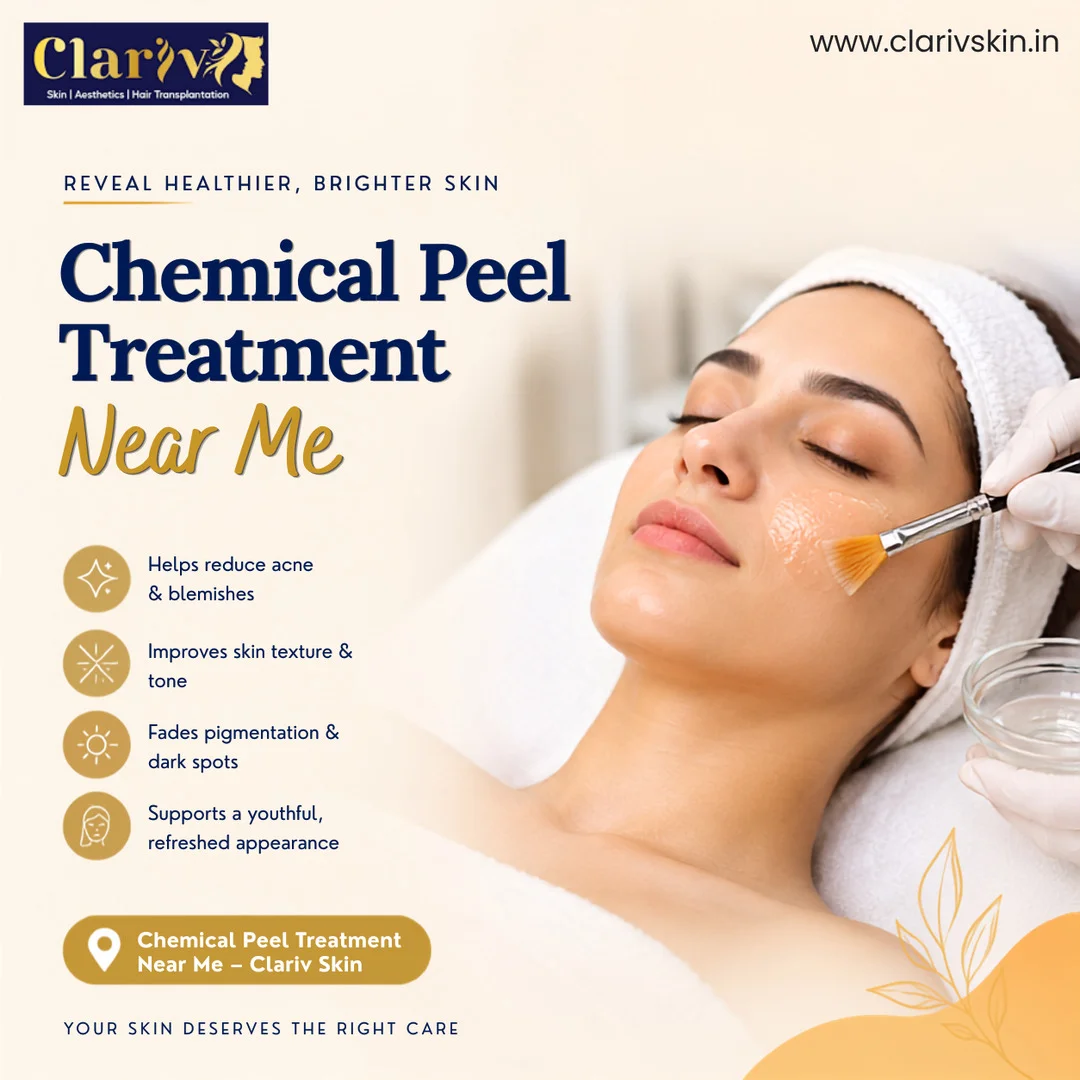
A chemical peel applies a carefully chosen acid solution to the skin for a short, controlled time. The acid loosens the bond between dead, pigmented surface cells so they shed faster than usual. As those cells come off, fresher skin with less pigment comes forward. Because most sun tan sits in the upper layers, peels tend to suit it better than they suit pigmentation that lies deeper.
Common peel ingredients used for tan
Not every peel is the same, and the right one depends on your skin. Here are the three you will hear about most often.
Glycolic acid
A small molecule that works on the surface and is often used for dullness and uneven tone. It is usually a popular option for tan on oily or normal skin.
Lactic acid
Generally considered gentler than glycolic acid. It is often chosen for people with drier or more sensitive skin who still want a brighter, more even look.
Salicylic acid
Oil-soluble, so it suits oily, acne-prone skin. If your tan comes along with clogged pores or blemishes, your doctor may consider it.
Your skin specialist should pick the type and strength after looking at your skin in person. Avoid any clinic that recommends a peel without examining you first.
What to Expect Before You Try
The consultation matters more than the peel
A good first visit is not just a sales conversation. The specialist should ask about your skin history, any medicines or creams you use, how much sun you get, and any past reactions. They should also check whether what you are calling a tan is actually a tan. Sometimes it is a mix of tan, old acne marks and hormonal pigmentation, and each needs a different plan.
How many sessions might you need?
There is no fixed number. A recent tan from a trip or a few weeks of heavy sun exposure may look noticeably better after one or two sessions. Tan that has built up over several years, or that overlaps with other pigmentation, usually needs a longer series, and it may not clear completely. Sessions are commonly spaced a few weeks apart so the skin can recover in between. Ask your clinic for an honest estimate before you start rather than a promise of a one-visit fix.
What you may notice after a session
Everyone heals differently, but here is a general idea of what many people report.
The first few days
Your skin may feel tight, look slightly pink, or feel a little dry. Some people notice mild stinging during the application itself.
The following week
Light flaking or peeling can begin. This is the old, pigmented layer coming off. It may look a little untidy, but picking at it is the one thing you should not do.
After the skin settles
As the flaking ends, the skin often looks brighter and more even. If you are doing a series, this cycle repeats with each session.
When a Peel May Not Be the Right Answer
Deeper or hormonal pigmentation
Conditions like melasma sit deeper in the skin and are influenced by hormones, heat and genetics. A strong peel on melasma can sometimes make it worse. These cases usually need a gentler, combined approach planned by a specialist.
Active irritation or broken skin
If you currently have sunburn, open acne, a skin infection, eczema flares or recent waxing or threading on the area, most doctors will ask you to wait. Peeling irritated skin only adds to the problem.
Unrealistic expectations
A peel can lighten tan. It cannot change your natural skin colour, and it should not be used to chase a shade far lighter than the one you were born with. A responsible clinic will tell you this plainly.
Chemical Peels and Indian Skin Tones
Medium to deeper skin tones are more prone to post-inflammatory hyperpigmentation, which simply means dark marks that appear after the skin is irritated. A peel that is too strong, left on too long, or followed by sun exposure can trigger it. This is why many dermatology teams begin with milder strengths on Indian skin and increase only if the skin handles it well. Slow and steady often gives a safer and better result than rushing.
Aftercare That Protects Your Results
Sunscreen is not optional
Freshly peeled skin is more sensitive to UV. Use a broad-spectrum sunscreen every morning, even on cloudy days or when you are mostly indoors near windows, and reapply if you are outside for long. A hat or scarf helps too. Without sun protection, a tan can return in a few weeks and undo the whole effort.
Keep your routine simple
Avoid scrubs, retinoids, strong exfoliating acids and harsh face washes until your specialist says your skin is ready. A gentle cleanser and a fragrance-free moisturiser are usually enough in the early days.
Let the skin peel on its own
Do not pull, scratch or scrub the flakes. Forcing them off can leave marks or lead to infection.
Home Care Versus a Clinic Peel
Regular sunscreen, a mild exfoliant used sparingly, and ingredients like vitamin C or niacinamide can help fade a light tan slowly. They are lower risk and easy to start. A clinic peel works faster on stubborn tan but needs proper assessment and aftercare. Many people use both: professional sessions for the visible change, and home care to maintain it.
Choosing a Clinic Nearby
For a series of sessions, convenience matters because you will be visiting more than once. If you are searching for chemical peel treatment in Electronic City, Clariv Skin is easy to reach for people working and living in that area. Residents of nearby localities can also look at options for chemical peel treatment in Shanthipura and chemical peel treatment in Singasandra, so follow-up visits fit comfortably around work and travel.
Questions Worth Asking Before You Book
• Is this definitely tan, or is another kind of pigmentation involved?
• Which peel and strength do you suggest for my skin tone, and why?
• How many sessions will I probably need, and what will the full plan cost?
• What should I avoid before and after each session?
• What should I do if my skin reacts badly?
Clear, specific answers are a good sign. Vague promises of an "instant glow" or a "guaranteed result" are a reason to ask more questions.
Final Thoughts
A chemical peel can help reduce sun tan, especially a recent one, by encouraging the pigmented outer layers to shed. It is not a one-visit magic fix, it does not suit every dark patch, and it only holds when you protect your skin from the sun afterwards. A proper assessment, a gentle plan and honest expectations make the biggest difference.
If you would like a clear opinion on whether a peel suits your skin, book a consultation at Clariv Skin, where your skin is examined before any treatment is suggested.
Contact Details
Clariv Skin — Hair, Skin & Aesthetic Clinic
Phone: +91 77600 56665
Email: [email protected]
Website: www.clarivskin.in
Address: G floor, Saptagiri, No.203, 15th Cross, 4th main, Ananth Nagar, Phase 1, Kammasandra, Electronic City, Hebbagodi, Karnataka 560100