Sign up with Google
 Sign in with Zoho
Information forms the backbone of all successful ventures today. The information that organizations possess about their customers allows them to deliver personalized services, make better decisions, and ultimately increase revenues. But traditional CRM data management systems tend to falter when faced with the large volume of interactions between customers.
This is where Salesforce Data Cloud transforms the game. It enables businesses to unify customer data in real time, creating a comprehensive customer view that drives better engagement and business outcomes.
This blog will highlight the differences between Salesforce Data Cloud and Traditional CRM Data Management in order to help you decide which one suits your needs.
What is Traditional CRM Data Management?
Traditional CRM data management focuses on storing and organizing customer information within a CRM platform. It typically includes:
- Customer contact details
- Sales interactions
- Service records
- Marketing activities
- Purchase history
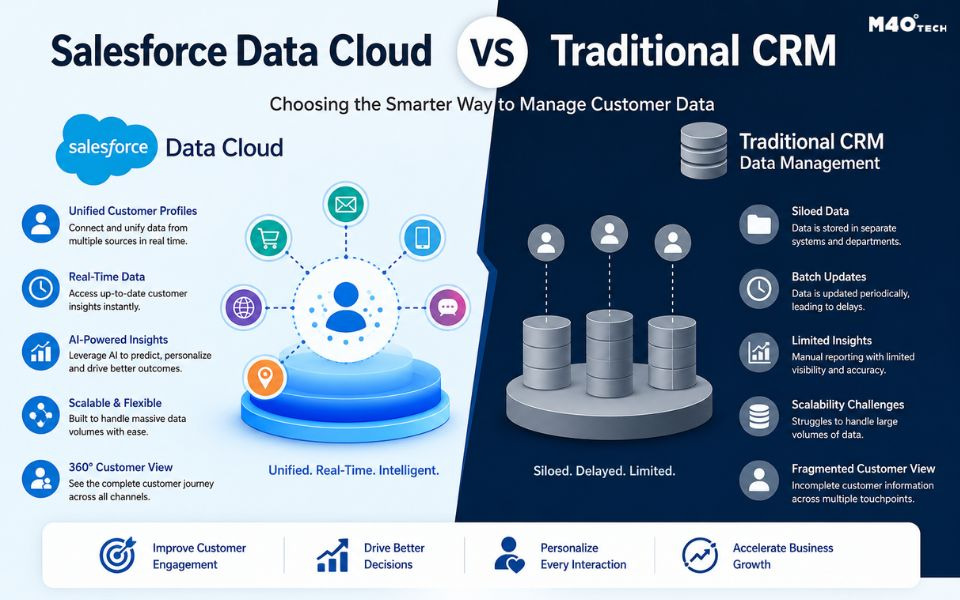
While traditional CRM systems provide valuable customer insights, they often rely on periodic data updates and may struggle to integrate data from multiple sources efficiently.
Challenges of Traditional CRM Data Management
- Data silos across departments
- Limited real-time visibility
- Manual data integration processes
- Inconsistent customer records
- Difficulty handling large-scale data volumes
These limitations can impact customer experiences and business performance.
What is Salesforce Data Cloud?
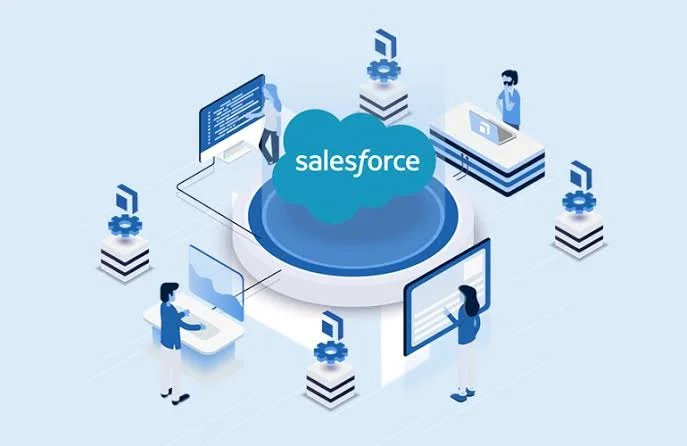
Salesforce Data Cloud is a modern customer data platform designed to connect and unify data about customers collected from several sources at one go.
Unify customer profiles
Real-time customer insights
Data integration for marketing, sales, services, and commerce
Personalized customer experiences
Decision-making based on AI-driven analytics
With Salesforce Data Cloud, customers have access to one definitive repository for all their data.
Salesforce Data Cloud vs Traditional CRM Data Management
1. Data Integration
Traditional CRM
- Requires manual integrations
- Often operates in isolated systems
- Delayed synchronization
Salesforce Data Cloud
- Real-time data integration
- Connects multiple platforms seamlessly
- Unified customer profiles
2. Customer View
Traditional CRM
- Limited customer visibility
- Fragmented records
Salesforce Data Cloud
- 360-degree customer view
- Complete customer journey tracking
3. Real-Time Insights
Traditional CRM
- Batch updates
- Delayed reporting
Salesforce Data Cloud
- Real-time analytics
- Instant customer behavior insights
4. Scalability
Traditional CRM
- May face performance limitations as data grows
Salesforce Data Cloud
- Designed for enterprise-scale data management
- Handles billions of customer interactions efficiently
5. AI and Personalization
Traditional CRM
- Limited AI capabilities
Salesforce Data Cloud
- AI-ready customer data
- Advanced personalization opportunities
- Improved marketing and sales performance
Benefits of Salesforce Data Cloud
Businesses adopting Salesforce Data Cloud can experience:
- Improved customer engagement
- Better data accuracy
- Faster decision-making
- Enhanced personalization
- Increased operational efficiency
- Higher revenue opportunities
When Should Businesses Upgrade?
Organizations should consider Salesforce Data Cloud if they:
- Manage customer data across multiple systems
- Need real-time customer insights
- Want to improve personalization strategies
- Plan to leverage AI-driven customer experiences
- Struggle with data silos and integration challenges
Ready to Modernize Your Customer Data Strategy?
Transform Your Customer Data with Salesforce Data Cloud
Unlock real-time insights, improve customer experiences, and drive business growth with expert Salesforce solutions.
Contact M40Tech today for a personalized Salesforce Data Cloud consultation.
Conclusion
Traditional CRM systems continue to play an important role in customer relationship management, but modern businesses require more advanced capabilities to manage growing data complexity. Salesforce Data Cloud offers a unified, scalable, and intelligent approach to customer data management that enables real-time engagement and business growth.
If your organization is looking to maximize the value of customer data and stay competitive in today's digital landscape, partnering with M40Tech can help you successfully implement and optimize Salesforce Data Cloud solutions.
FAQs
1. What is the main difference between Salesforce Data Cloud and traditional CRM systems?
Salesforce Data Cloud unifies customer data from multiple sources in real time, while traditional CRM systems primarily store customer information within a single platform.
2. Is Salesforce Data Cloud suitable for small businesses?
Yes. Businesses of all sizes can benefit from centralized customer data, improved analytics, and personalized customer experiences.
3. How does Salesforce Data Cloud improve customer engagement?
By creating a complete customer profile and providing real-time insights, Salesforce Data Cloud enables businesses to deliver more relevant and personalized interactions.