Sign up with Google
 Sign in with Zoho

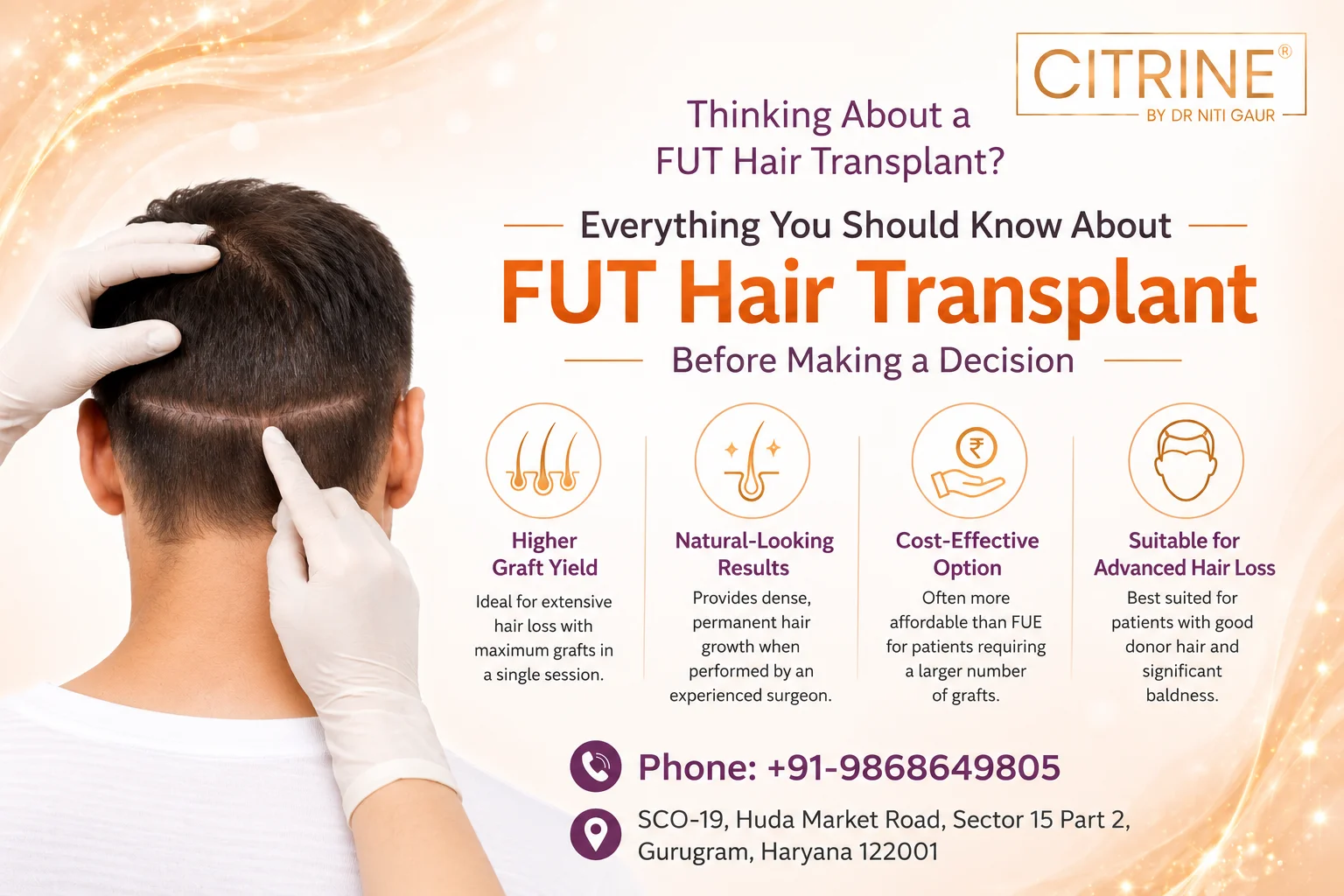
Hair loss is one of those concerns that people carry quietly for longer than they should. By the time most people seriously consider a surgical solution, they've typically spent years on topical treatments, supplements, and various non-invasive options — some of which may have helped slow the progression, but none of which have restored what's already gone. For patients at that stage, hair transplant surgery represents a genuine turning point. And among the surgical options available, FUT remains one of the most effective and widely performed techniques in the world.
What FUT Actually Is
FUT stands for Follicular Unit Transplantation. It involves removing a thin strip of scalp from the donor area — typically the back and sides of the head, where hair follicles are genetically resistant to the hormonal triggers that cause pattern hair loss — and carefully dissecting that strip under high magnification into individual follicular units. These units, each containing one to four hairs, are then implanted into the recipient area with precision to recreate natural hair density and direction.
The technique has been refined significantly over the decades and remains the gold standard for patients requiring a high number of grafts in a single session. The growing interest in FUT Hair Transplant in Gurgaon reflects a broader shift toward surgical solutions that deliver lasting, natural-looking results — particularly among patients with moderate to advanced hair loss who need comprehensive coverage in a single procedure.
FUT vs FUE — Understanding the Difference
The most common question patients have when exploring surgical hair restoration is how FUT compares to FUE — Follicular Unit Extraction, which involves harvesting individual follicles directly from the scalp without a linear incision.
Both techniques transplant the same type of follicular units and produce comparable hair growth results in skilled hands. The key differences lie in the harvesting method, the resulting scar, and the recovery experience.
FUT leaves a linear scar along the donor area, which is concealed by surrounding hair in most cases but becomes visible if the hair is worn very short. FUE leaves multiple small circular scars scattered across the donor area, which are individually less noticeable but can become apparent across a larger surface area if many grafts are needed.
For patients who wear their hair at a medium or longer length and require a high number of grafts, FUT often represents the more practical choice — allowing for greater coverage in a single procedure. For those who prefer very short hairstyles or need a smaller number of grafts, FUE may be more appropriate. The right choice depends on an honest assessment of the individual patient's goals, donor availability, and degree of hair loss — which is exactly what a thorough pre-operative consultation is designed to determine.
What Recovery Looks Like
Recovery from FUT is more straightforward than many patients anticipate. The donor area will have a linear suture that heals over one to two weeks. Some swelling and mild discomfort in the first few days is expected and manageable with standard pain relief.
The transplanted hair typically sheds within two to four weeks after surgery — a completely normal part of the process that patients should be prepared for. New hair growth begins emerging from the transplanted follicles around three to four months post-procedure, with more significant density visible by six to nine months. Full results are typically appreciated at the twelve month mark.
Protecting the scalp from direct sun exposure, avoiding strenuous physical activity for the first few weeks, and following post-operative care instructions carefully all contribute meaningfully to the quality of the final outcome.
Why Surgical Skill Is the Most Important Variable
Hair transplant surgery is as much an art as it is a procedure. The natural appearance of the result — particularly the hairline design — depends heavily on the aesthetic judgment and technical precision of the surgeon. A poorly designed hairline, unnatural graft angulation, or inconsistent density distribution can produce results that are immediately recognisable as transplanted rather than natural. In skilled hands, the result should be indistinguishable from natural hair growth.
This is why the surgeon's experience and approach matters more than any other factor in the decision-making process. Patients should prioritise consultation quality, transparency around expected results, and evidence of consistent, natural-looking outcomes over cost or convenience.
Choosing the Right Clinic
Beyond the surgeon, the facility and the team supporting the procedure play a meaningful role in outcomes. Graft survival — the percentage of transplanted follicles that successfully establish and grow — depends on how carefully follicular units are handled between extraction and implantation. An experienced, well-coordinated team working in a properly equipped surgical environment makes a measurable difference to this critical variable.
When evaluating the best hair transplant clinic in Gurgaon, the questions worth asking include how many procedures the team performs regularly, whether the surgeon is present throughout the procedure or delegates to technicians, and what the post-operative support and follow-up process looks like.
For patients also dealing with concurrent skin concerns — which is more common than people realise, given that scalp health directly affects hair transplant outcomes — having access to a best skin doctor within the same clinical setting is a meaningful advantage. Dr. Niti Gaur at Citrine Clinic brings both dermatological and hair restoration expertise to patient consultations, which allows for a more comprehensive assessment of scalp health, donor quality, and suitability before any surgical recommendation is made.
A Final Word
A hair transplant is one of the more significant personal investments a person can make — in terms of both money and expectation. The patients who tend to be most satisfied are those who go in with a clear, accurate understanding of what the procedure involves, what results are achievable for their specific degree of hair loss, and what the recovery timeline realistically looks like.
Take the time to consult properly, ask the questions that matter, and choose a team whose experience and transparency give you genuine confidence. Consulting Dr. Niti Gaur at Citrine Clinic ensures a personalized, evidence-based approach focused on long-term results. The outcome, when everything is done well, can be genuinely life-changing—and it lasts.