Sign up with Google
 Sign in with Zoho

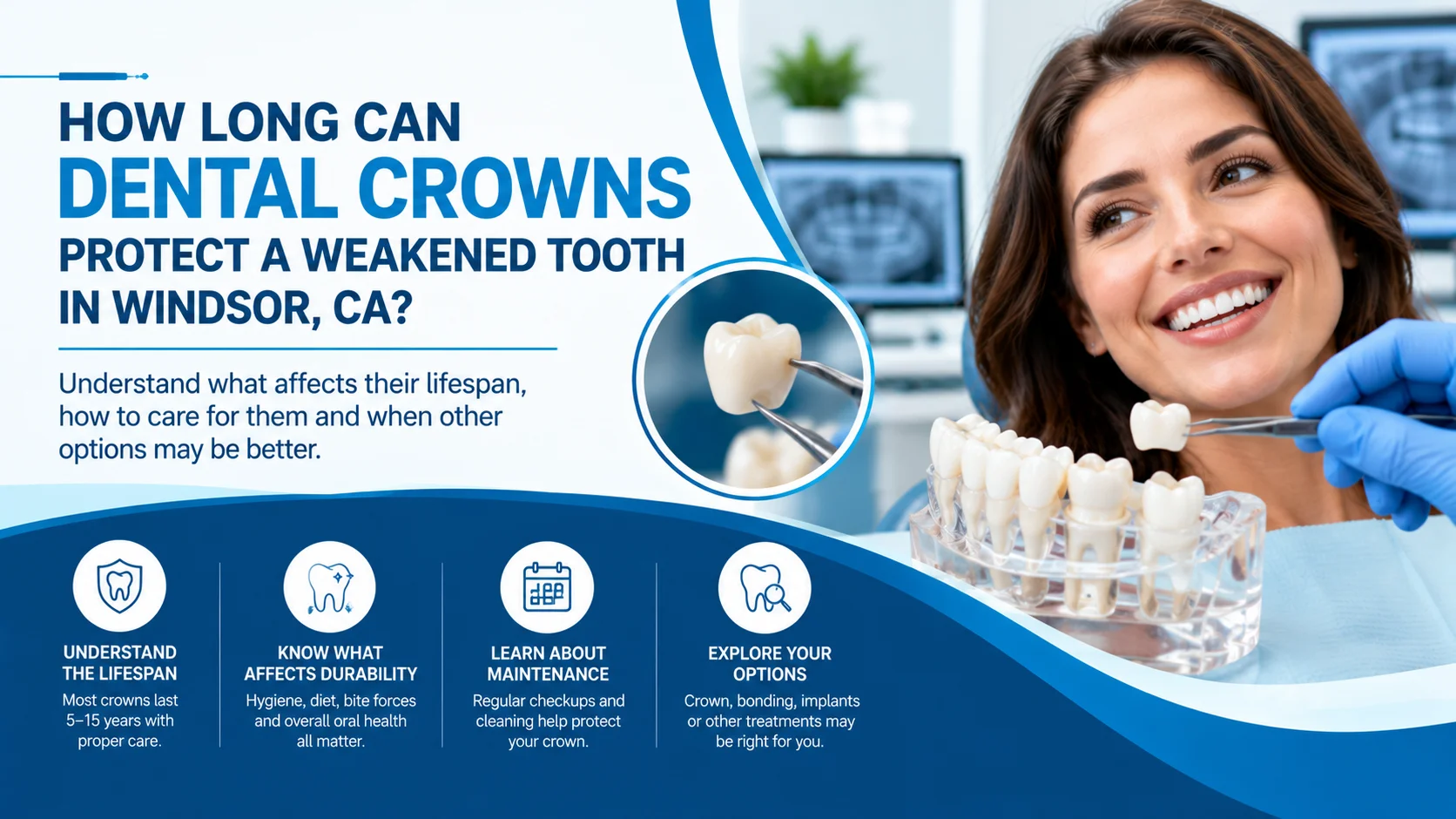
A dental crown can protect a weakened, cracked, heavily restored, or extensively decayed tooth, but no crown has a guaranteed expiration date. In general, dental crowns can last about five to 15 years with proper care, according to Cleveland Clinic, while clinical studies show that many crowns can remain functional for longer depending on the tooth, restoration, oral environment, and patient factors.
For someone researching dental crowns in Santa Rosa, CA while living in Windsor, the more useful question is not simply “How many years will my crown last?” It is “What determines whether the crowned tooth remains healthy and functional over time?”
Key Takeaways
- Crowns can protect teeth that have lost substantial structure and are at greater risk of breaking.
- A five-to-15-year lifespan is a general estimate, not a guarantee.
- The condition of the underlying tooth is just as important as the crown material.
- Recurrent decay, fracture, poor fit, gum disease, clenching, and excessive chewing forces can contribute to failure.
- Good oral hygiene and regular dental examinations help protect both the crown and the tooth underneath.
- Not every damaged tooth requires a crown; bonding, fillings, root canal treatment, or tooth replacement may sometimes be more appropriate.
What Does a Dental Crown Actually Protect?
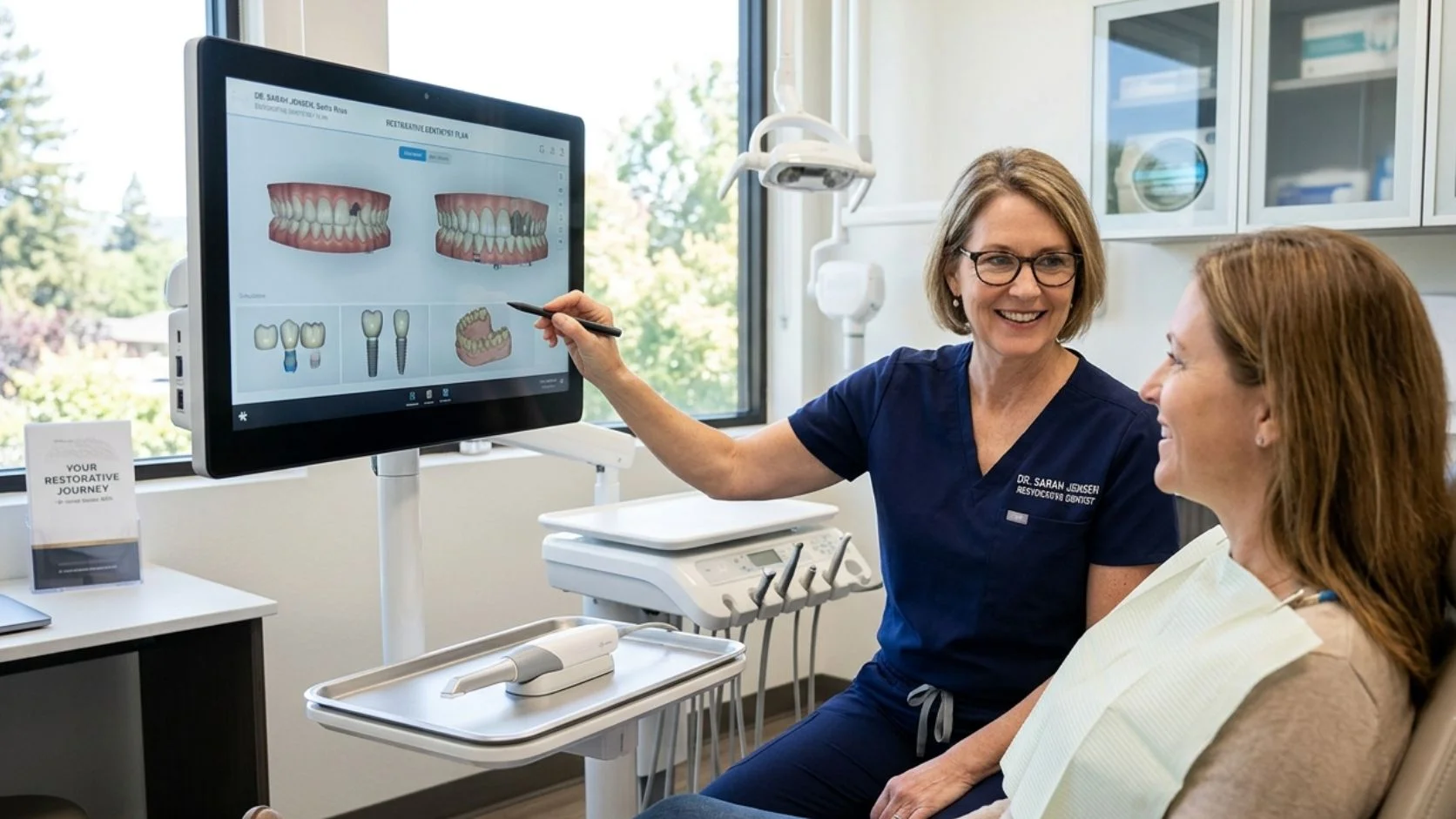
A crown is a tooth-shaped restoration that covers a weakened or damaged tooth. The American Dental Association notes that crowns can strengthen teeth with large fillings, protect weak teeth from breaking, restore broken teeth, and cover dental implants.
This makes crowns particularly relevant when a tooth has lost too much structure for a conventional filling to provide adequate support.
For example, a large cavity can leave insufficient natural tooth structure to withstand normal chewing forces. Similarly, a cracked or heavily restored tooth may require cuspal coverage to reduce the risk of further structural damage.
The objective is therefore not simply to improve appearance. A properly planned crown can help preserve a natural tooth that still has a reasonable restorative prognosis.
How Long Can Dental Crowns Last?
There is no single lifespan that applies to every crown.
Cleveland Clinic gives a general range of five to 15 years with proper care, while also noting that some crowns can last substantially longer. Research also demonstrates that long-term survival varies according to the type of restoration and the clinical circumstances.
For example, a systematic review of crowns placed on root-canal-treated teeth reported an approximately 81% 10-year survival rate for crowned teeth in the studies reviewed. More recent research on zirconia restorations has also found high survival rates through 10 years, although the evidence varies by restoration type and clinical situation.
These figures should not be interpreted as a personal prediction. A crown's expected service life depends on the individual tooth and how it is maintained.
5 Factors That Determine Crown Longevity
1. How Much Healthy Tooth Remains
The foundation underneath the crown matters enormously.
If a tooth retains substantial healthy structure and has a favorable supporting foundation, the prognosis can be better than for a severely compromised tooth. Recent evidence suggests that remaining tooth structure is an important consideration when deciding between direct restorations and cuspal-coverage restorations such as crowns.
This is why a dentist should evaluate the tooth before recommending a crown rather than treating the visible damage alone.
2. The Cause of the Weakness
A crown may be used after extensive decay, a fracture, significant wear, or root canal treatment. Each situation presents different considerations.
Buzza Dental Group's Windsor crown information explains that crowns may be recommended when extensive decay leaves too little natural tooth structure for a filling and that crowns can also restore damaged teeth and improve their strength and function.
A tooth that has already undergone significant structural loss may therefore require closer long-term monitoring than a tooth receiving a crown for a comparatively limited problem.
3. Oral Hygiene and Recurrent Decay
A crown itself does not make the tooth underneath immune to decay.
The margin where the crown meets the natural tooth remains important. Plaque accumulation, inadequate cleaning, and bacterial activity can contribute to problems around a restoration.
The ADA recommends brushing twice daily with fluoride toothpaste, cleaning between teeth daily, maintaining a healthy diet, and seeing a dentist regularly.
These habits protect the surrounding tooth structure and supporting tissues—not just the crown.
4. Bite Forces, Grinding, and Chewing Habits
A crown is designed to withstand normal chewing, but excessive forces can create mechanical problems.
People who clench or grind their teeth may place substantially greater stress on dental restorations. Similarly, regularly chewing extremely hard objects can increase the risk of fracture or damage.
If you grind your teeth, tell your dentist before or after crown treatment. A professionally recommended protective appliance may be appropriate in some cases.
5. Crown Fit and Maintenance
The quality and fit of a restoration matter because a poorly fitting crown can create areas where plaque and bacteria accumulate.
NIDCR explains that restorative materials are exposed to chewing forces, saliva, bacteria, pH, and temperature changes, all of which can contribute to material degradation over time.
This reinforces an important principle: crown longevity is a combination of restoration quality, tooth health, oral environment, and patient maintenance.
When Is a Crown Better Than Bonding?
Not every damaged tooth needs full coverage.
Dental bonding Santa Rosa patients may consider can be useful for selected cosmetic or structural problems, particularly when the remaining tooth structure is sufficient and the damage is relatively limited. Buzza Dental Group describes bonding as a tooth-colored composite resin treatment used for issues such as chips, cracks, discoloration, spaces, and certain restorative concerns.
A crown, by contrast, may be more appropriate when substantial tooth structure has been lost and greater protection is required.
This is one reason choosing the best restorative dentist Santa Rosa patients can find should not mean choosing a provider based solely on a procedure list. A useful consultation should explain why one restoration is preferable to another for the particular tooth.
What If the Tooth Cannot Be Saved?
A crown is intended to preserve and restore a natural tooth when the tooth has a viable restorative prognosis. It cannot repair every severely damaged tooth.
If a tooth has an unfavorable prognosis and must eventually be removed, replacement options may include a dental implant, bridge, or denture depending on the patient's circumstances.
Dental implants are fundamentally different from crowns placed on natural teeth: an implant replaces the tooth root, while a crown can serve as the visible restoration attached to a natural tooth or, in some cases, to an implant. Buzza Dental Group describes dental implants as titanium posts placed in the jaw that can support artificial teeth.
Therefore, dental implants Santa Rosa patients research should be considered a tooth-replacement topic rather than simply an alternative crown material.
How Can Windsor Patients Extend Crown Longevity?
A practical maintenance strategy includes:
- Brush twice daily with fluoride toothpaste.
- Clean between teeth every day.
- Attend recommended dental examinations and professional cleanings.
- Avoid using teeth to open packages or bite hard non-food objects.
- Tell your dentist about grinding or clenching.
- Contact a dental professional if the crown becomes loose, cracked, painful, or unusually sensitive.
- Address new decay or gum problems promptly.
A crown that feels normal should still be monitored during routine dental visits because problems around the restoration may not always produce immediate symptoms.
Conclusion
For patients researching dental crowns Santa Rosa CA from Windsor, the realistic expectation is that a well-planned and properly maintained crown can protect a weakened tooth for many years, but longevity varies considerably. The condition of the remaining tooth, restoration fit, oral hygiene, bite forces, material, and ongoing dental care all influence the outcome.
The most important decision is therefore not simply choosing a crown. It is determining whether the tooth is a good candidate for one, whether a less invasive restoration could work, and how the tooth can be protected for the long term.
FAQs
How long do dental crowns usually last?
Dental crowns commonly last around five to 15 years with proper care, although some can function considerably longer. Individual longevity depends on the tooth's condition, restoration type, oral hygiene, bite forces, and maintenance.
Can a crown save a badly damaged tooth?
A crown can protect and restore a tooth that has lost substantial structure, but it cannot save every damaged tooth. The remaining tooth structure, supporting tissues, fracture pattern, decay, and overall prognosis determine whether restoration is appropriate.
Can dental bonding replace a crown?
Sometimes, but the treatments have different purposes. Bonding can address selected smaller chips, cracks, gaps, or cosmetic concerns, while a crown provides broader coverage when a tooth has substantial structural loss.
Does a crowned tooth still need regular dental care?
Yes. A crown does not eliminate the risk of decay or gum disease around the restored tooth. Daily brushing, interdental cleaning, professional cleanings, and regular examinations remain important for protecting the underlying tooth and surrounding tissues.
What happens if a crowned tooth eventually fails?
The dentist will first determine why it failed and whether the natural tooth can still be restored. Depending on the circumstances, treatment may involve repairing or replacing the crown, additional restorative or endodontic treatment, or tooth replacement such as a dental implant.