Sign up with Google
 Sign in with Zoho

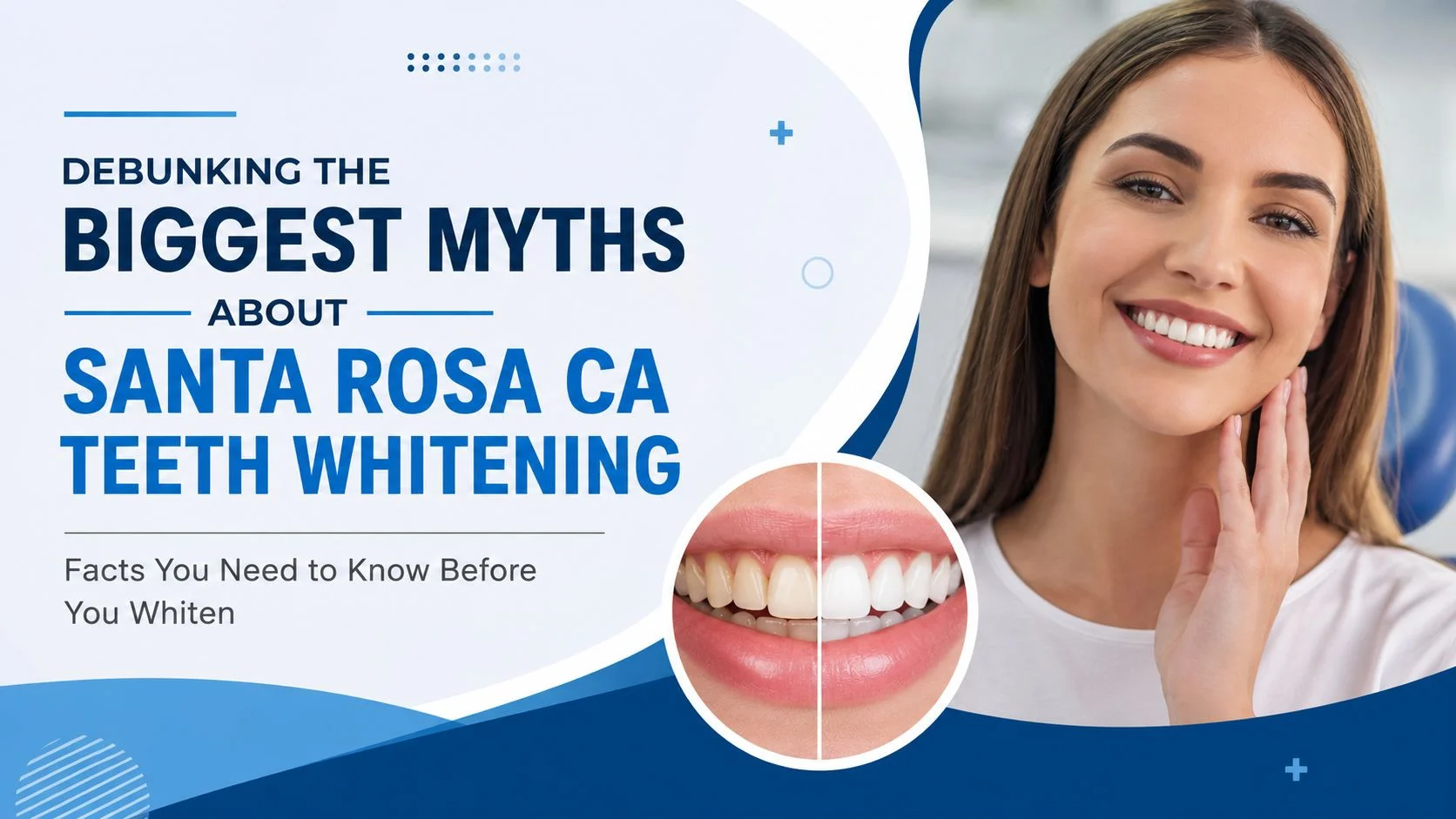
A brighter smile is one of the most common cosmetic dental goals, but teeth whitening is surrounded by conflicting advice. Social media trends, DIY recipes, whitening strips, charcoal products, and dramatic before-and-after images can make it difficult to separate realistic expectations from marketing claims. For anyone considering Santa Rosa CA teeth whitening, the key is understanding what bleaching can actually change, which stains respond well, and when whitening may not be the appropriate solution. Evidence shows that professional and appropriately used over-the-counter whitening products can lighten natural teeth, but they do not whiten restorations and can cause temporary sensitivity or gum irritation.
Myth #1: Teeth Whitening Works the Same for Everyone
Teeth whitening results depend heavily on the type and cause of discoloration.
Some stains are extrinsic, meaning they develop on the outside of the tooth. Coffee, tea, red wine, tobacco, and highly pigmented foods can contribute to surface staining. Other discoloration is intrinsic and occurs within enamel or dentin. Aging, certain medications during tooth development, fluorosis, trauma, and other conditions can contribute to intrinsic changes.
This distinction matters because a whitening toothpaste may help remove surface stains without substantially changing the underlying color of the tooth. Chemical bleaching with peroxide can address certain intrinsic discolorations, but the response varies according to the type of stain.
A dental examination can therefore be more useful than choosing a whitening product based solely on its advertised shade improvement.
Myth #2: Stronger Whitening Always Means Better Results
A higher concentration of bleaching agent is not automatically the best choice.
Hydrogen peroxide and carbamide peroxide are common whitening agents, but concentration, application time, treatment method, existing sensitivity, and the condition of the teeth all affect the treatment experience. Temporary sensitivity and gingival irritation are among the most common adverse effects associated with vital-tooth whitening.
The goal should be effective whitening with appropriate risk management, not maximum chemical exposure.
Dentist-supervised whitening can also help identify problems that could make bleaching uncomfortable or inappropriate, such as untreated decay, gum problems, recession, or significant pre-existing sensitivity.
Myth #3: Whitening Damages Healthy Teeth Every Time
This claim goes too far in the other direction.
Properly used whitening products are generally considered effective for natural teeth, and products carrying the ADA Seal of Acceptance have demonstrated safety and effectiveness according to the program's requirements.
However, “safe” does not mean “risk-free.”
Temporary tooth sensitivity and gum irritation can occur, particularly when bleaching materials are used improperly or at excessive concentrations. Overuse is another concern; repeatedly applying whitening products without appropriate guidance can increase the risk of sensitivity and other unwanted effects.
The practical takeaway is simple: follow product directions, avoid excessive treatment frequency, and address persistent sensitivity rather than repeatedly whitening through it.
Myth #4: Charcoal, Lemon, or Baking Soda Is a Better Natural Alternative
DIY whitening is one of the most persistent myths.
Acidic household ingredients such as lemon or vinegar are sometimes promoted online, while charcoal and abrasive mixtures are marketed as natural ways to create a brighter smile. The evidence does not support treating these approaches as safer alternatives to established whitening methods.
The American Dental Association notes limited evidence for many DIY approaches and reports concerns about abrasive methods. Research cited by the ADA found a charcoal-and-salt mixture to be ineffective and abrasive enough to produce surface damage in the tested conditions.
A “natural” ingredient is not automatically gentle on enamel.
Whitening should involve a method with a reasonable evidence base and a clear understanding of how the product interacts with dental tissues.
Myth #5: Whitening Also Changes Porcelain Veneers and Dental Bonding
Professional whitening changes the color of natural teeth, not tooth-colored restorations.
This is one of the most important considerations before cosmetic treatment. Crowns, veneers, implants, and many tooth-colored restorative materials generally do not respond to bleaching in the same way natural enamel does. Whitening natural teeth after restorations have already been placed can therefore create a color mismatch.
That has implications for people considering porcelain veneers Santa Rosa CA or dental bonding Santa Rosa CA.
If cosmetic restorations are planned, tooth shade should be discussed before treatment. In some cases, whitening natural teeth first allows the dentist and patient to select a restoration shade that better matches the desired final appearance.
If an existing restoration is noticeably darker than newly whitened natural teeth, replacing the restoration may be a separate cosmetic consideration rather than simply applying more whitening gel.
Myth #6: Whitening Is Always the Best Solution for a Discolored Tooth
Not every dark or yellow tooth needs bleaching.
A single tooth that has changed color may have a different cause from generalized staining. Caries, previous trauma, pulpal changes, or certain restorations can contribute to discoloration. The ADA recommends an appropriate clinical evaluation before bleaching to help identify factors contributing to tooth discoloration.
This is particularly important when discoloration appears suddenly, is limited to one tooth, or occurs alongside pain, swelling, sensitivity, or other symptoms.
If an underlying dental problem is responsible, cosmetic whitening alone does not address the cause.
Myth #7: In-Office Whitening Is the Only Effective Option
Professional in-office whitening is not the only legitimate approach.
Current whitening options generally fall into three broad categories:
- In-office whitening: Performed under professional supervision and generally designed for faster visible results.
- Dentist-supervised at-home whitening: Uses professional products, often with custom-fitted trays and a prescribed treatment schedule.
- Over-the-counter whitening: Includes strips, toothpastes, gels, rinses, and other consumer products.
The best option depends on the patient's goals, timeline, oral health, sensitivity, existing restorations, and budget. The ADA recognizes all three categories, while noting meaningful differences in formulation, concentration, application, and treatment time.
Therefore, the question is not simply “Which treatment is strongest?” It is “Which approach is appropriate for this patient's teeth and objectives?”
Myth #8: Emergency Dental Problems Can Be Solved With Whitening
Whitening is cosmetic dentistry, not emergency treatment.
Someone experiencing severe tooth pain, facial swelling, dental trauma, uncontrolled bleeding, or another urgent dental symptom should not attempt to mask the problem with whitening products. Cosmetic treatment should generally follow appropriate diagnosis and management of underlying oral health issues.
This distinction is important for patients searching for an emergency dentist Santa Rosa CA while also considering cosmetic treatment. Urgent symptoms deserve clinical assessment first; whitening can be considered later when the mouth is healthy enough for elective treatment.
A Better Way to Evaluate Teeth Whitening
Instead of choosing a treatment based on a dramatic advertisement, use a simple five-question framework:
- What caused the discoloration?
- Are the teeth and gums healthy enough for whitening?
- Are there crowns, veneers, bonding, fillings, or implants that will not change color?
- How much sensitivity is already present?
- Is the priority speed, convenience, cost, or controlled results?
For people researching Santa Rosa CA teeth whitening, a local treatment overview can provide additional information about available whitening approaches and what to consider before treatment.
The Bottom Line
The biggest misconception about teeth whitening is that it is simply a matter of applying a stronger product until teeth become dramatically whiter. In reality, successful whitening depends on the cause of discoloration, oral health, treatment method, existing restorations, sensitivity, and realistic expectations.
Professional assessment does not necessarily mean choosing an in-office procedure. It means understanding what is causing the discoloration and selecting an evidence-based approach that fits the individual rather than following a one-size-fits-all whitening trend.
FAQs
Can teeth whitening remove every type of stain?
No. Whitening can reduce many extrinsic and some intrinsic stains, but response varies by cause. Certain discolorations may require alternative cosmetic or restorative treatment rather than conventional external bleaching.
Does teeth whitening work on dental bonding?
No. Whitening affects natural tooth structure, while existing tooth-colored bonding generally does not change color through bleaching. This can create a mismatch if natural teeth are whitened after bonding has been placed.
Is tooth sensitivity after whitening normal?
Temporary sensitivity is a common adverse effect of bleaching and is usually transient. However, persistent, severe, or worsening sensitivity should be evaluated rather than treated by repeatedly applying whitening products.
Are whitening strips effective?
Evidence supports whitening strips as an effective over-the-counter option for lightening teeth. Results and treatment time vary, and sensitivity or gum irritation can occur, particularly with inappropriate use.
Should you whiten before getting porcelain veneers?
The timing should be discussed with the dentist. Because veneers do not bleach like natural teeth, whitening natural teeth before selecting a restoration shade may help prevent an unwanted color mismatch.