Sign up with Google
 Sign in with Zoho

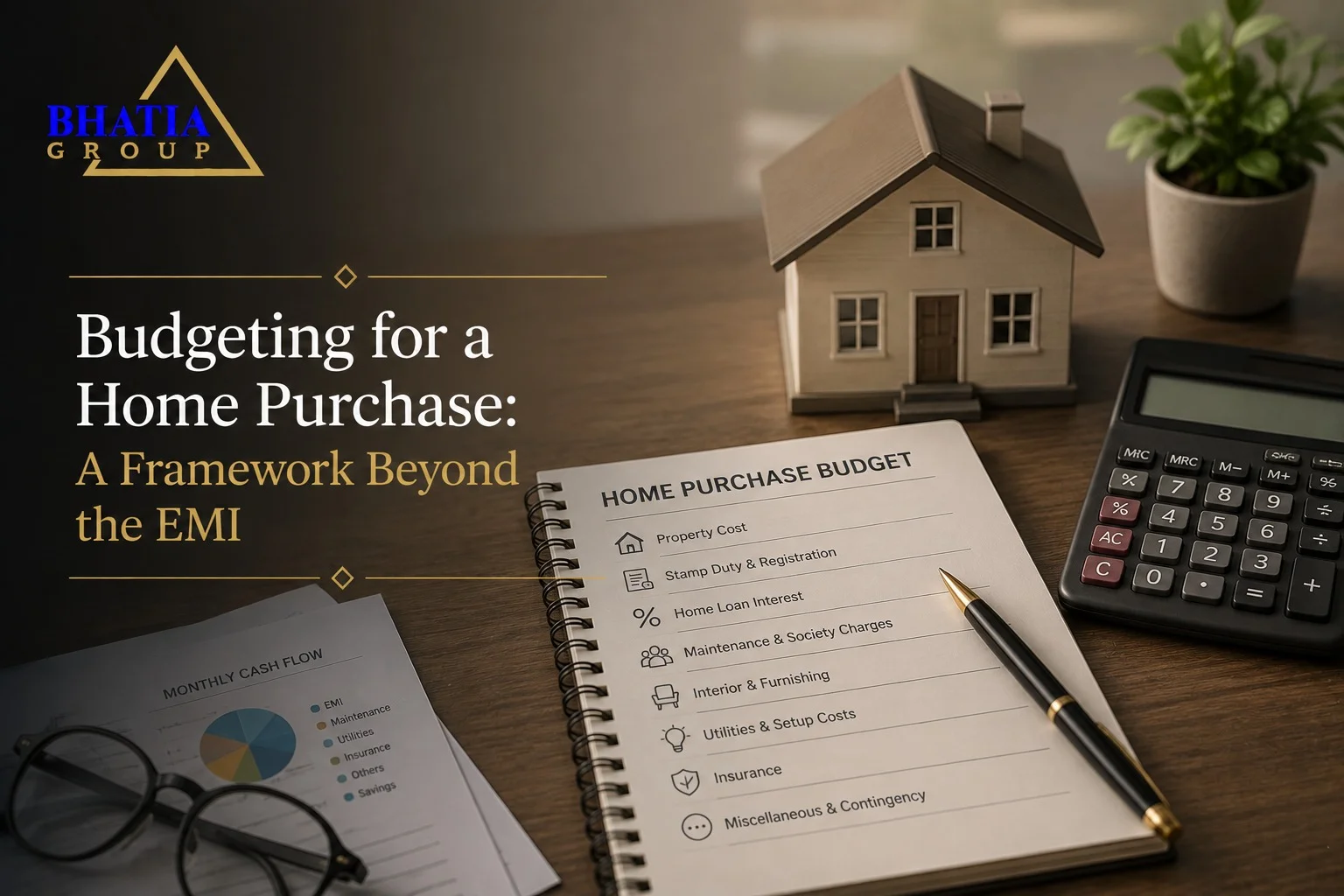
Most buyers budget for a home purchase by focusing almost entirely on the EMI figure a bank quotes them. That's an important number, but it's only one piece of a larger financial picture that, if ignored, can leave buyers financially stretched in ways they didn't anticipate.
Step 1: Calculate True Affordability, Not Maximum Eligibility
Banks approve loans based on income multiples, but "approved for" and "comfortably affordable" are different numbers. A commonly used guideline keeps total EMI outflow under 40% of monthly take-home income — borrowing to the edge of your maximum eligibility often leaves little room for other financial goals, emergencies, or lifestyle flexibility.
Step 2: Account for the Full Upfront Cost, Not Just Down Payment
Beyond the down payment (typically 10-20% of property value), factor in stamp duty, registration charges, GST for under-construction properties, and brokerage if applicable. These costs collectively often add 8-10% on top of the base property price and need to be planned for separately, since most lenders don't finance them.
Step 3: Budget for Post-Possession Costs
Once you move in, ongoing costs include monthly maintenance charges, property tax, and periodic society contributions toward a sinking fund for future repairs. For an amenity-rich project, maintenance charges tend to run higher than a bare-bones building — a reasonable trade-off for the amenities, but one that needs to be factored into your monthly budget from day one, not treated as a surprise later.
Step 4: Set Aside an Emergency Buffer Separate From Your EMI Budget
Homeownership comes with occasional unplanned expenses — appliance repairs, minor maintenance issues, or an unexpected society charge. Maintaining a separate emergency fund, distinct from your regular EMI and living expenses, prevents these from becoming a financial strain when they arise.
Step 5: Factor in Interior and Fit-Out Costs
Especially for an under-construction purchase, budget separately for interiors, modular kitchen setup, and furnishing — costs that are easy to underestimate and that arrive right around possession, when buyers have often already stretched their budget on the property itself.
Applying This Framework to a Real Purchase
For a property like a unit in Auriga 9, building a complete cost sheet — down payment, stamp duty and registration, GST if applicable, projected monthly maintenance, and an interior fit-out estimate — gives a far more accurate picture of total financial commitment than looking at the advertised base price and EMI figure alone.
A Practical Tip
Before finalizing a purchase, simulate your post-possession monthly budget on paper: EMI, estimated maintenance, utilities, and routine expenses, compared honestly against your actual take-home income. If this simulation feels comfortable, you're likely budgeting realistically; if it feels tight even on paper, it's worth reconsidering the unit size or price band before committing.
Bottom Line
EMI is an important number, but true home-buying affordability requires looking at the complete financial picture — upfront costs, ongoing charges, and a reasonable buffer for the unexpected. For a substantial purchase like a unit in Auriga 9, this fuller budgeting approach helps ensure the decision remains comfortable well beyond the day you sign the agreement.