Sign up with Google
 Sign in with Zoho

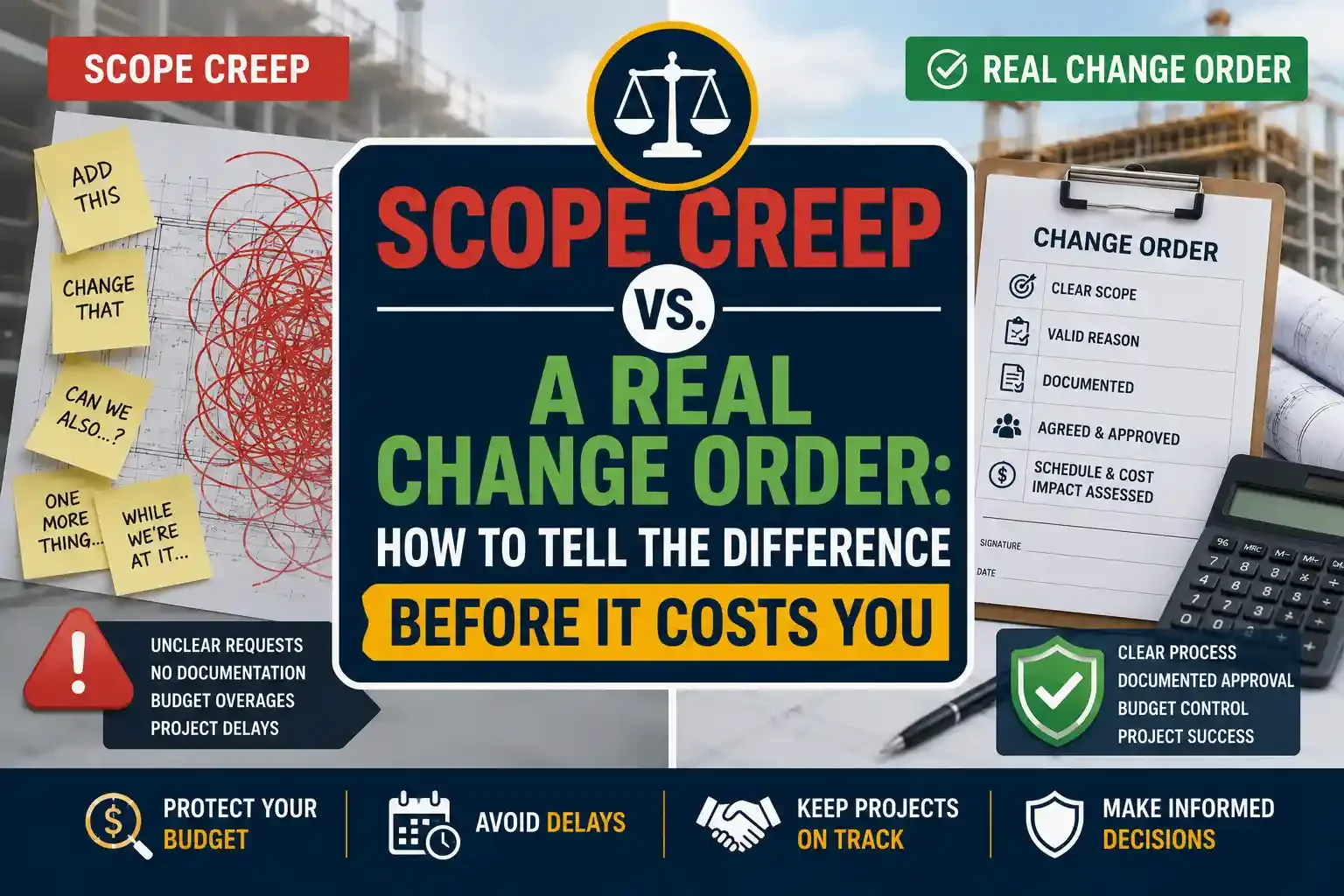
"Can you just add this while you're already here?" is one of the most expensive sentences in construction, mostly because it rarely gets treated with the seriousness it deserves. It sounds like a small favor. In practice, it's the exact moment scope creep starts eating into a contractor's margin, one small, undocumented request at a time.
The frustrating part is that scope creep and a legitimate change order often look identical in the moment. Both involve doing something that wasn't in the original plan. The difference isn't in what gets done it's in whether it gets defined, priced, and approved before the work happens, or absorbed quietly and paid for out of the contractor's own pocket.
What Scope Creep Actually Looks Like on Site
Scope creep rarely shows up as one dramatic request. It shows up as a string of small ones:
- An extra electrical outlet added "while the wall's already open"
- A slightly upgraded fixture swapped in because the client "just liked it better"
- A minor layout tweak requested verbally during a walkthrough, with no one writing it down
- Extra site cleanup or protection work that wasn't in the original bid but felt necessary to keep things moving
None of these individually seem worth stopping the job to formalize. That's exactly the trap. A dozen "small" additions across a project can add up to real, unrecovered cost labor hours, materials, and schedule time that were never billed because nobody paused to document them.
The One Question That Separates the Two
Whenever a request for extra or different work comes in, there's a single question worth asking before anyone picks up a tool: is this different enough from the original scope that it needs its own price and its own approval?
If the answer is yes, it's not a favor, it's a change order, and it should be treated with the same rigor as the rest of the estimate: scoped, priced, documented, and signed off before work starts. Treating it that way isn't about being difficult with a client. It's about making sure the work that's actually done matches the work that's actually paid for.
Why Verbal Agreements Are Where Scope Creep Thrives
Almost every scope-creep story starts the same way: someone agreed to something out loud, on-site, without writing it down. It felt reasonable in the moment. Weeks later, when the invoice doesn't match what the client remembers agreeing to, there's a dispute and disputes over verbal agreements are almost impossible to win cleanly, no matter how reasonable the original request was.
This is really a documentation habit, not a legal one. The fix isn't complicated: any request that falls outside the original scope gets a short written note, even if it's just a quick email confirming "as discussed on site, we'll add X for $Y, please reply to confirm" before the work happens. It takes two minutes and closes off most of the disputes that would otherwise drag on for weeks.
Where Proper Change Order Estimating Comes In
Catching scope creep early only solves half the problem. Once something is correctly identified as a change rather than a freebie, it still needs to be priced properly: direct costs, indirect costs, markup, and schedule impact all accounted for, not just a rough number quoted on the spot to keep the conversation moving.
This is the part most contractors underestimate, because pricing a change order accurately takes more than adding up material costs. For a clear walkthrough of how to do this properly including the formula for direct costs, indirect costs, markup, and contingency this guide on how to estimate change orders in construction projects breaks the process down step by step.
The Habit That Protects Your Margin
Scope creep isn't really about dishonest clients or unreasonable requests. Most of it comes from contractors trying to be accommodating in the moment, without a quick habit in place to flag when "a small favor" has crossed into "a change to the contract." Build that habit, ask the one question, write the short note, price it properly and most of the margin lost to scope creep simply stops leaking.
The projects that stay profitable aren't the ones where nothing ever changes. They're the ones where every change gets caught, priced, and documented before it becomes free labor.