Sign up with Google
 Sign in with Zoho

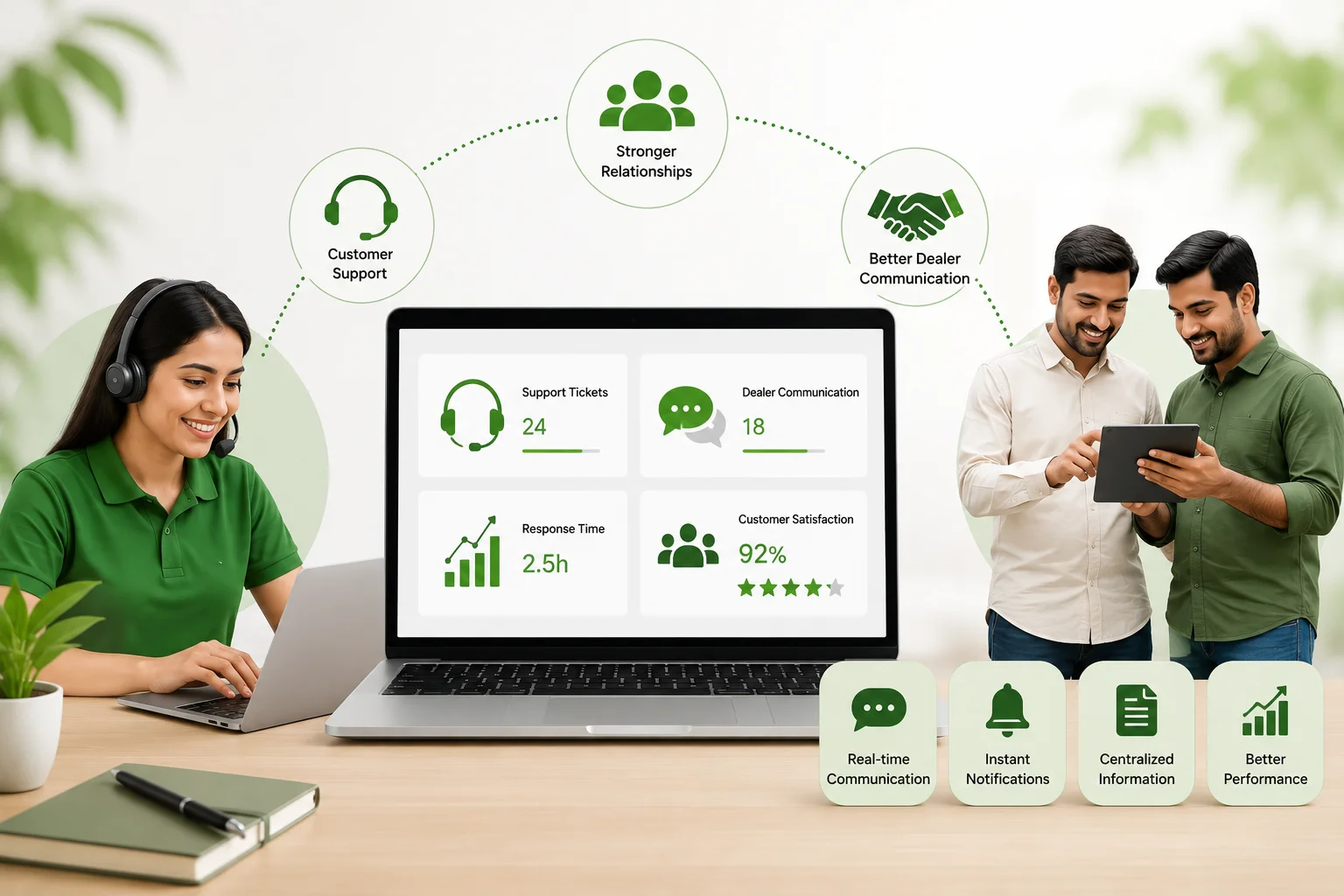
Many businesses invest heavily in generating leads and increasing sales, but long-term success depends on much more than closing deals. Once a customer makes a purchase or a dealer joins your network, the focus shifts to maintaining strong relationships through consistent communication, timely support, and ongoing engagement.
Customers expect quick responses, personalized assistance, and seamless service. Similarly, dealers need regular updates, transparent communication, and efficient collaboration to perform at their best. Managing these interactions manually often leads to delayed responses, missed follow-ups, and inconsistent experiences.
This is where a Customer Relationship Management (CRM) system delivers real value. Beyond managing sales pipelines, CRM helps businesses improve customer support, strengthen dealer communication, and build long-lasting relationships that drive sustainable business growth.
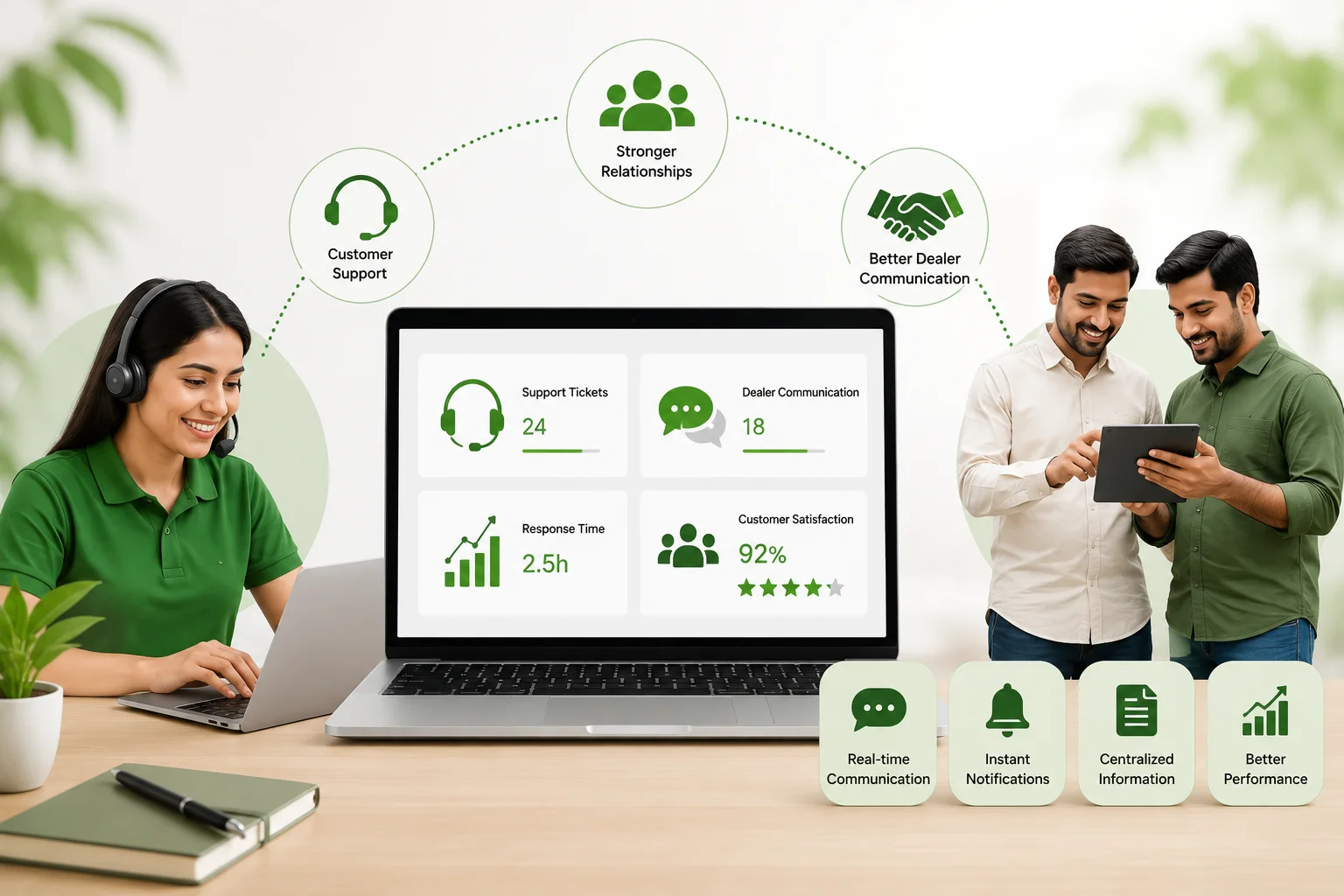
Why Customer Support and Dealer Communication Matter
Customer satisfaction doesn't end when a sale is completed. In fact, the post-sale experience often determines whether customers remain loyal to a brand.
Likewise, dealers play a critical role in representing your business, managing local sales, and supporting customers. Poor communication with dealers can impact sales performance, customer experience, and brand reputation.
Strong customer support and dealer communication help businesses:
Build customer trust
Improve dealer engagement
Increase customer retention
Reduce communication gaps
Strengthen brand loyalty
Drive repeat business
Organizations that prioritize these areas create stronger relationships and gain a competitive advantage.
What Is CRM Beyond Sales?
Many people associate CRM only with lead management and sales automation. However, modern CRM platforms support the entire customer lifecycle—from the first inquiry to long-term relationship management.
A CRM helps businesses manage:
Customer interactions
Dealer communication
Support requests
Service follow-ups
Complaint resolution
Activity tracking
Order updates
Performance monitoring
Instead of working with multiple disconnected tools, businesses can manage every interaction from one centralized platform.
Centralized Customer and Dealer Information
One of the biggest advantages of CRM is having complete customer and dealer information in one place.
Businesses can access:
Customer profiles
Dealer details
Purchase history
Communication records
Service requests
Order history
Support interactions
Having a centralized database allows teams to respond quickly and provide personalized support.
It also eliminates duplicate records and improves collaboration across departments.
Improving Customer Support with CRM
Fast and efficient customer support is one of the most important drivers of customer satisfaction.
Customers expect businesses to respond quickly whenever they have questions, service requests, or product issues.
CRM systems help support teams by enabling them to:
Track customer inquiries
Assign support tickets
Monitor issue resolution
Record every interaction
Access complete customer history
This enables faster response times and more accurate support.
Satisfied customers are more likely to remain loyal and recommend your business to others.
Strengthening Dealer Communication
Dealers are valuable business partners who require consistent communication to perform effectively.
Businesses regularly need to share:
Product launches
Marketing campaigns
Pricing updates
Sales targets
Inventory availability
Promotional offers
Training materials
CRM provides a centralized communication platform that ensures every dealer receives timely and consistent updates.
Better communication improves collaboration and strengthens dealer relationships.
Automating Routine Communication
Manual communication often results in missed follow-ups and delayed responses.
CRM automation simplifies routine tasks such as:
Follow-up reminders
Customer notifications
Dealer announcements
Appointment confirmations
Service reminders
Feedback requests
Automation reduces administrative work while ensuring every customer and dealer receives timely communication.
This consistency improves engagement and customer satisfaction.
Delivering Personalized Experiences
Customers and dealers expect businesses to understand their unique needs.
Generic communication often fails to create meaningful relationships.
CRM systems allow businesses to personalize interactions based on:
Purchase history
Previous conversations
Product preferences
Dealer performance
Service history
Customer behavior
Personalized communication helps businesses build trust and strengthen long-term relationships.
Improving Team Collaboration
Customer support and dealer management often involve multiple departments working together.
These may include:
Sales teams
Customer support
Service departments
Dealer managers
Marketing teams
Without a centralized platform, communication gaps can delay issue resolution.
CRM gives every department access to the same customer and dealer information.
This improves coordination and ensures a consistent experience across every touchpoint.
Real-Time Visibility into Customer and Dealer Activities
Managers need complete visibility to monitor performance and improve business operations.
CRM dashboards provide real-time insights into:
Customer inquiries
Support ticket status
Dealer activities
Follow-up completion
Customer satisfaction
Communication history
These insights help businesses identify bottlenecks and improve service quality.
Real-time visibility also enables faster and more informed decision-making.
Faster Issue Resolution
Customers appreciate businesses that resolve issues quickly.
CRM streamlines issue management by:
Tracking service requests
Assigning responsibilities automatically
Monitoring response times
Recording resolution history
This structured process reduces delays and improves customer confidence.
Efficient issue resolution contributes directly to higher customer satisfaction.
Building Long-Term Customer Loyalty
Customer loyalty is built through consistent experiences rather than one-time transactions.
CRM helps businesses maintain ongoing relationships by:
Sending personalized follow-ups
Sharing useful updates
Collecting customer feedback
Providing proactive support
Tracking customer satisfaction
Customers who feel valued are more likely to continue doing business with your company.
Higher loyalty leads to repeat purchases and stronger brand advocacy.
Supporting Business Growth
As businesses expand, managing customer support and dealer communication manually becomes increasingly difficult.
CRM provides the scalability needed to support:
Larger customer databases
Growing dealer networks
Higher communication volumes
Multiple business locations
Expanding support teams
Businesses can continue delivering exceptional experiences without increasing operational complexity.
The Future of CRM in Customer Support
CRM technology continues to evolve with features such as:
AI-powered customer assistance
Automated workflows
Predictive analytics
Omnichannel communication
Mobile CRM access
Intelligent reporting
These innovations help businesses provide faster support, improve dealer collaboration, and deliver exceptional customer experiences.
Organizations that adopt modern CRM solutions will be better prepared for future growth.
Benefits of CRM for Customer Support and Dealer Communication
Businesses implementing CRM can achieve:
Improved customer satisfaction
Better dealer engagement
Faster support response times
Stronger communication
Increased customer retention
Better collaboration
Higher operational efficiency
Data-driven decision-making
Enhanced business performance
Sustainable long-term growth
Conclusion
A CRM is much more than a sales management solution. It serves as the foundation for building stronger customer relationships, improving dealer communication, and delivering exceptional support throughout the customer journey.
By centralizing customer and dealer information, automating communication, and providing , CRM helps businesses improve operational efficiency while creating better experiences for everyone involved.