Sign up with Google
 Sign in with Zoho

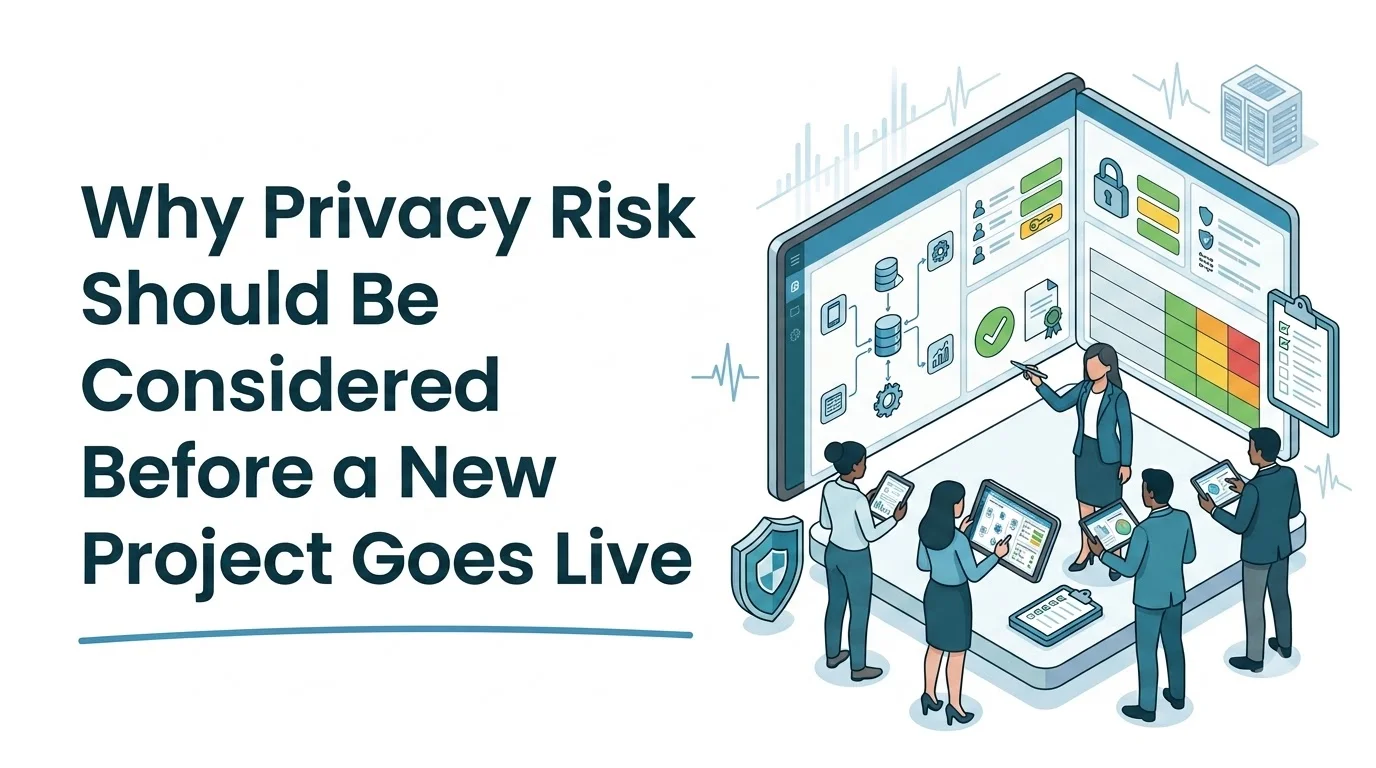
Every time a business runs a new technology project that can look successful from an operational perspective while creating risks that were never considered during planning.
But if these projects involve collecting, storing, using, or sharing personal information, they can also change an organization's privacy risk profile.
This raises an important question: should privacy risk be assessed before a project is implemented rather than after problems appear? The answer is generally yes.
Why Should Privacy Be Considered During Project Planning?
Privacy issues are often more difficult and expensive to address after a system or process has already been designed. Changing a data flow after implementation may require architectural changes, additional controls, new contracts, or changes to business processes.
The Australian Information Commissioner recommends incorporating privacy impact assessments into risk management and planning processes. A PIA can identify how a project may affect individuals' privacy and provide recommendations for managing, minimising, or eliminating those impacts.
This is the basic idea behind privacy by design: consider privacy requirements while the project is being designed instead of treating them as a compliance check at the end.
When Does a Project Need a Privacy Impact Assessment?
Not every project will require the same level of analysis. A useful starting point is to determine whether the project involves new or changed ways of handling personal information.
That could include a new application, a change to an existing database, a new service-delivery model, a new supplier, or a different method of collecting customer information.
The OAIC recommends a threshold assessment to help organizations determine whether a more detailed PIA is appropriate. The assessment considers the nature and potential impact of the proposed information handling rather than assuming every project carries the same level of privacy risk.
This proportional approach is important. Risk management becomes difficult when every project is subjected to the same level of bureaucracy.
What Should a Privacy Risk Assessment Examine?
A useful assessment should look beyond whether an organization technically complies with privacy requirements. It should examine how information moves through the project.
- Where is information collected?
- Who can access it?
- Where is it stored?
- Is it shared with another organization?
- How long is it retained?
- What happens if the information is incorrect, exposed, or accessed without authorization?
The OAIC's guidance specifically recommends mapping information flows and considering how information is collected, used, disclosed, held, protected, and accessed.
These questions can reveal risks that may not be obvious from a project plan alone.
Can Privacy Risk Management Continue After Implementation?
Yes, and it often should. A project can change after its original assessment. New features may be added, vendors may change, data flows may expand, or business teams may begin using information in ways that were not originally anticipated.
The OAIC notes that PIAs can be iterative and updated as a proposal evolves. It also recommends considering the ongoing management of privacy risks within the organization's broader risk-management strategy.
This makes privacy assessment more useful when it becomes part of ongoing governance rather than a one-time document.
How Can GRC Teams Connect Privacy With Wider Risk Management?
Privacy risks rarely exist independently. A privacy issue can create compliance exposure, operational risk, reputational consequences, or an incident requiring investigation.
Keeping these activities in separate systems can make those relationships harder to see.
A connected GRC platform can provide a shared environment for managing risk, compliance, incidents, audits, and related governance activities. AssurePlus describes its platform as connecting these GRC functions so organizations can maintain greater visibility across their risk environment.
Similarly, a structured incident management process can help organizations record, investigate, and analyse incidents when a privacy or security control fails.
The objective is not to automate every privacy decision. It is to make the information needed for those decisions easier to connect and manage.
What Does Better Privacy Risk Management Look Like?
The strongest approach is usually proactive and proportionate.
Organizations can identify whether a project involves personal information, assess potential privacy impacts, establish appropriate controls, document decisions, and continue monitoring relevant risks as the project develops.
This approach also gives project teams an opportunity to change designs before implementation becomes expensive. Privacy therefore becomes part of good project governance rather than an obstacle added at the final stage.
Conclusion
Privacy risk should not be treated as something that appears only after a data breach or regulatory concern. New systems, processes, suppliers, and services can change how personal information is handled, creating risks that deserve attention during planning.
A privacy impact assessment can help organizations understand those risks early, while ongoing monitoring can ensure that controls remain appropriate as the project evolves.
The goal is straightforward: build privacy considerations into the project before they become problems that are harder to fix.