Sign up with Google
 Sign in with Zoho

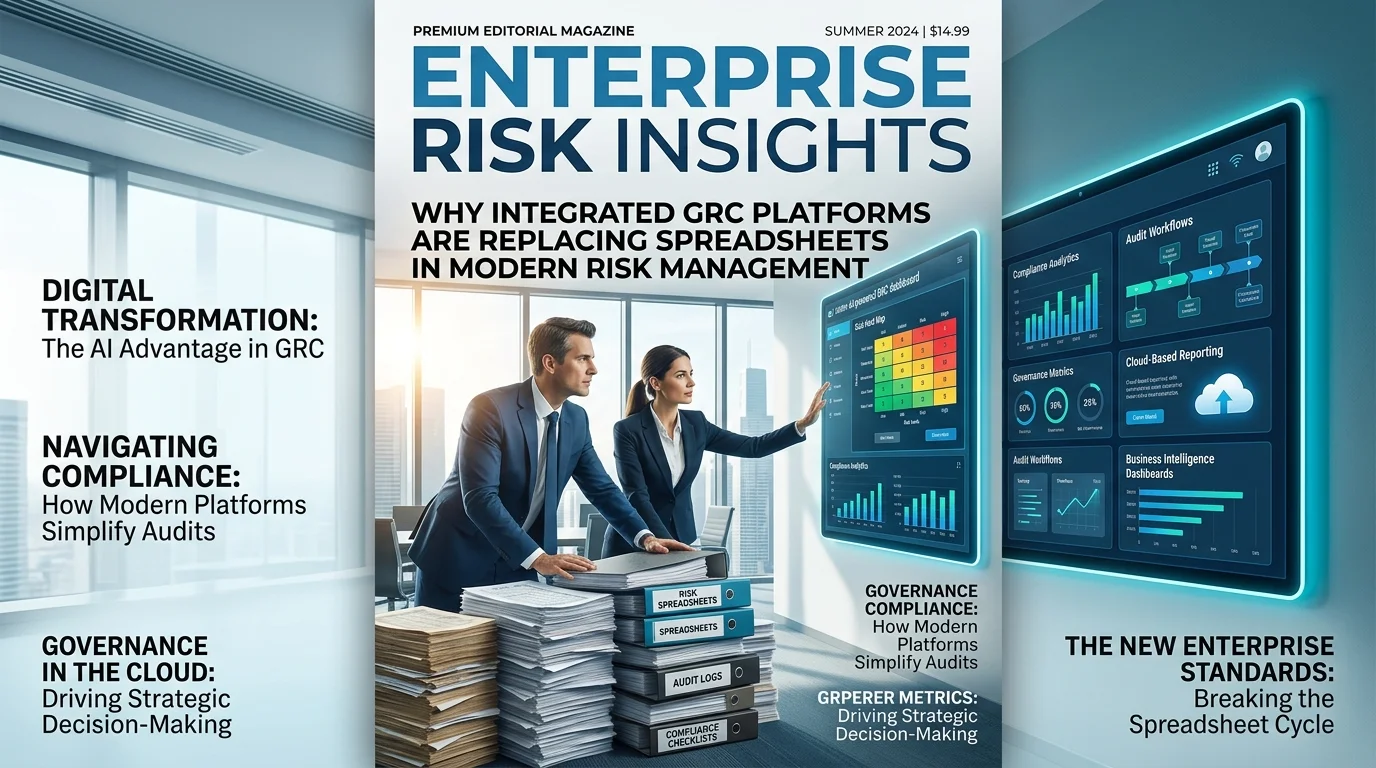
For years, spreadsheets have been the default tool for managing governance, risk, and compliance (GRC). They are inexpensive, familiar, and easy to set up. But as organizations expand across multiple locations, face increasing regulatory obligations, and manage growing volumes of operational data, spreadsheets begin to reveal their limitations. Version control becomes difficult, reporting takes longer, collaboration suffers, and critical risks can easily be overlooked.
Today, organizations are looking beyond manual processes and adopting integrated GRC platforms that provide a centralized view of governance, risk, compliance, audits, and resilience. Industry trends show that enterprises increasingly prefer connected systems that improve visibility, automate workflows, and support informed decision-making rather than relying on disconnected documents and emails.
The Hidden Cost of Spreadsheet-Based Governance
Spreadsheets remain useful for simple tracking tasks, but they struggle to support enterprise-wide governance programs.
Common challenges include:
- Duplicate information across departments.
- Limited audit trails.
- Manual updates and reporting.
- Difficulty assigning ownership.
- Delayed identification of emerging risks.
- Inconsistent compliance records.
As organizations grow, these issues become more than operational inconveniences—they become business risks. Senior leadership requires real-time information to make strategic decisions, yet manually maintained spreadsheets often provide only a historical snapshot.
An integrated GRC platform replaces fragmented processes with a single source of truth where governance activities remain connected across the organization.
Governance Works Better When Everything Is Connected
Governance is rarely limited to one department. Risk management influences compliance, compliance affects audits, and audit findings often shape operational improvements.
When these activities operate independently, organizations spend unnecessary time reconciling information instead of improving performance.
Platforms such as AssurePlus are designed to centralise governance, risk, compliance, audits, incidents, and operational resilience into one connected environment. By providing a unified platform, organisations can improve collaboration, standardise reporting, and strengthen accountability across business functions.
Businesses looking to modernize their governance framework often begin by exploring AssurePlus as a centralized AI-powered GRC solution that brings together governance processes while supporting enterprise-wide visibility and better decision-making.
Risk Management Requires Continuous Monitoring
Enterprise risks no longer remain static.
Cybersecurity threats evolve daily.
Supply chain disruptions appear unexpectedly.
Regulatory requirements change frequently.
Operational challenges emerge without warning.
Managing these risks through quarterly reviews or annual assessments is becoming increasingly difficult.
Modern Risk Management solutions enable organisations to maintain centralised risk registers, automate assessments, monitor mitigation activities, and generate executive dashboards in real time. Instead of waiting for scheduled reviews, leadership gains continuous visibility into the organisation's risk profile.
Organizations implementing Risk Management capabilities can identify trends earlier, prioritize mitigation activities more effectively, and allocate resources based on real-time business intelligence instead of historical reports.
Continuous monitoring also strengthens organizational resilience because emerging risks can be addressed before they develop into larger operational issues.
Compliance Should Be Built Into Daily Operations
Compliance is no longer simply about preparing for audits.
It has become an ongoing business function.
Organizations must demonstrate consistent governance across policies, controls, regulations, third-party relationships, and internal processes throughout the year.
Manual compliance tracking often leads to duplicated work, inconsistent evidence collection, and unnecessary administrative effort.
Modern Compliance Management solutions simplify this process by centralizing obligations, automating recurring compliance activities, assigning ownership, collecting evidence digitally, and producing real-time reporting dashboards.
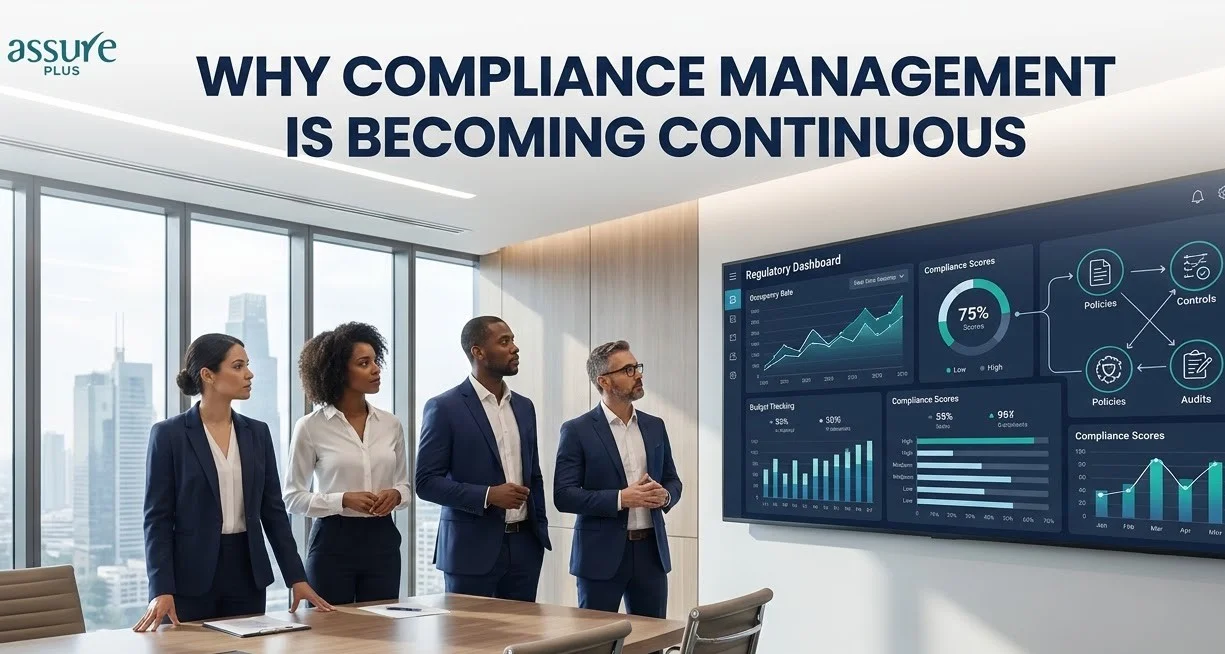
Instead of asking whether the organization is compliant today, leadership can continuously monitor compliance performance throughout the year.
This proactive approach reduces audit preparation time while increasing confidence across regulators, customers, and executive stakeholders.
Automation Is Transforming Governance
Artificial intelligence and workflow automation are rapidly changing how governance teams operate.
Rather than replacing governance professionals, intelligent automation supports them by handling repetitive administrative activities, allowing specialists to focus on higher-value work.
Automation can assist organizations by:
- Monitoring compliance deadlines.
- Tracking policy reviews.
- Routing approvals automatically.
- Identifying emerging risks.
- Generating executive reports.
- Supporting faster incident response.
- Improving data consistency.
As AI capabilities continue evolving, organizations will increasingly rely on intelligent governance platforms that deliver insights instead of simply storing information.
Better Governance Creates Better Business Outcomes
Governance is often viewed as a compliance requirement, yet its impact extends much further.
Organizations with mature governance frameworks typically experience:
- Better executive decision-making.
- Faster audit preparation.
- Improved accountability.
- Stronger operational resilience.
- More effective risk mitigation.
- Greater stakeholder confidence.
Rather than becoming an administrative burden, governance becomes a strategic capability that supports sustainable growth.
Integrated GRC platforms provide the visibility necessary for leadership to understand relationships between risk, compliance, operations, and performance, allowing organizations to respond more effectively to changing business conditions.
Final Thoughts
Enterprise governance is becoming more complex each year. Growing regulatory requirements, increasing cyber risks, expanding digital operations, and higher stakeholder expectations demand a more connected approach to managing governance, risk, and compliance.
Organizations that continue relying on spreadsheets may find it increasingly difficult to maintain visibility and consistency across their governance programs. Those investing in integrated GRC platforms are building stronger foundations for resilience, operational excellence, and long-term growth.
Solutions like AssurePlus demonstrate how modern governance technology can replace fragmented manual processes with a centralized platform that supports enterprise risk management, continuous compliance, and smarter decision-making. As organizations continue their digital transformation journey, integrated GRC platforms will play an increasingly important role in helping businesses remain agile, compliant, and prepared for future challenges.
For years, spreadsheets have been the default tool for managing governance, risk, and compliance (GRC). They are inexpensive, familiar, and easy to set up. But as organizations expand across multiple locations, face increasing regulatory obligations, and manage growing volumes of operational data, spreadsheets begin to reveal their limitations. Version control becomes difficult, reporting takes longer, collaboration suffers, and critical risks can easily be overlooked.
Today, organizations are looking beyond manual processes and adopting integrated GRC platforms that provide a centralized view of governance, risk, compliance, audits, and resilience. Industry trends show that enterprises increasingly prefer connected systems that improve visibility, automate workflows, and support informed decision-making rather than relying on disconnected documents and emails.
The Hidden Cost of Spreadsheet-Based Governance
Spreadsheets remain useful for simple tracking tasks, but they struggle to support enterprise-wide governance programs.
Common challenges include:
- Duplicate information across departments.
- Limited audit trails.
- Manual updates and reporting.
- Difficulty assigning ownership.
- Delayed identification of emerging risks.
- Inconsistent compliance records.
As organizations grow, these issues become more than operational inconveniences—they become business risks. Senior leadership requires real-time information to make strategic decisions, yet manually maintained spreadsheets often provide only a historical snapshot.
An integrated GRC platform replaces fragmented processes with a single source of truth where governance activities remain connected across the organization.
Governance Works Better When Everything Is Connected
Governance is rarely limited to one department. Risk management influences compliance, compliance affects audits, and audit findings often shape operational improvements.
When these activities operate independently, organizations spend unnecessary time reconciling information instead of improving performance.
Platforms such as AssurePlus are designed to centralize governance, risk, compliance, audits, incidents, and operational resilience into one connected environment. By providing a unified platform, organizations can improve collaboration, standardize reporting, and strengthen accountability across business functions.
Businesses looking to modernize their governance framework often begin by exploring AssurePlus as a centralized AI-powered GRC solution that brings together governance processes while supporting enterprise-wide visibility and better decision-making.
Risk Management Requires Continuous Monitoring
Enterprise risks no longer remain static.
Cybersecurity threats evolve daily.
Supply chain disruptions appear unexpectedly.
Regulatory requirements change frequently.
Operational challenges emerge without warning.
Managing these risks through quarterly reviews or annual assessments is becoming increasingly difficult.
Modern Risk Management solutions enable organizations to maintain centralized risk registers, automate assessments, monitor mitigation activities, and generate executive dashboards in real time. Instead of waiting for scheduled reviews, leadership gains continuous visibility into the organization's risk profile.
Organizations implementing Risk Management capabilities can identify trends earlier, prioritize mitigation activities more effectively, and allocate resources based on real-time business intelligence instead of historical reports.
Continuous monitoring also strengthens organizational resilience because emerging risks can be addressed before they develop into larger operational issues.
Compliance Should Be Built Into Daily Operations
Compliance is no longer simply about preparing for audits.
It has become an ongoing business function.
Organizations must demonstrate consistent governance across policies, controls, regulations, third-party relationships, and internal processes throughout the year.
Manual compliance tracking often leads to duplicated work, inconsistent evidence collection, and unnecessary administrative effort.
Modern Compliance Management solutions simplify this process by centralizing obligations, automating recurring compliance activities, assigning ownership, collecting evidence digitally, and producing real-time reporting dashboards.
Instead of asking whether the organization is compliant today, leadership can continuously monitor compliance performance throughout the year.
This proactive approach reduces audit preparation time while increasing confidence across regulators, customers, and executive stakeholders.
Automation Is Transforming Governance
Artificial intelligence and workflow automation are rapidly changing how governance teams operate.
Rather than replacing governance professionals, intelligent automation supports them by handling repetitive administrative activities, allowing specialists to focus on higher-value work.
Automation can assist organizations by:
- Monitoring compliance deadlines.
- Tracking policy reviews.
- Routing approvals automatically.
- Identifying emerging risks.
- Generating executive reports.
- Supporting faster incident response.
- Improving data consistency.
As AI capabilities continue evolving, organizations will increasingly rely on intelligent governance platforms that deliver insights instead of simply storing information.
Better Governance Creates Better Business Outcomes
Governance is often viewed as a compliance requirement, yet its impact extends much further.
Organizations with mature governance frameworks typically experience:
- Better executive decision-making.
- Faster audit preparation.
- Improved accountability.
- Stronger operational resilience.
- More effective risk mitigation.
- Greater stakeholder confidence.
Rather than becoming an administrative burden, governance becomes a strategic capability that supports sustainable growth.
Integrated GRC platforms provide the visibility necessary for leadership to understand relationships between risk, compliance, operations, and performance, allowing organizations to respond more effectively to changing business conditions.
Final Thoughts
Enterprise governance is becoming more complex each year. Growing regulatory requirements, increasing cyber risks, expanding digital operations, and higher stakeholder expectations demand a more connected approach to managing governance, risk, and compliance.
Organizations that continue relying on spreadsheets may find it increasingly difficult to maintain visibility and consistency across their governance programs. Those investing in integrated GRC platforms are building stronger foundations for resilience, operational excellence, and long-term growth.
Solutions like AssurePlus demonstrate how modern governance technology can replace fragmented manual processes with a centralized platform that supports enterprise risk management, continuous compliance, and smarter decision-making. As organizations continue their digital transformation journey, integrated GRC platforms will play an increasingly important role in helping businesses remain agile, compliant, and prepared for future challenges.