Sign up with Google
 Sign in with Zoho

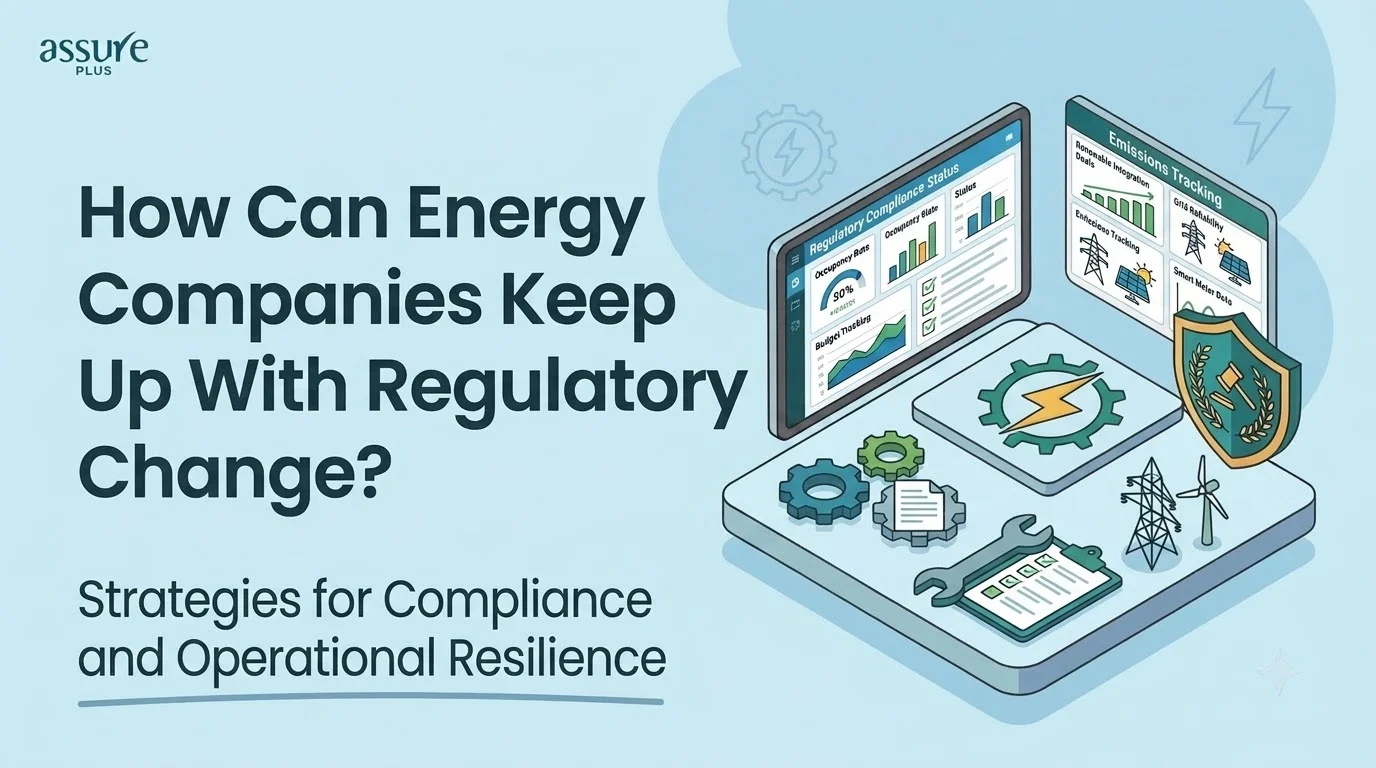
Regulatory change is a normal part of operating in Australia's energy sector. Electricity networks, retailers, generators and other market participants need to manage requirements that can affect reporting, consumer obligations, infrastructure, safety and operational processes.
The challenge is not simply finding out when a requirement changes. Organisations also need to determine what the change means for existing controls, policies, responsibilities and evidence.
The Australian Energy Regulator's 2026-27 priorities include consumer vulnerability, smart metre rollout, power system security, network compliance and gas market reporting.
For energy organisations, this makes regulatory monitoring and compliance management an ongoing activity rather than something reserved for an annual review.
Why is regulatory change difficult to manage manually?
Many compliance teams still use spreadsheets, shared folders and email to track regulatory requirements. These tools can be useful, but they can become difficult to manage when obligations involve multiple departments.
Suppose a regulatory change affects an operational control. The compliance team may need to identify the relevant requirement, update internal documentation, notify the control owner, collect evidence and confirm that the change has been implemented.
If each step is recorded separately, it becomes harder to know whether the entire process has been completed.
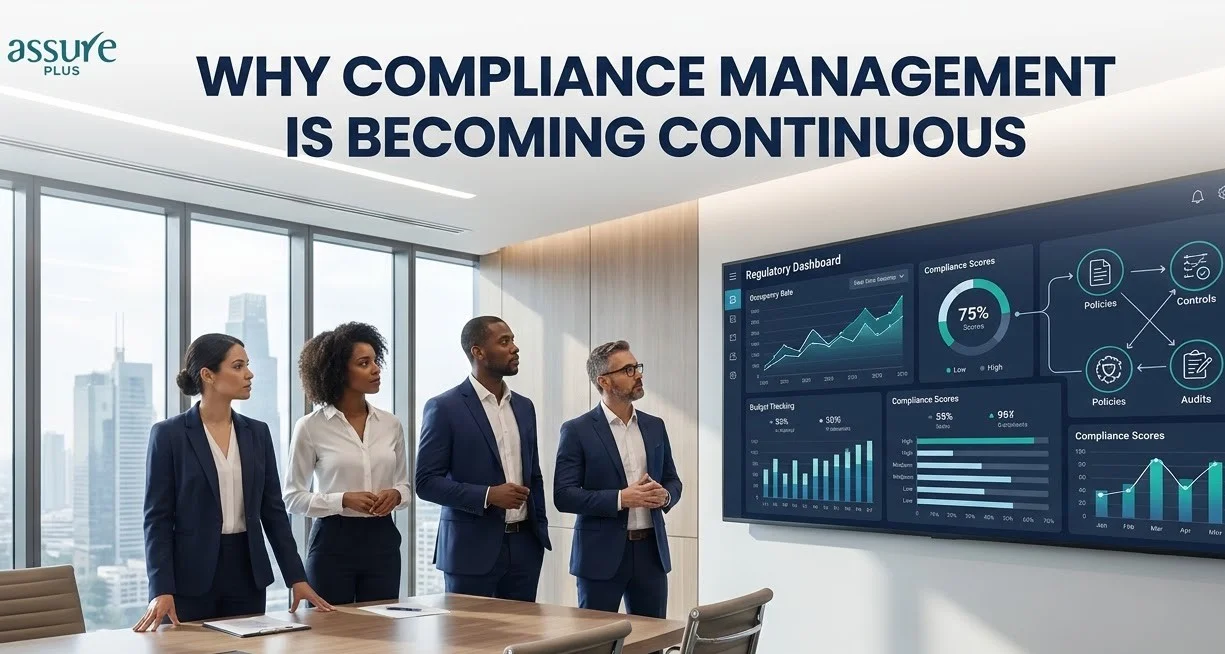
A centralised compliance management system can provide a structured place to manage obligations, policies, controls and evidence. AssurePlus describes its compliance management approach around centralisation, automated control testing, evidence collection, regulatory mapping and real-time reporting.
What does continuous compliance actually mean?
Continuous compliance does not mean that employees must manually check every regulation every day.
Instead, it means building compliance activities into normal business processes. Obligations can be assigned to owners, controls can be tested on a defined schedule and evidence can be collected throughout the year.
This approach makes it easier to identify gaps before they become urgent.
ISO 37301:2021 describes a compliance management system as a framework for establishing, developing, implementing, evaluating, maintaining and improving compliance. The standard was reviewed and confirmed as current in 2026.
The principle is important because compliance should not remain static. Organisations need processes that can adapt when regulations, business activities or risk conditions change.
How does energy GRC support regulatory readiness?
Energy compliance is closely connected with other areas of GRC.
A regulatory obligation might relate to a critical infrastructure asset, environmental requirement, safety process, cybersecurity control or third-party supplier. When compliance information is connected with these areas, teams can better understand the practical impact of regulatory changes.
This is where GRC capabilities for energy and utilities can extend beyond basic compliance tracking. AssurePlus describes capabilities for energy risk management, environmental compliance, operational and safety risk, cybersecurity and critical infrastructure reporting.
The need for reliable regulatory information is also visible in the AER's updated Annual Information Orders for 2026-27 and 2027-28. These orders set reporting obligations for regulated electricity distribution networks, transmission networks and interconnectors.
For organisations subject to these requirements, maintaining accurate information and understanding reporting responsibilities are important parts of compliance readiness.
Can automation reduce the burden on compliance teams?
Automation can take care of many recurring compliance activities without removing human oversight.
For example, organisations can automate reminders for control testing, assign evidence requests to responsible teams and escalate overdue actions. Dashboards can then show which activities are complete and where attention may be required.
This can reduce the administrative effort involved in maintaining compliance programmes.
AI can provide additional support by helping teams analyse information and identify relationships across large datasets. However, regulatory interpretation and important compliance decisions still require appropriate human review.
What should energy organisations prioritise?
A practical compliance process should make it easy to answer several basic questions.
What requirements apply to the organisation? Who owns each obligation? Which controls address it? What evidence demonstrates compliance? Has anything changed?
When these answers remain connected, regulatory changes can be assessed more efficiently. Teams can identify affected controls and responsibilities without rebuilding their compliance records from the beginning.
This also makes audit and regulatory preparation more manageable because evidence and ownership information are maintained throughout the compliance cycle.
Conclusion
Energy companies cannot eliminate regulatory change, but they can improve how they respond to it. A continuous compliance approach connects obligations with controls, evidence, ownership and follow-up actions, making it easier to identify and address changes. For utilities operating in a highly regulated environment, structured compliance management can provide greater visibility while reducing the administrative burden of keeping requirements up to date.